Traffic Intersection Control System
Aug 2017 - Dec 2017

Overview
An interactive, microcontroller-based intersection model built on the MSP432 ARM platform, designed to simulate real-world traffic control systems. The project implements coordinated light sequencing, pedestrian crosswalk logic with audible alerts, and emergency vehicle detection using IR signaling.
-
This project was completed independently, requiring full ownership of system design, implementation, and integration across multiple engineering domains.
Embedded Software:
Developed the complete control system in C using a state machine architecture
Implemented GPIO interrupts, timers, and register-level control for real-time responsiveness
Designed logic for traffic sequencing, pedestrian crosswalk timing, and emergency vehicle prioritization via IR detection
Electrical & Hardware Integration:
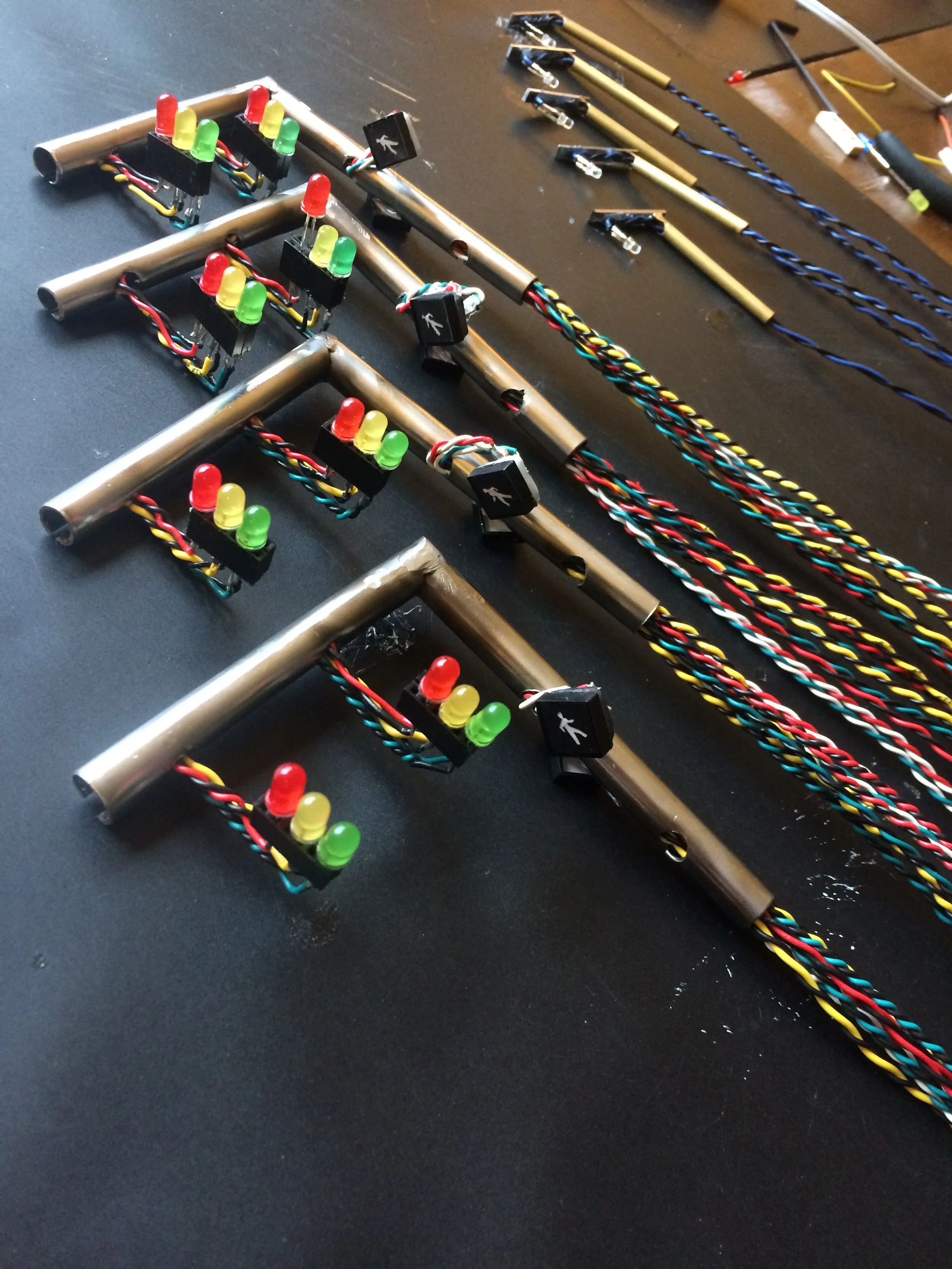
Designed and wired all system components, including sensors, LEDs, LCD, servo, and stepper motor systems
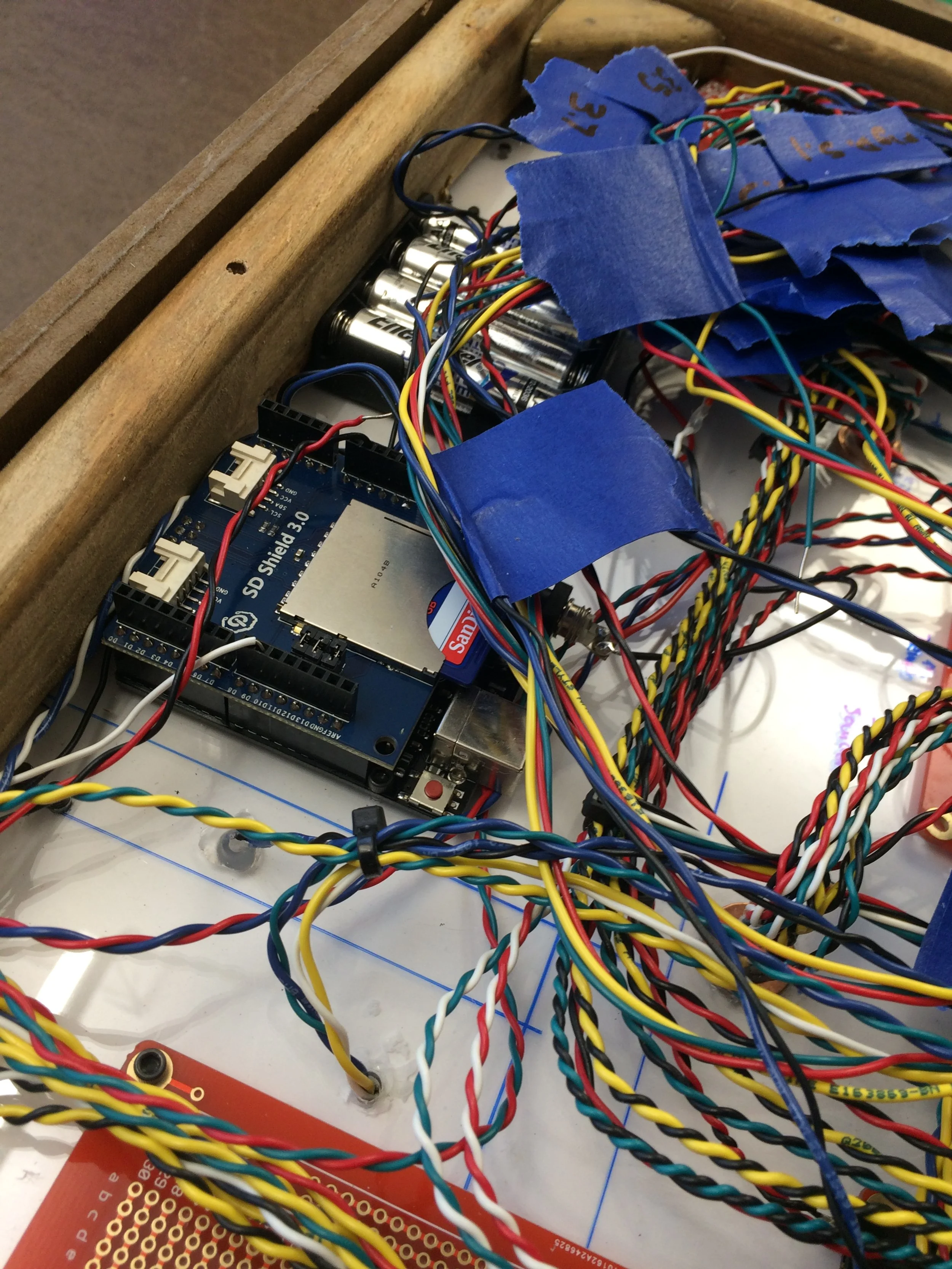
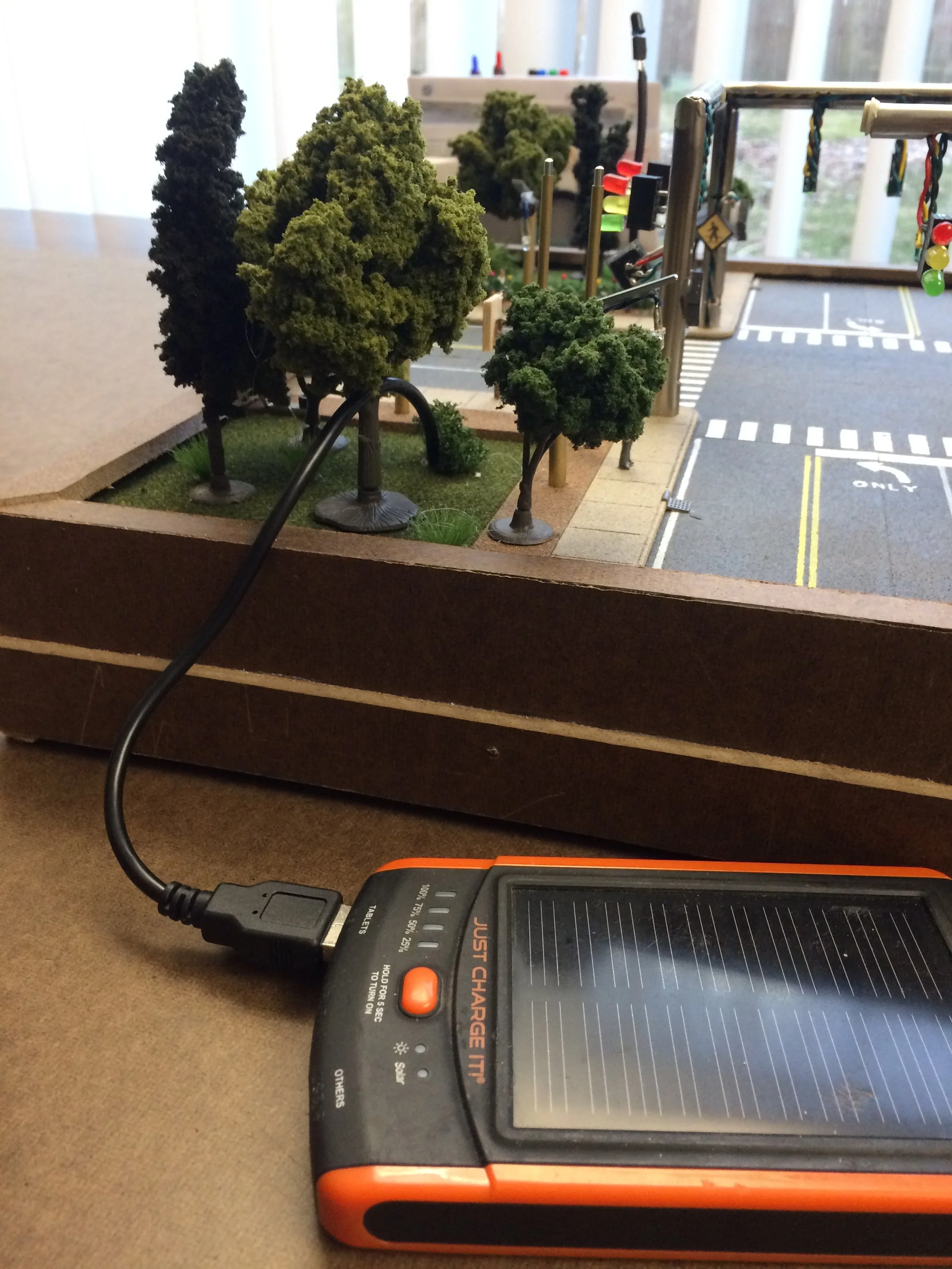
Created custom wiring harnesses and managed power distribution across microcontroller and auxiliary systems
Integrated an additional microcontroller-based audio system for ambient sound and interaction feedback
Mechanical & System Design:
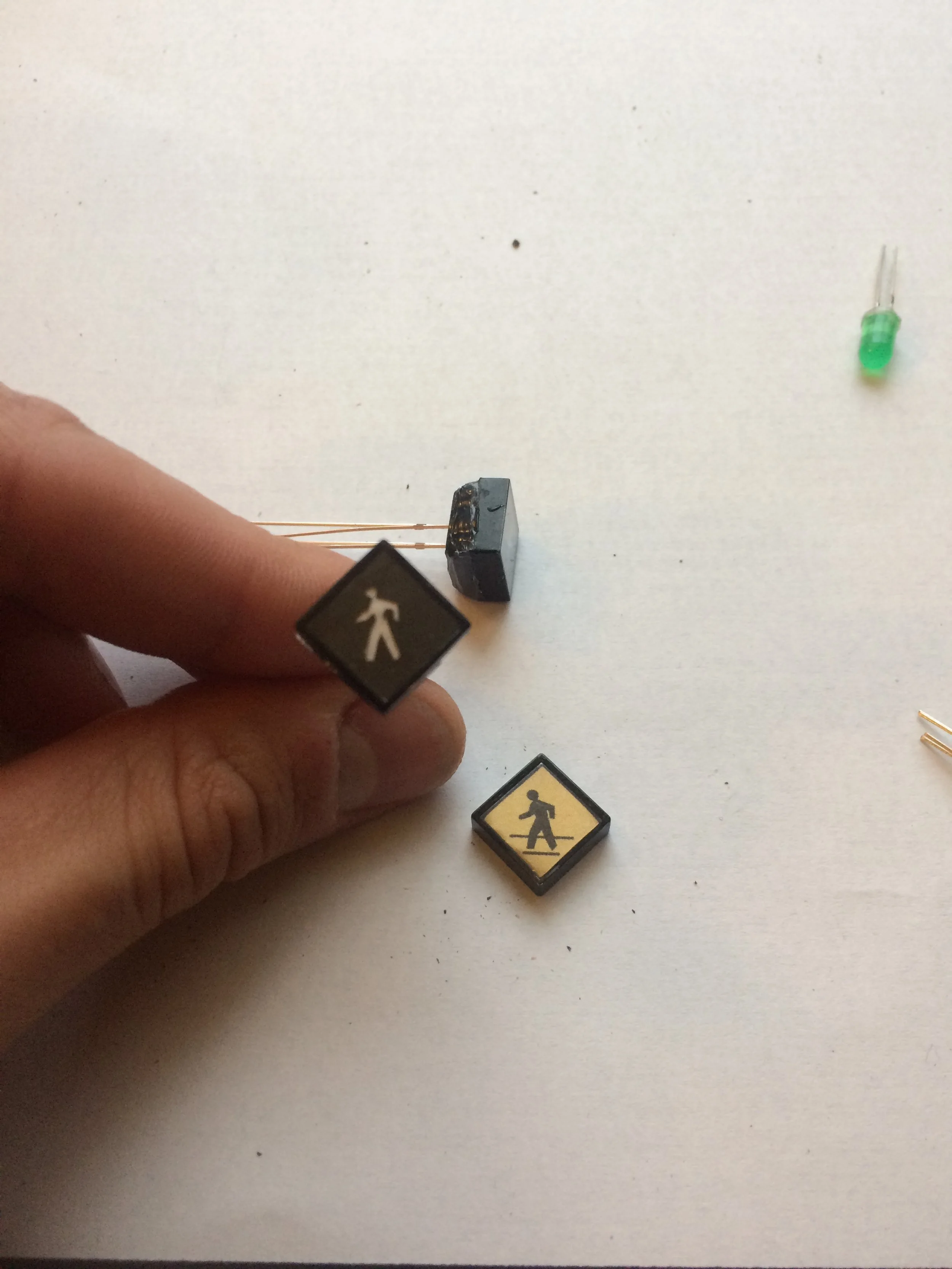
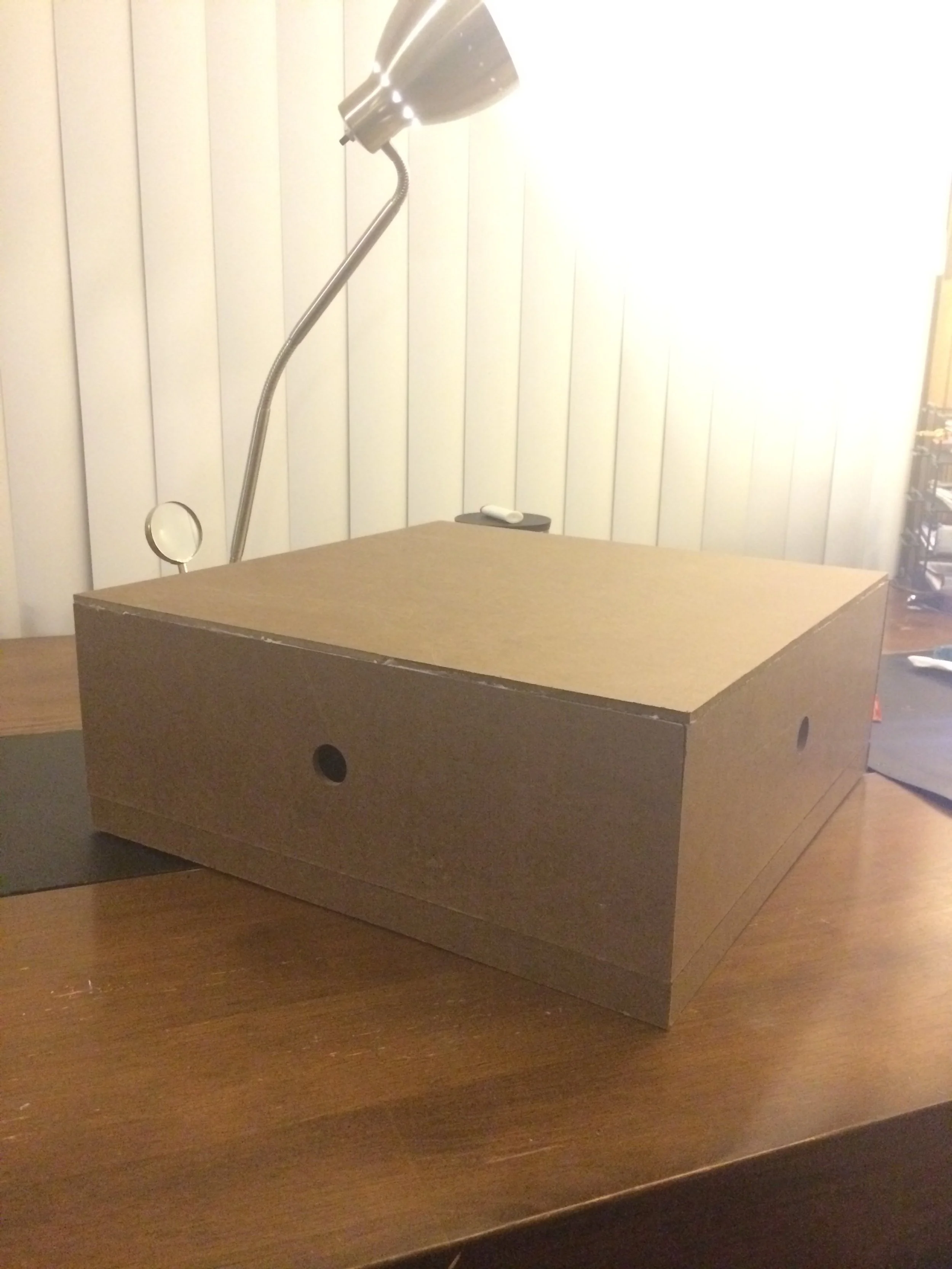
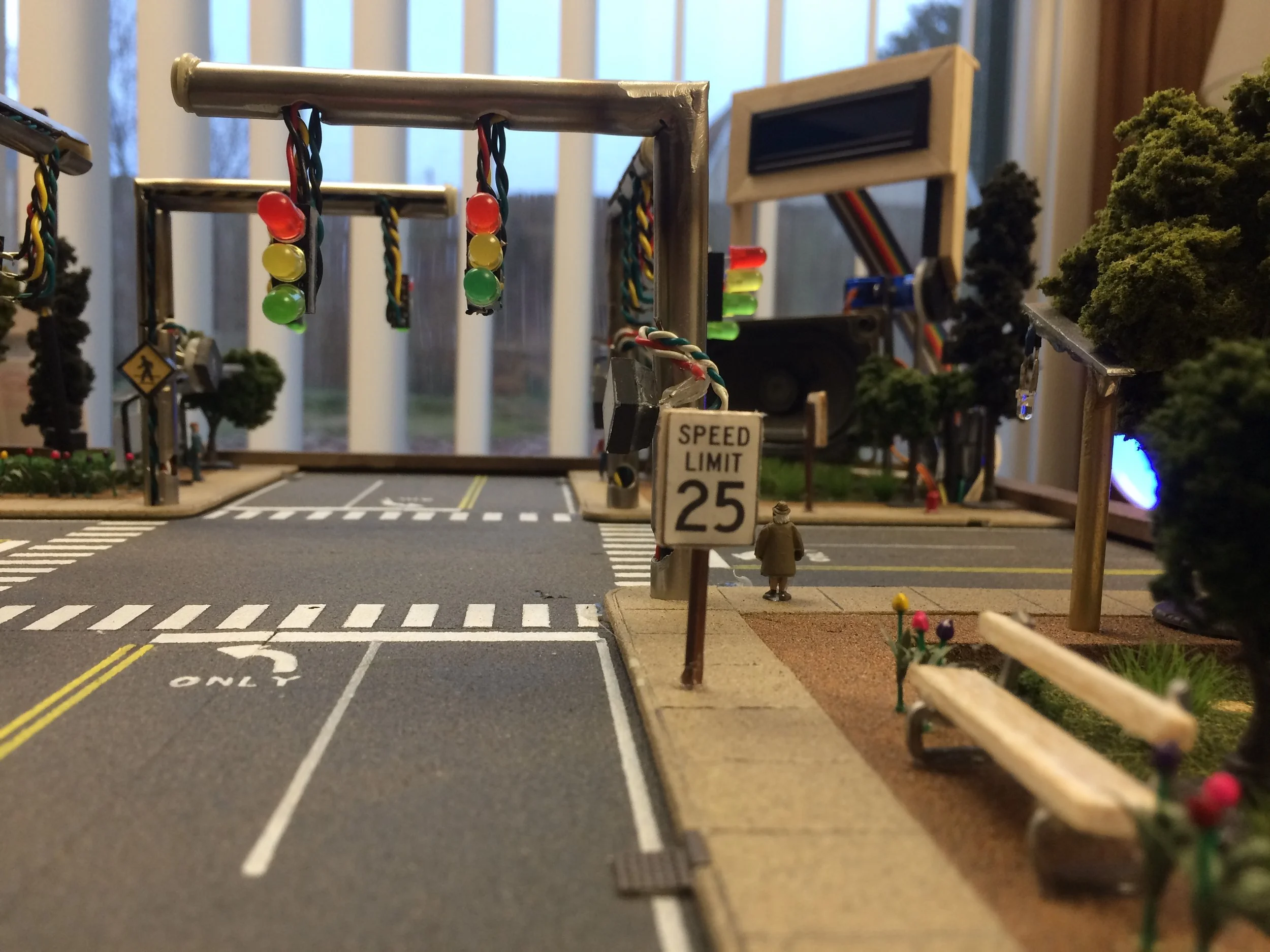
Designed and fabricated the physical intersection model, including structural layout and component placement
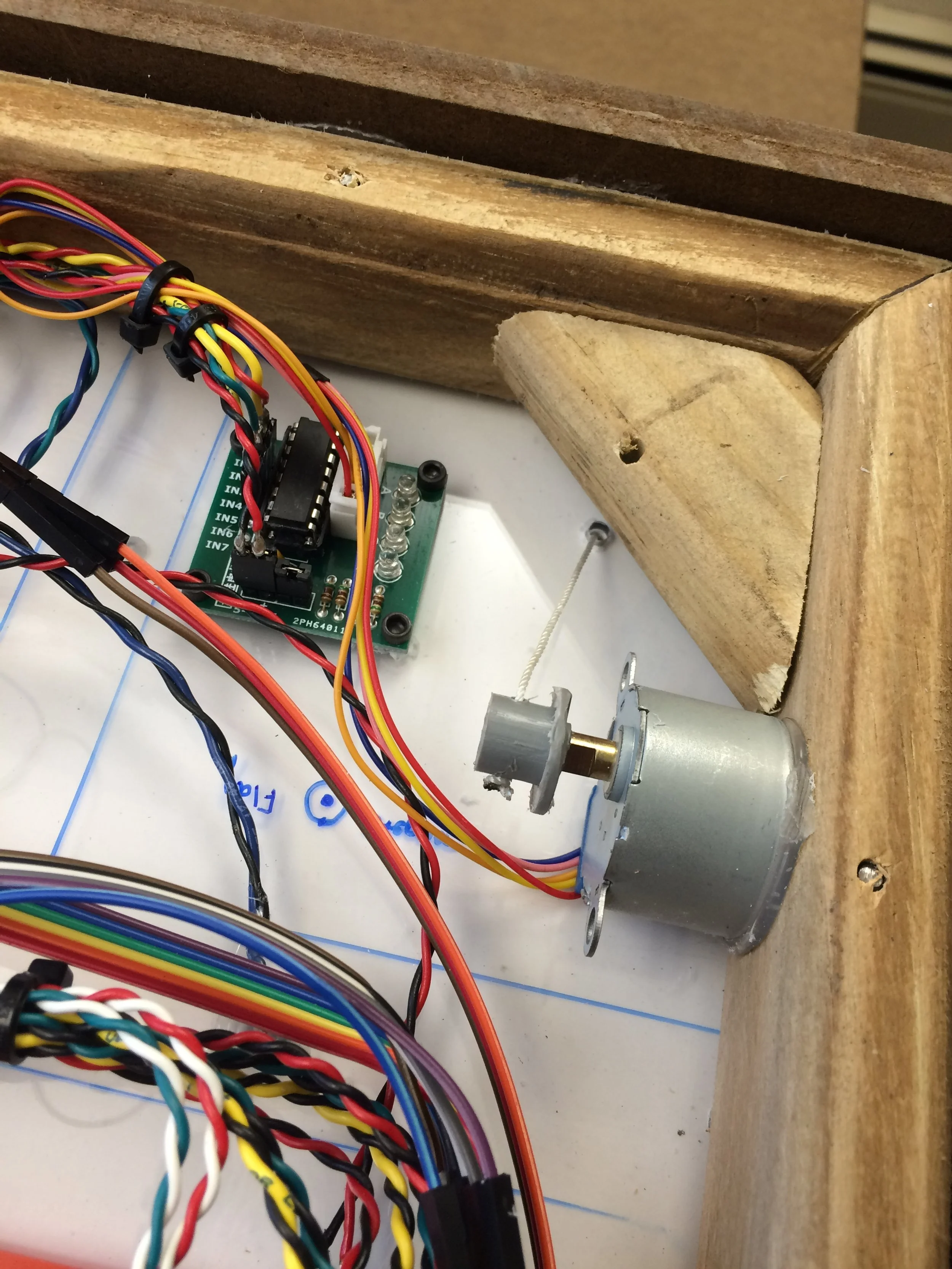
Built functional mechanisms including a servo-actuated display mount and a stepper-driven flag system
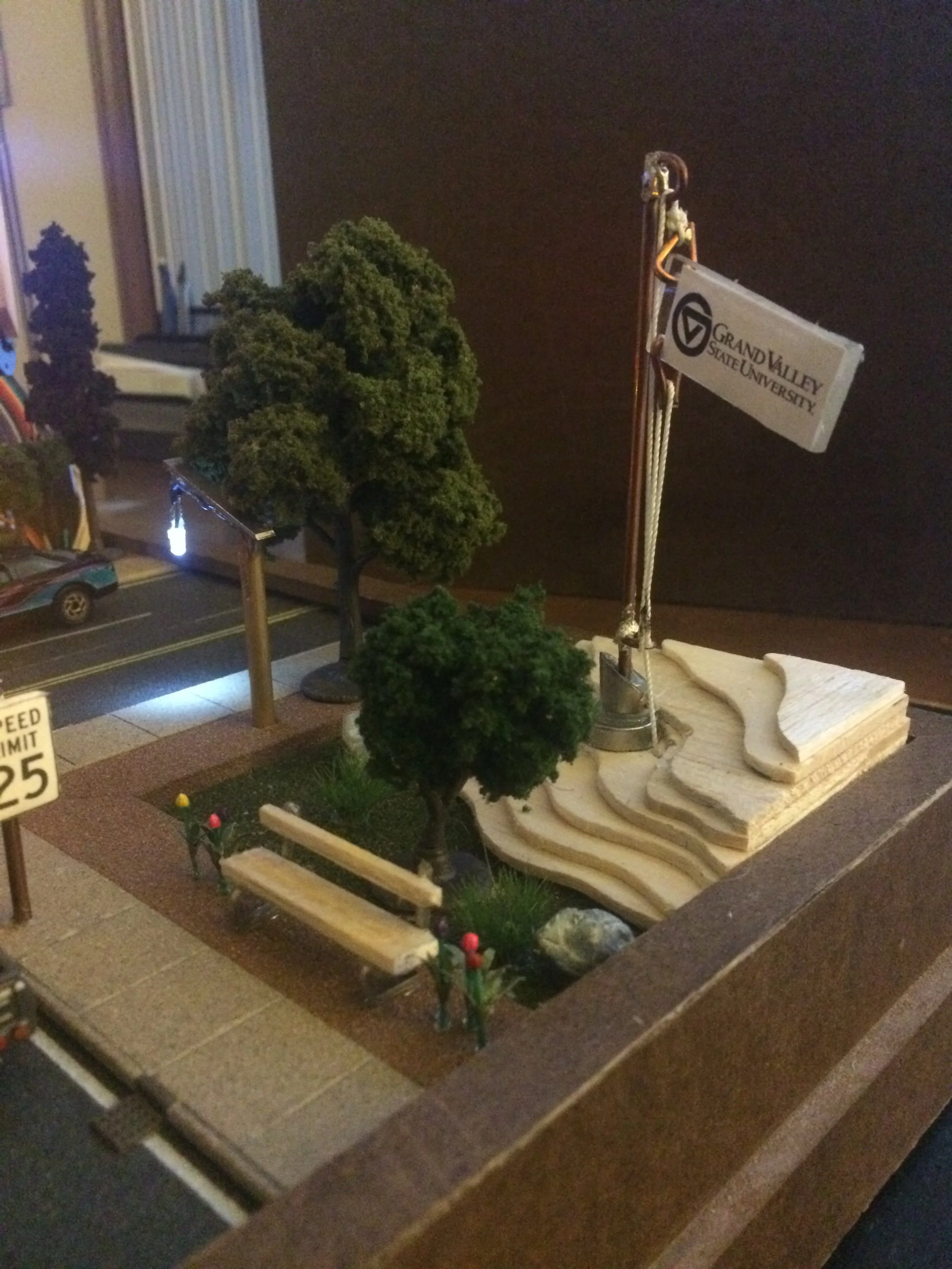
Constructed a detailed environment using custom materials and scaled components for realistic presentation
-
This project served as the culminating assignment for EGR 226: Introduction to Digital Systems, requiring the integration of core embedded system concepts including state machines, interrupts, timers, and hardware-level register control.
The objective was to design and implement a functional traffic intersection system capable of simulating real-world behavior, including coordinated signal timing, pedestrian interaction, and responsive event handling. The physical design, feature set, and level of system complexity were left open-ended, encouraging a fully integrated solution across software, electrical, and mechanical domains.
-
Challenges:
Managing the integration of multiple real-time subsystems within a single microcontroller environment required careful prioritization of resources and system architecture. Coordinating traffic sequencing, pedestrian interaction, and auxiliary features introduced increasing complexity, making it critical to maintain reliable system behavior while avoiding unnecessary feature overhead.
Additionally, designing for both functionality and user interaction required balancing embedded system performance with physical layout, visual clarity, and overall usability.
At the hardware level, implementing reliable driver circuits introduced challenges in both soldering and wiring practices. Early issues with heat management during soldering led to component degradation in semiconductors, requiring refinement of technique and improved process control. Wiring complexity also increased significantly during integration, where the use of solid-core wire proved difficult to manage in dense layouts and prone to fatigue at termination points, highlighting the importance of selecting appropriate materials for durability and maintainability.
Outcome:
The final system successfully integrated multiple hardware and software components into a cohesive, real-time interactive model. All core features operated reliably, including traffic control logic, pedestrian crosswalk timing, and event-driven responses.
The project was completed on schedule and selected for display at GVSU’s Engineering Project Day, where it received strong engagement for both its technical functionality and visual presentation.
Explore This Project
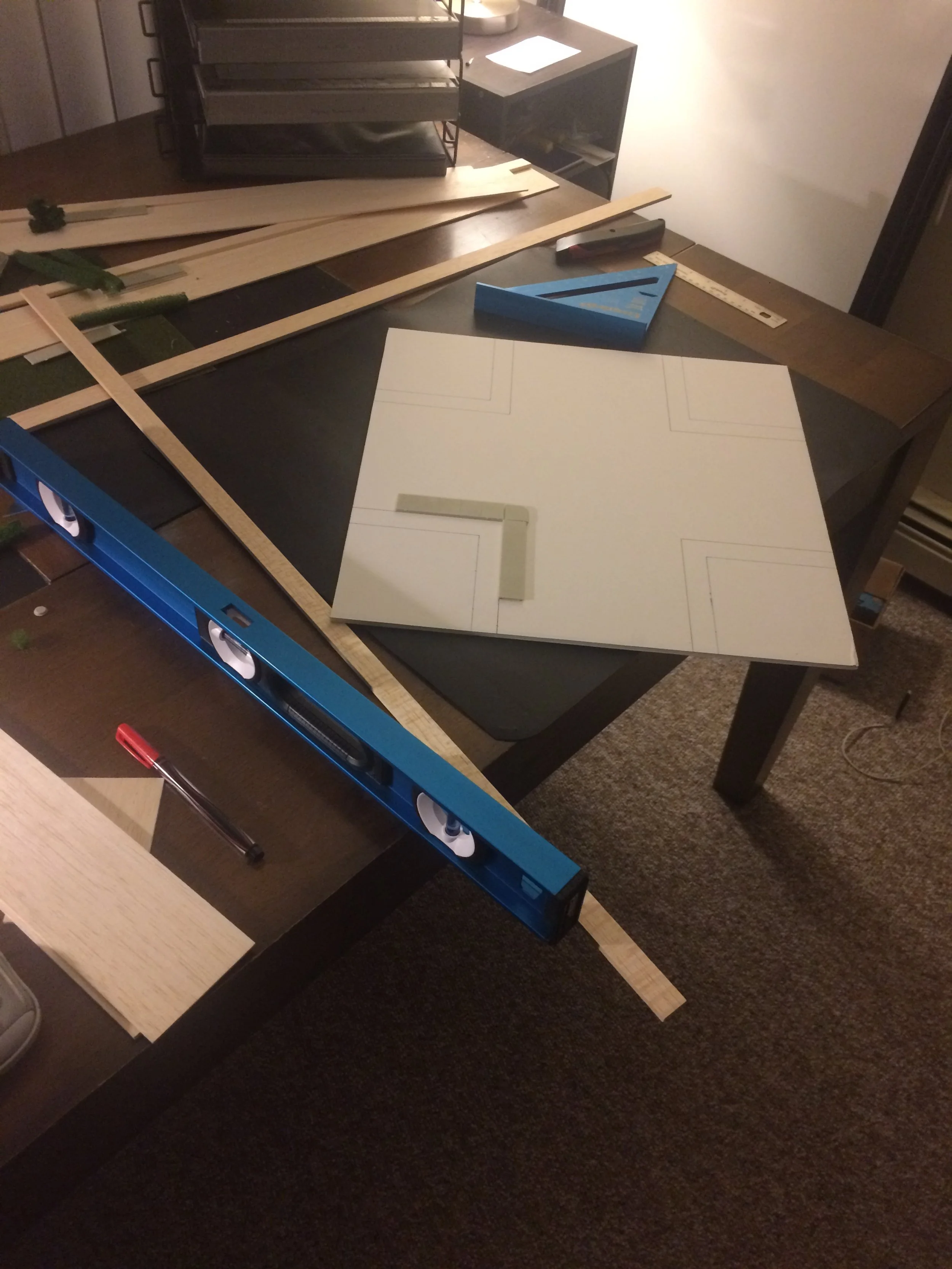
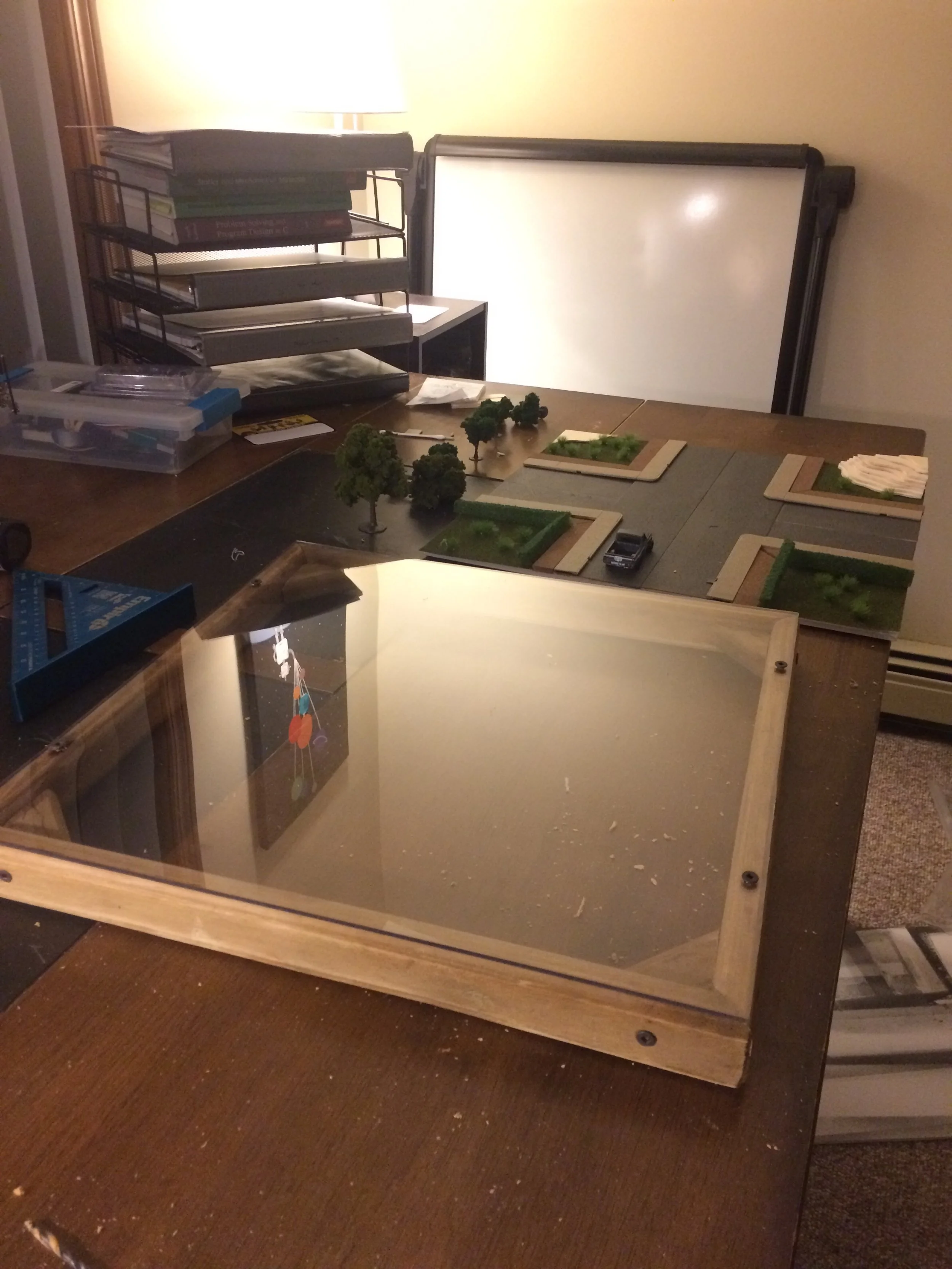
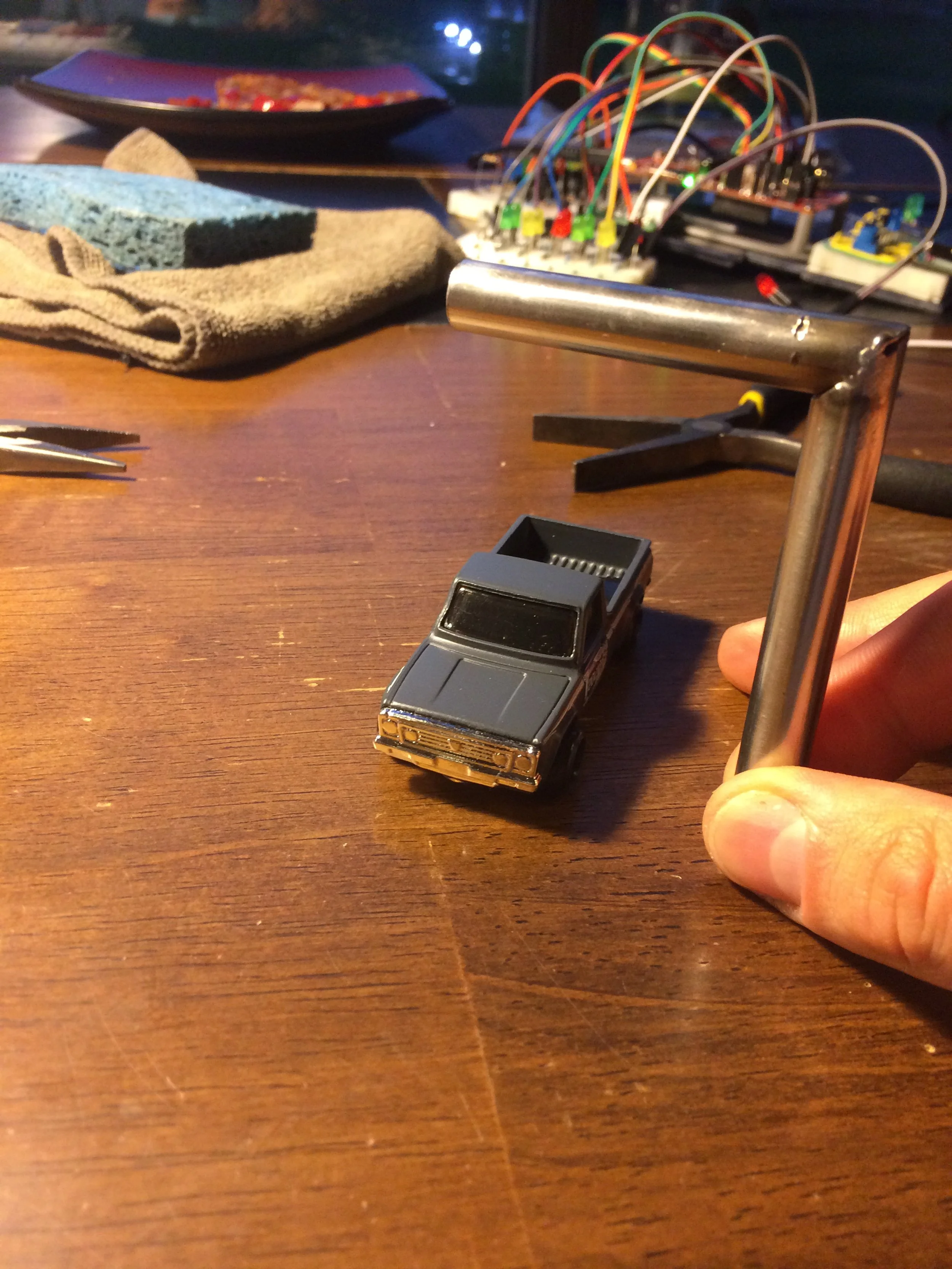
Build Progression
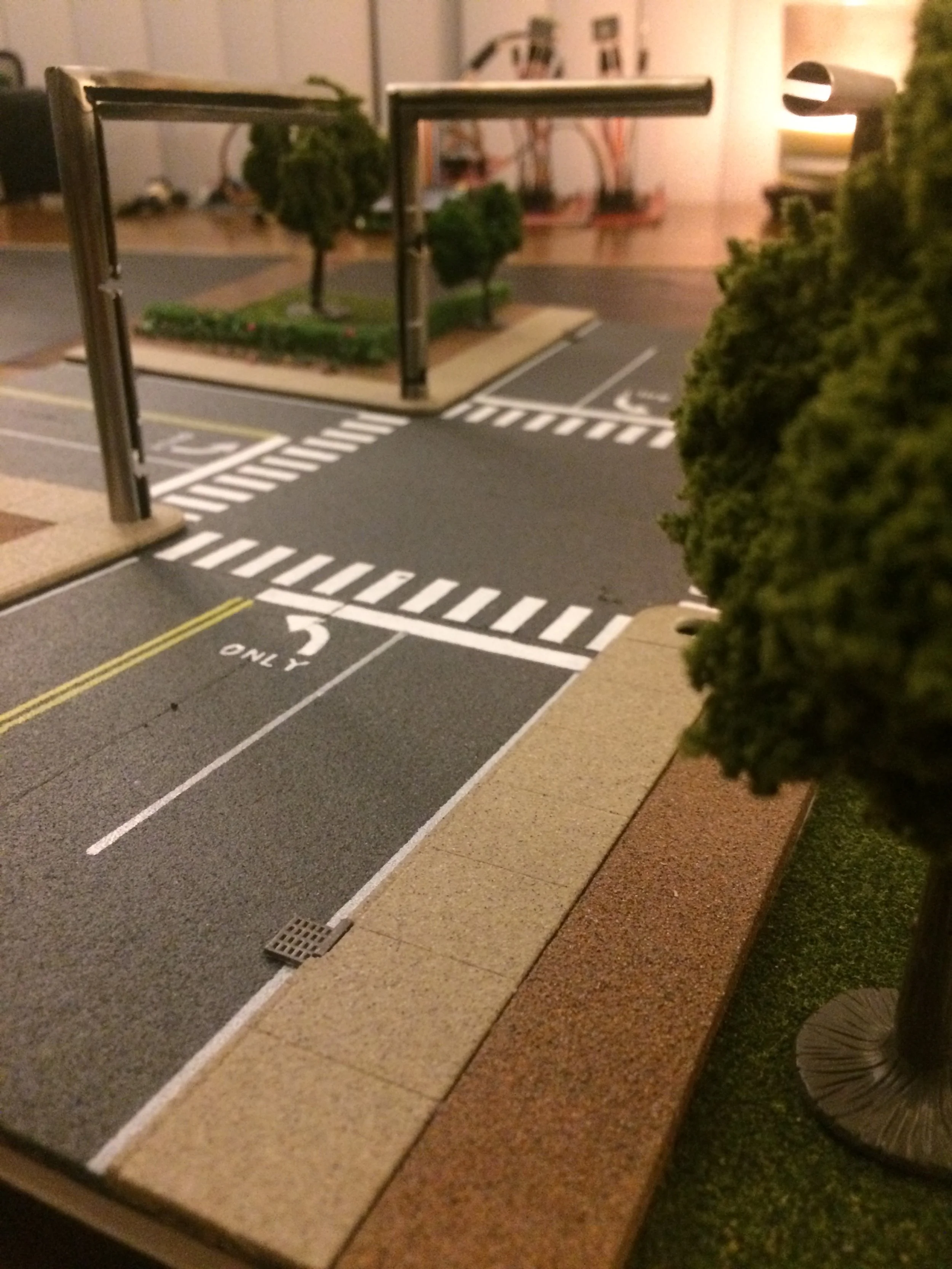
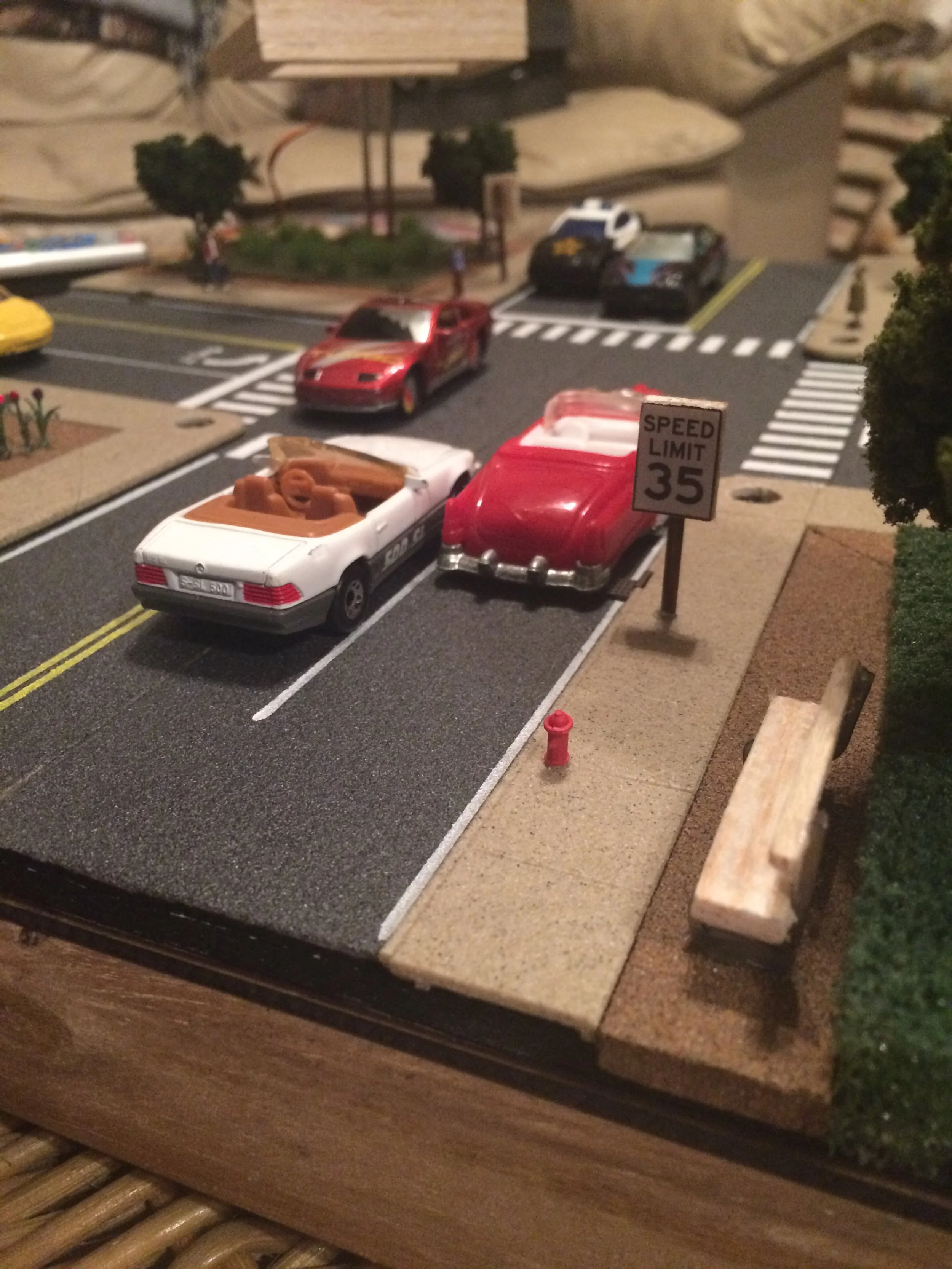
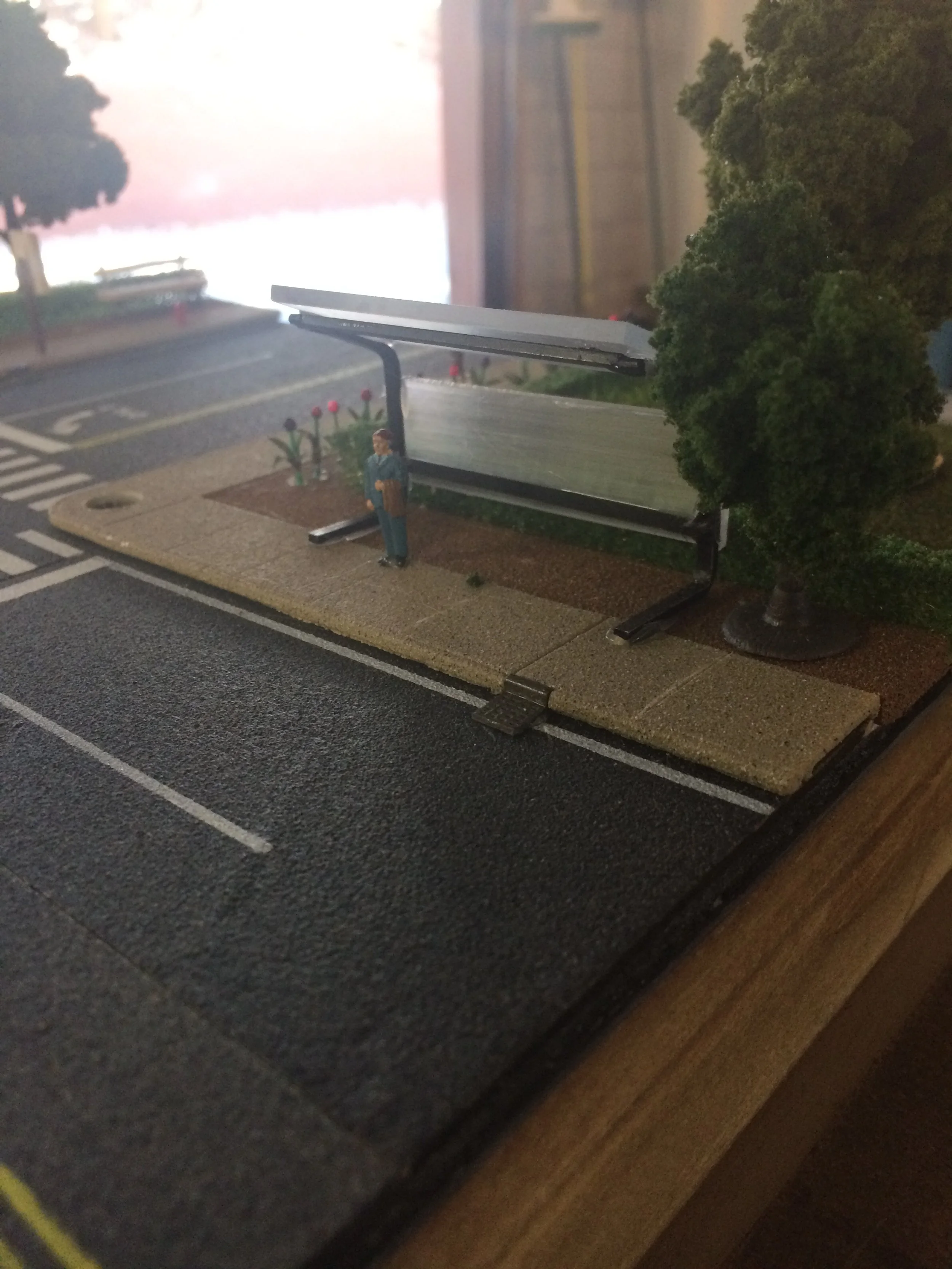
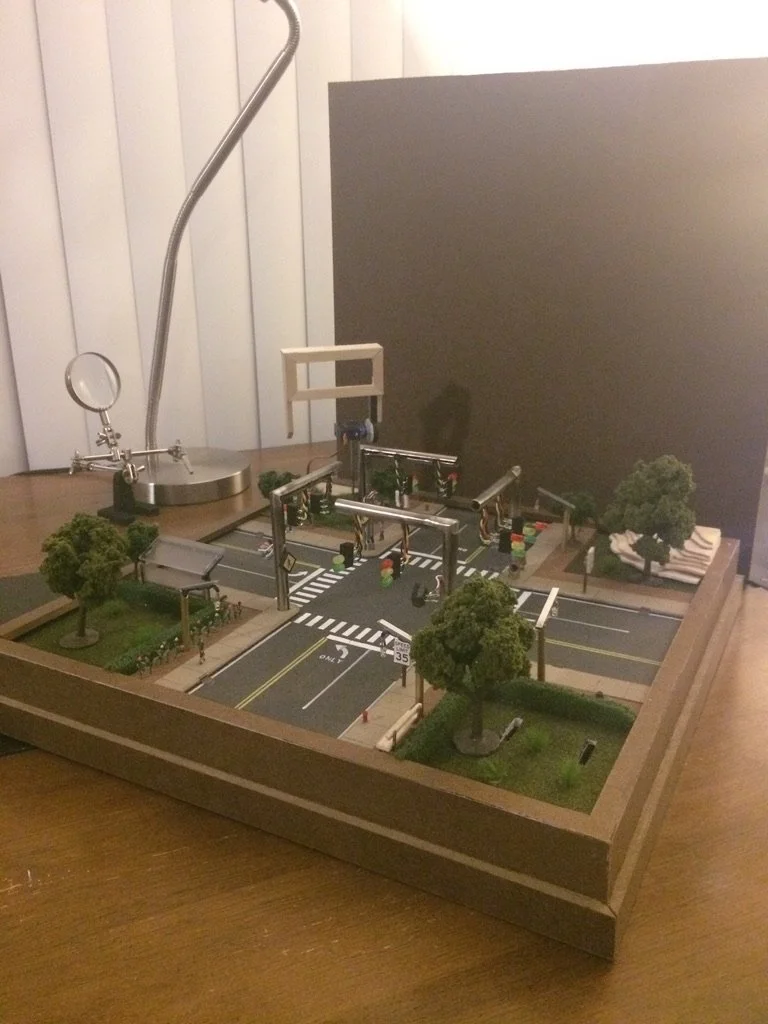
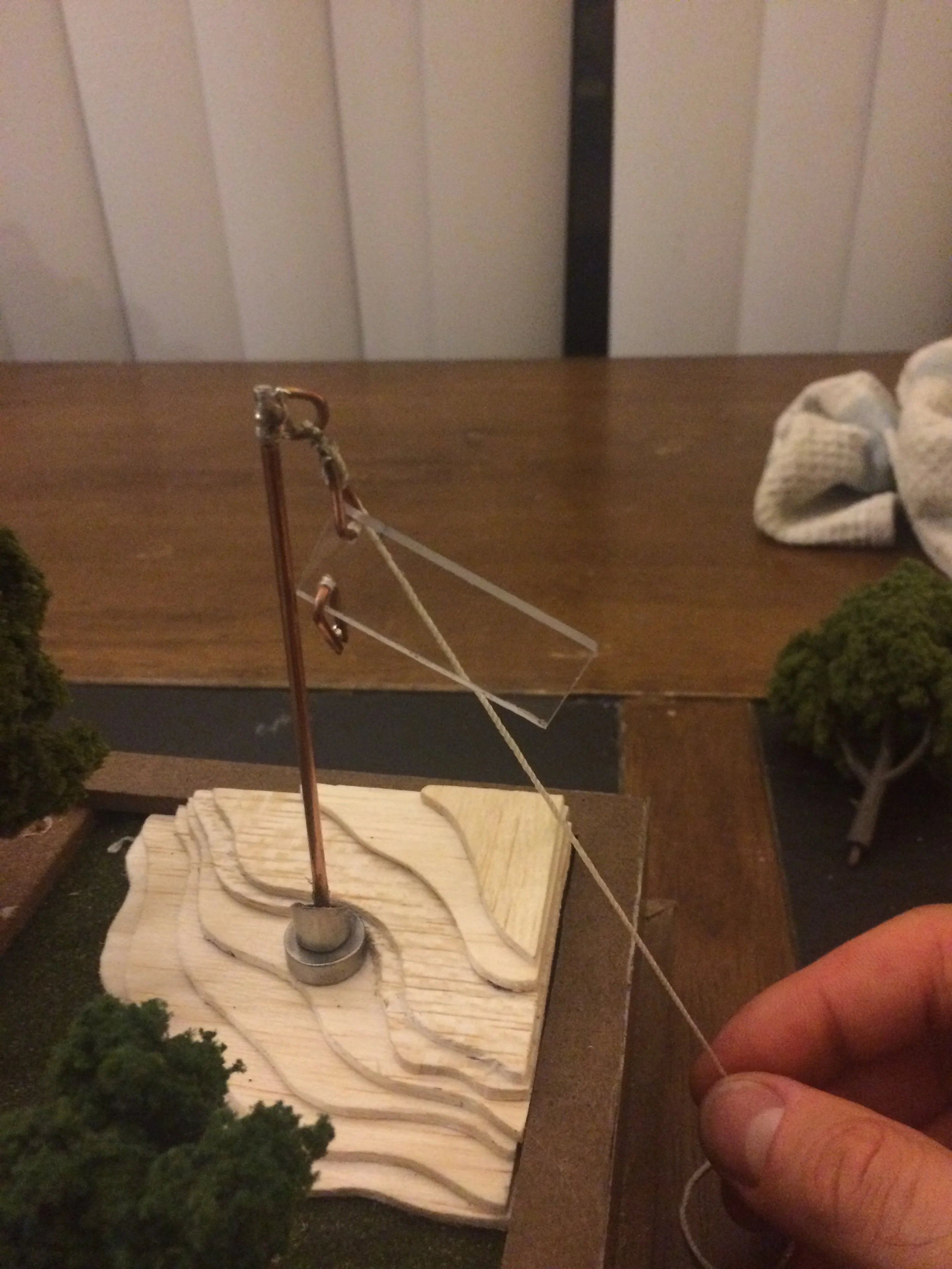
This section captures the iterative development of the project as it evolved from initial construction to a fully realized system. Rather than following a formal prototyping phase, the design was refined continuously through hands-on building, material selection, and real-time problem solving. As components were added and integrated, the overall vision became more defined, resulting in both functional and aesthetic improvements throughout the build.


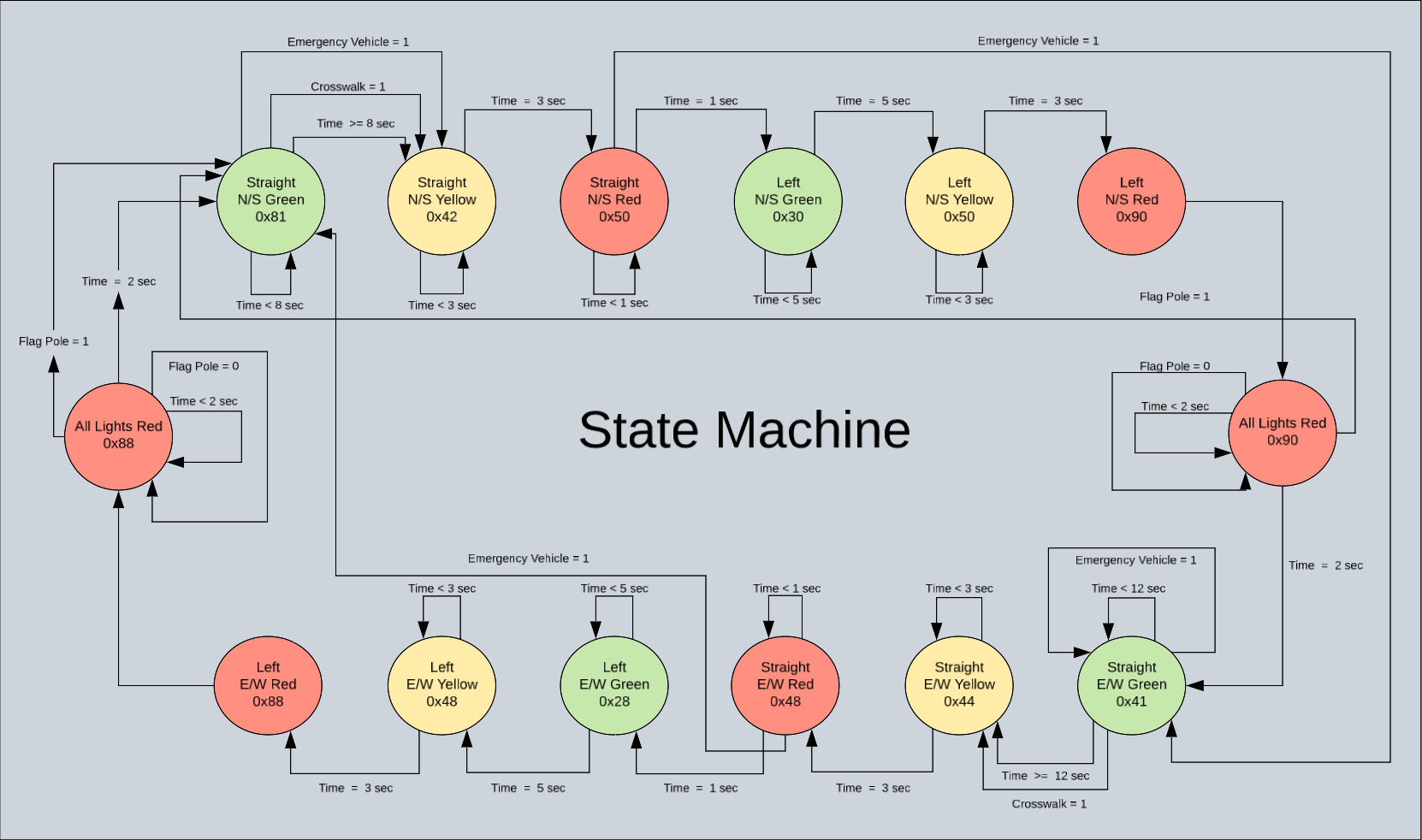
Software Design
The software was structured around a central state machine used to control traffic light sequencing and overall system behavior. An interrupt-driven architecture was implemented to handle real-time events such as pedestrian crosswalk requests, emergency vehicle detection, and user inputs for auxiliary features like the LCD display and flag mechanism. Interrupts were assigned priority levels, ensuring critical events—such as emergency vehicle detection—preempt lower-priority actions like crosswalk requests.


Hardware Design
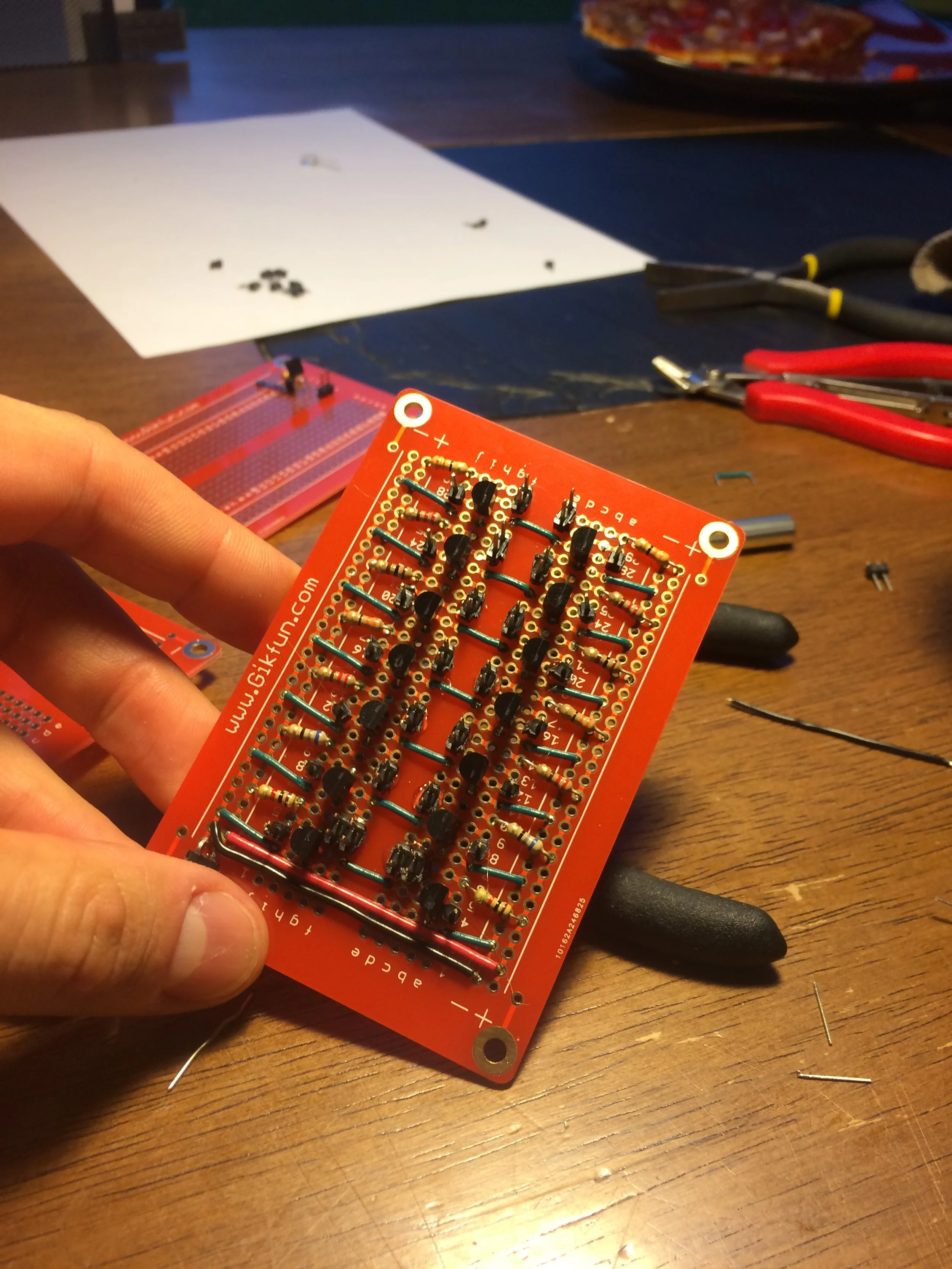
The hardware system was built using soldered protoboards to create dedicated driver circuits for each traffic light channel (red, yellow, and green). Each circuit utilized transistor-based switching controlled by the MSP432 to regulate LED operation through current-limited paths.
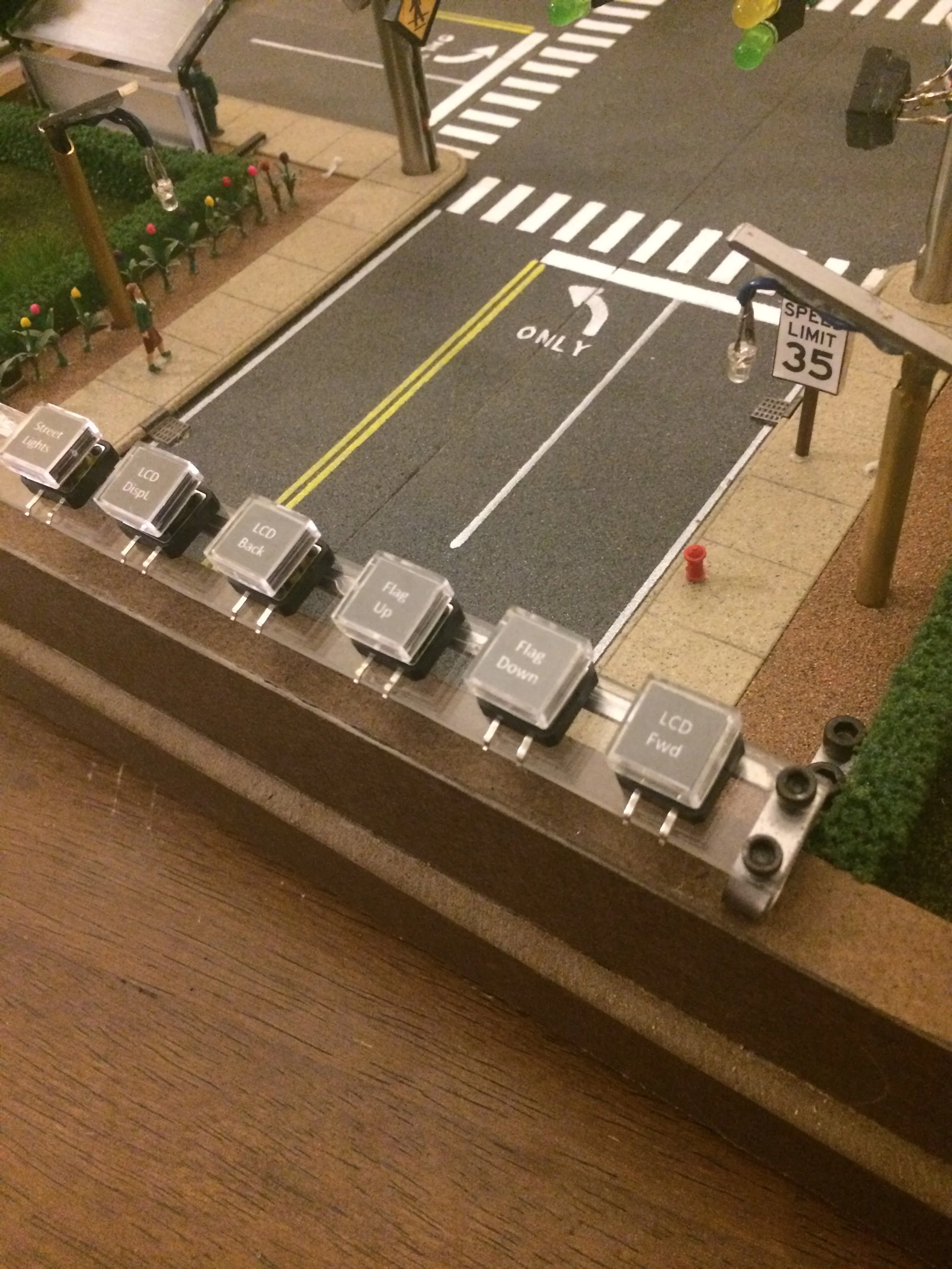
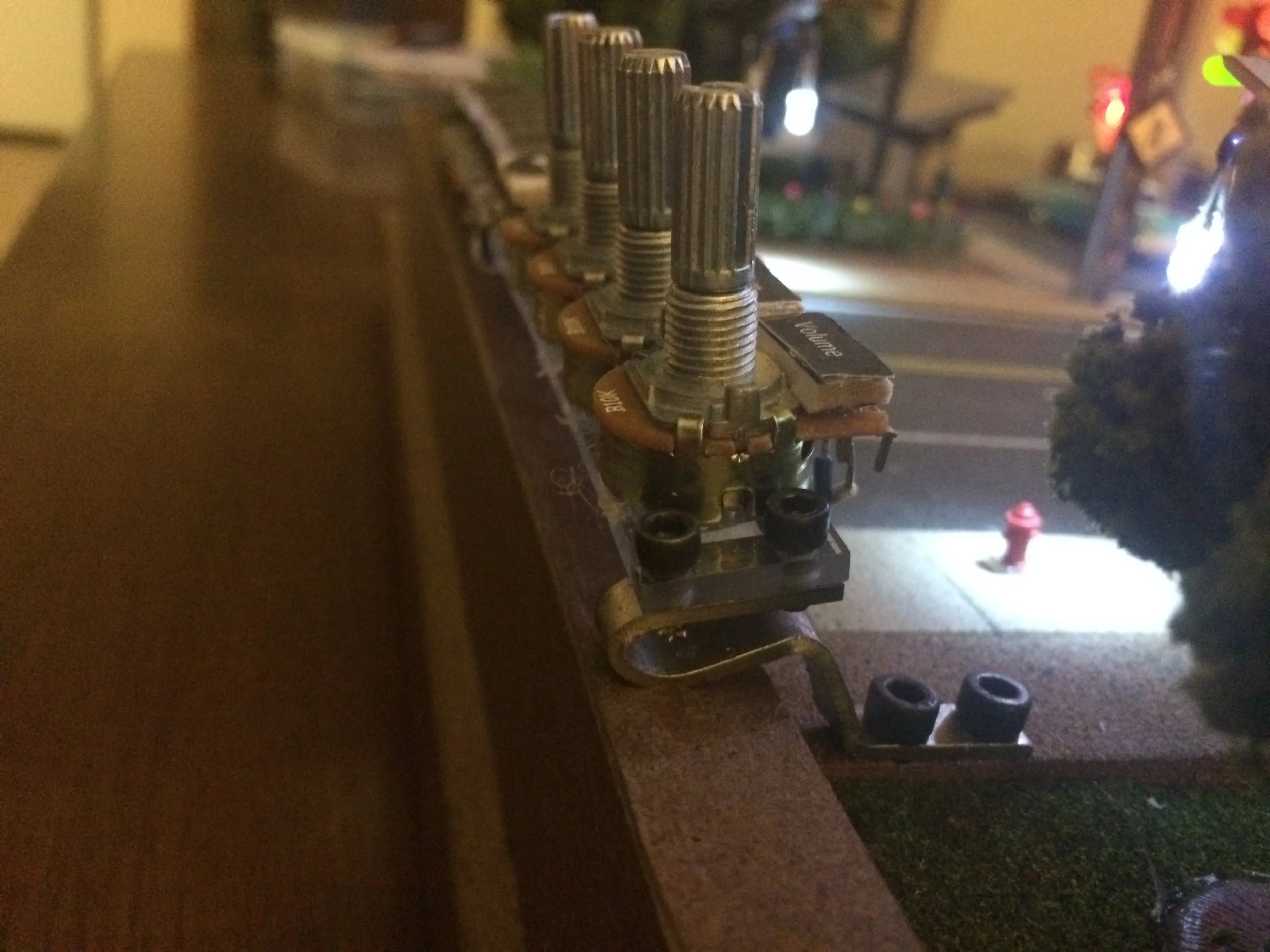
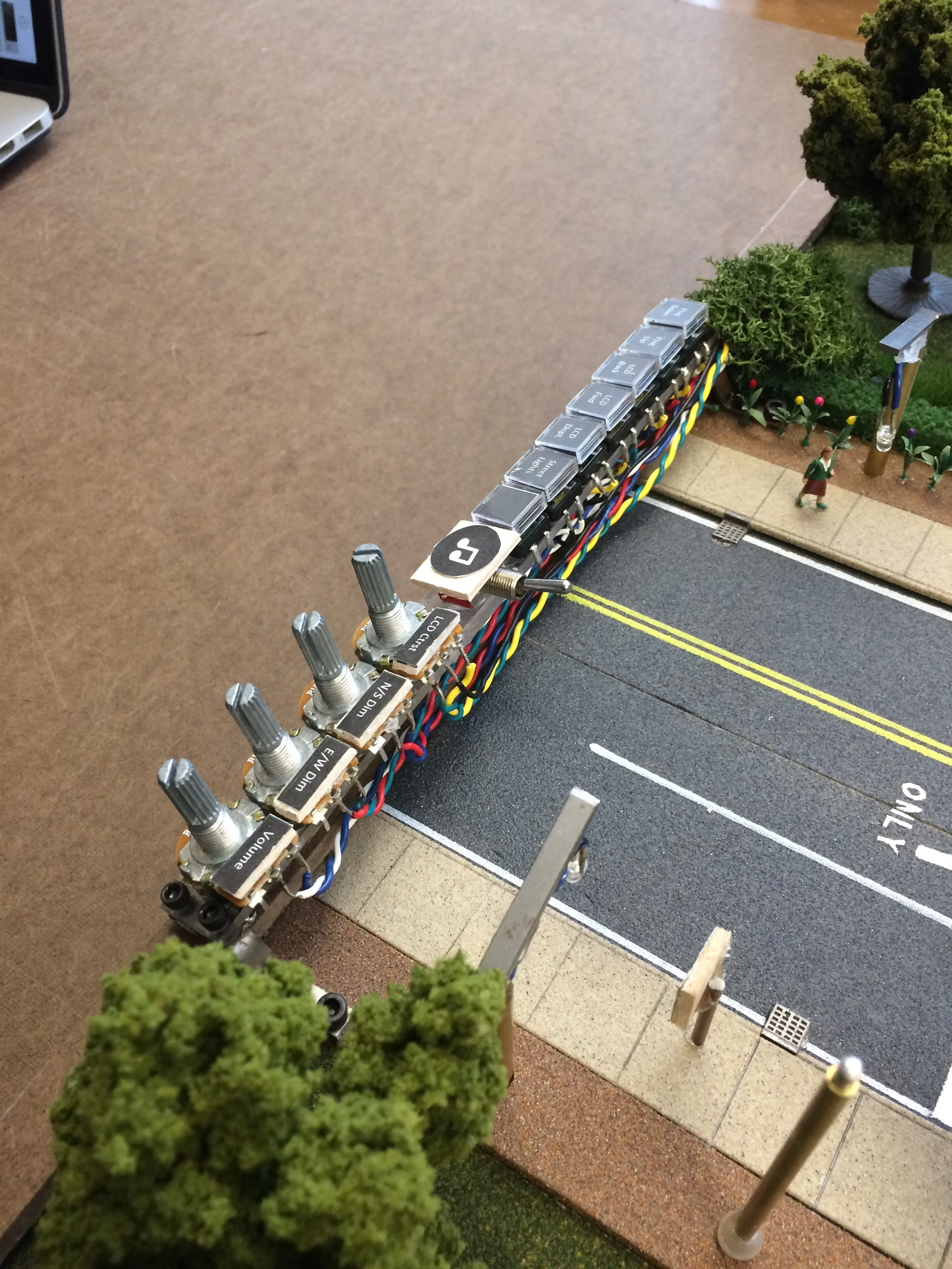
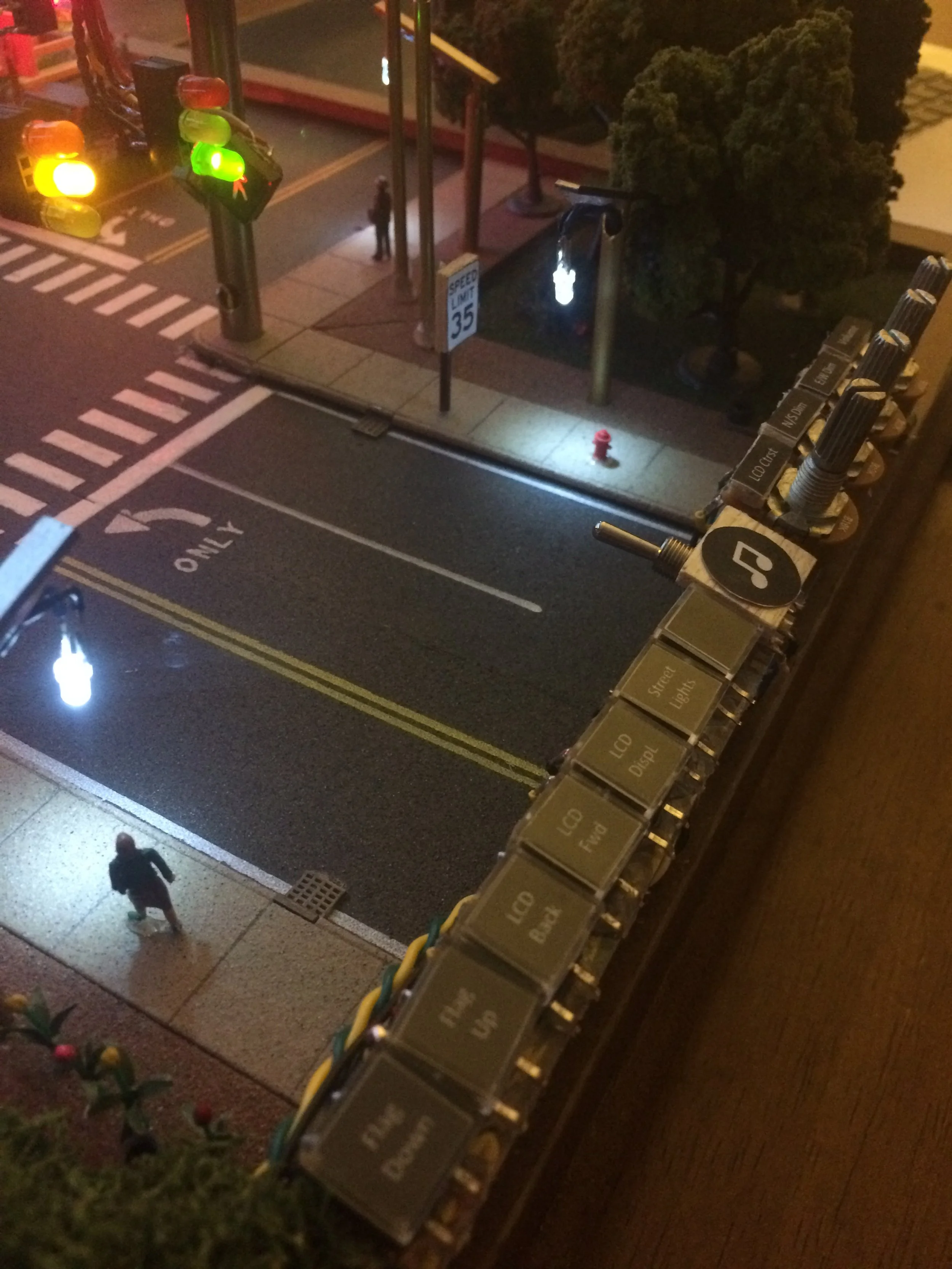
User interaction and system control were implemented through a front control panel consisting of switches, potentiometers, and auxiliary components, while the remaining sections document the wiring, signal routing, and physical integration of sensors, traffic lights, and display elements throughout the system.

Results
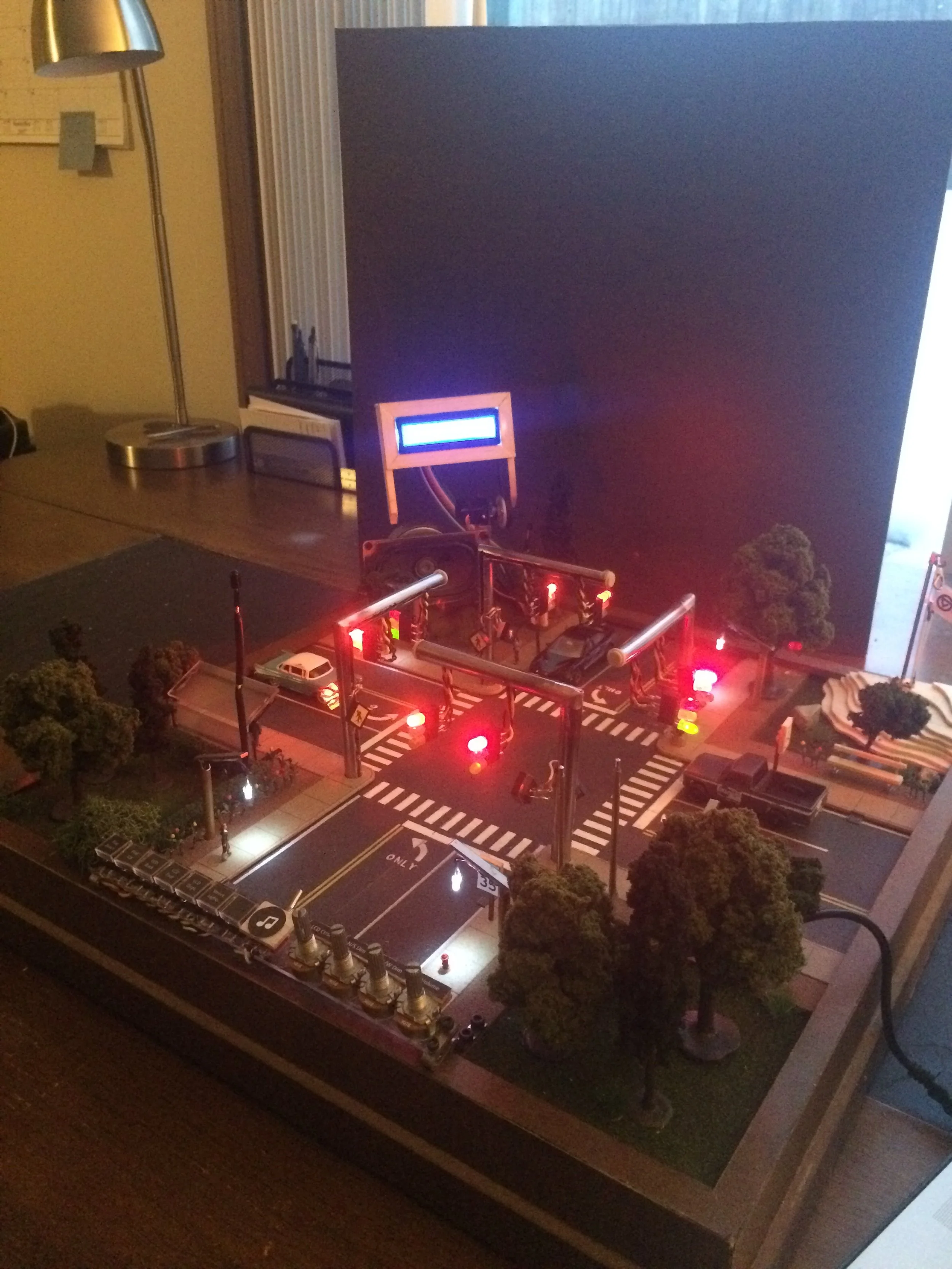
The completed system combined reliable real-time control with a highly detailed physical model, bringing the intersection to life both functionally and visually.
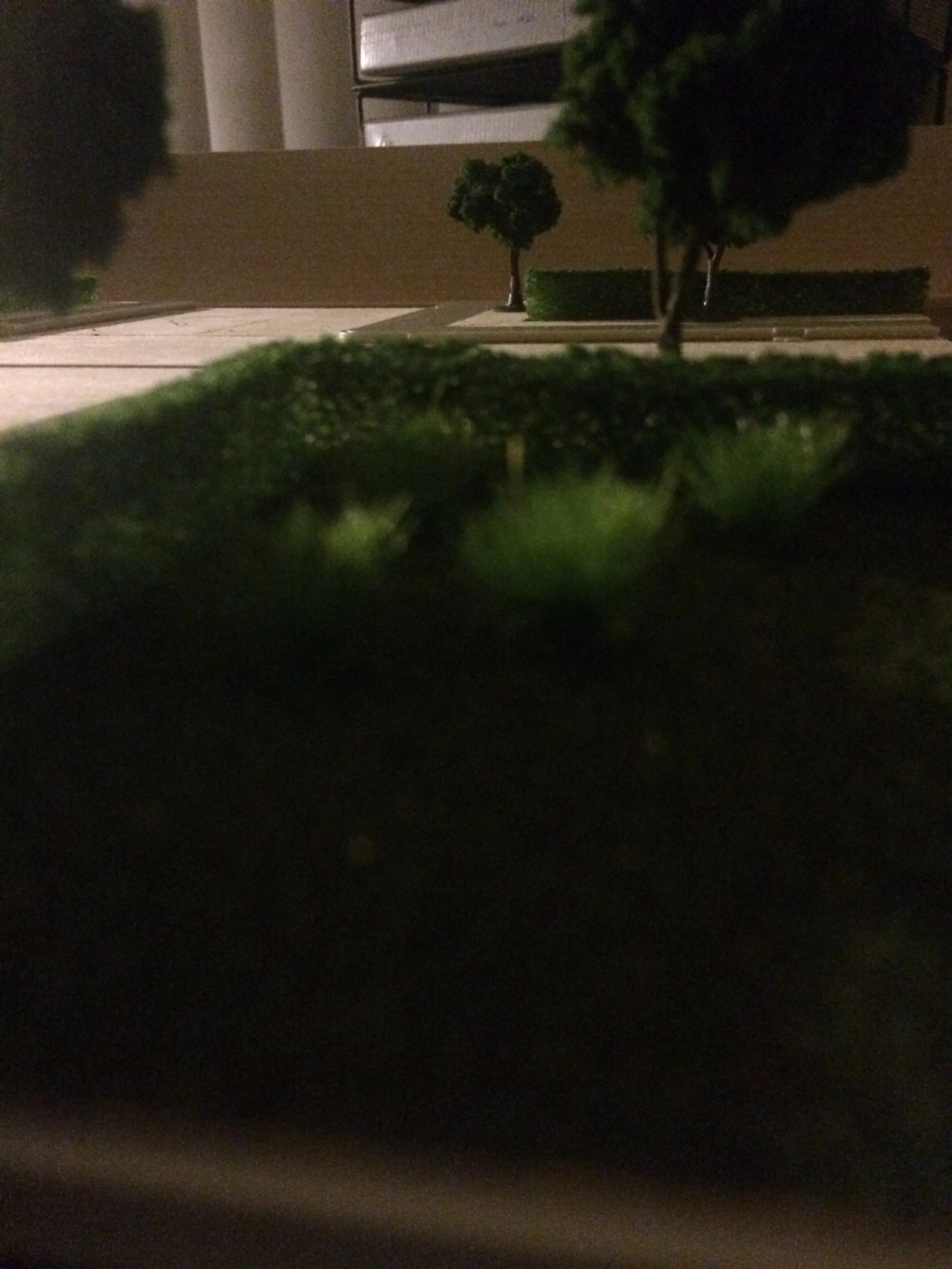
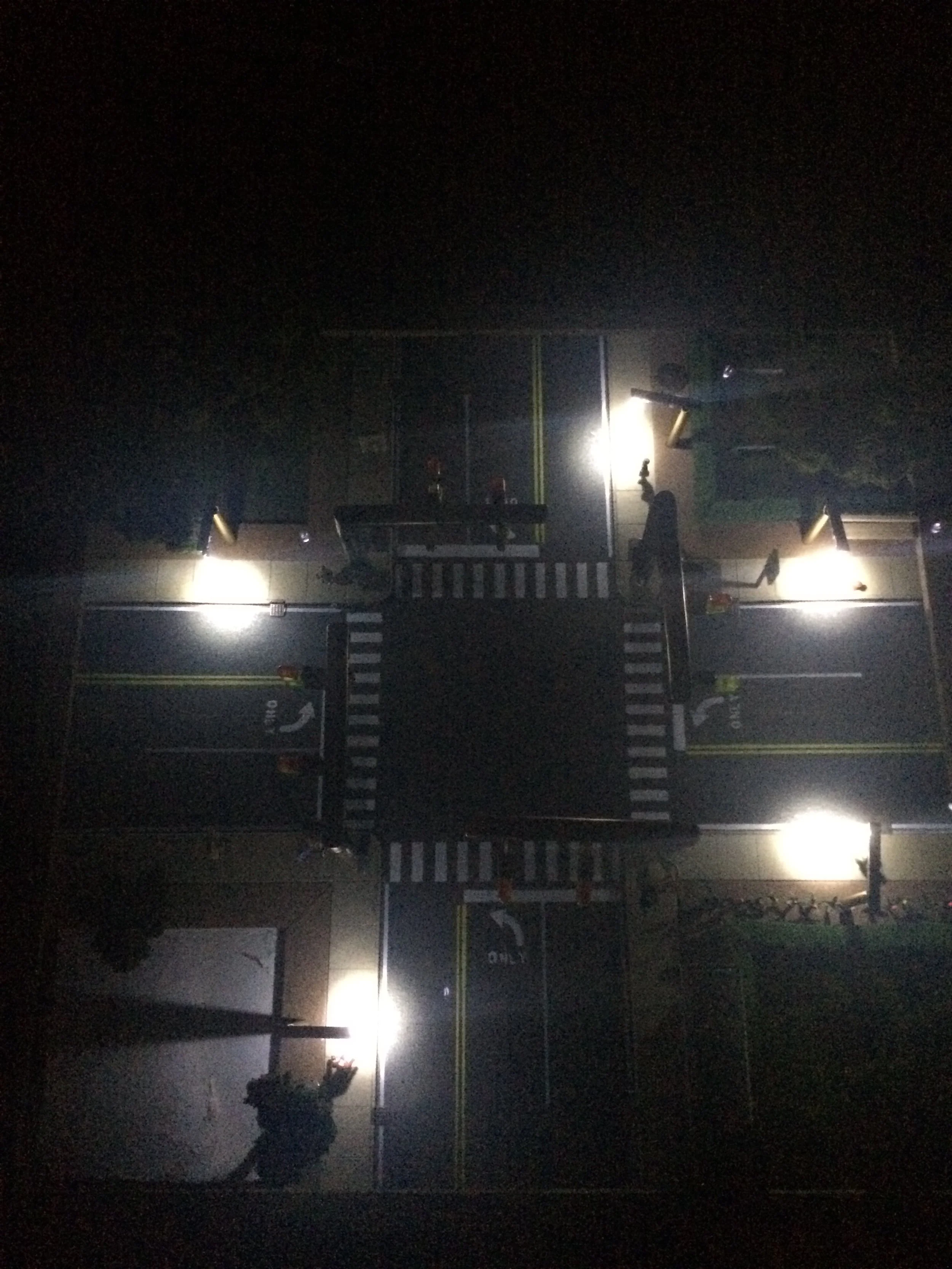
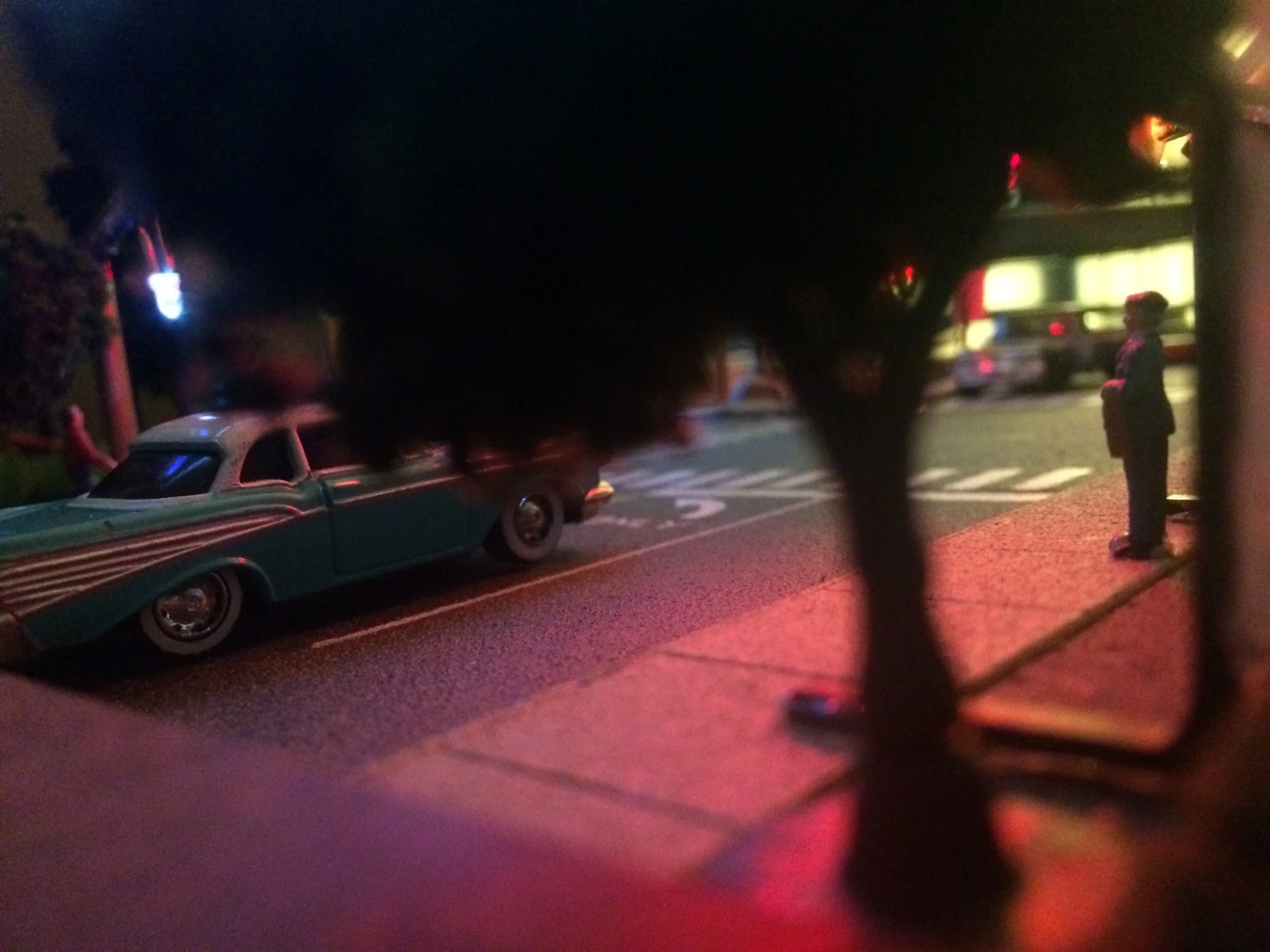
While the system performed as intended, the level of detail ultimately set the project apart—especially in low-light conditions, where lighting, materials, and scale elements created a surprisingly realistic and immersive scene.



Videos
Watch on YouTube
Short Demo