RFID-Based Identification System
Aug 2020 - Dec 2020

Overview
A portable RFID-based tracking system developed on an Arduino platform, designed to read, write, and manage passive RFID tags. Inspired by commercial RFID inventory systems, this project explores a novel application for locating lost disc golf discs.
-
Software:
Developed a state machine-driven UI for tag registration, scanning, and editing
Implemented RFID read/write communication using embedded protocols
Integrated I2C and SPI peripherals within a single microcontroller system
Optimized memory usage by modifying vendor libraries to resolve flash/RAM limits
Designed a menu-driven GUI using LCD and multi-input controls
System / Integration:
Integrated multiple hardware modules into a cohesive handheld system
Resolved resource conflicts and communication constraints across shared interfaces
Documented findings through a technical forum contribution
Hardware:
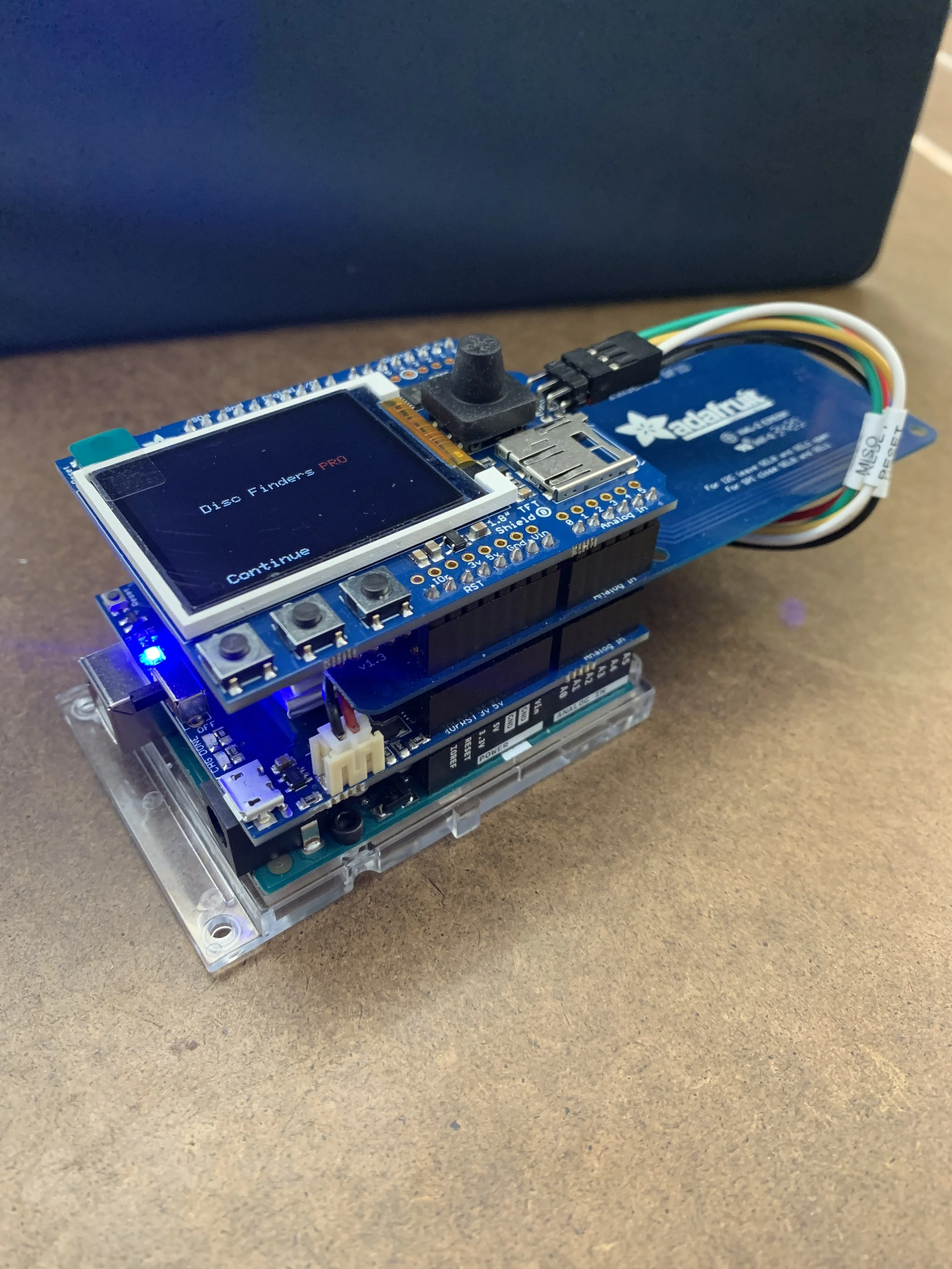
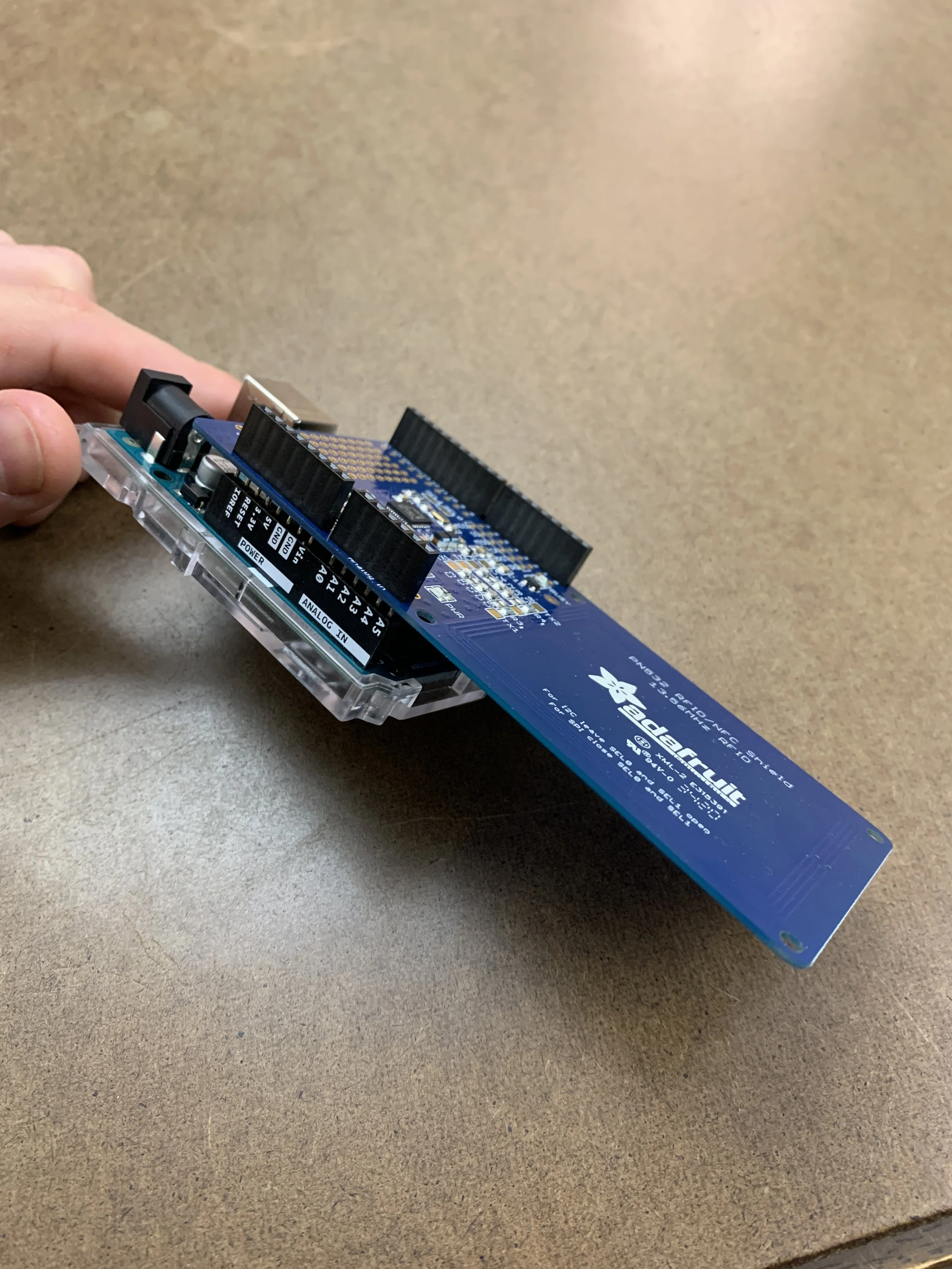
Assembled stacked shield configuration for a portable embedded device
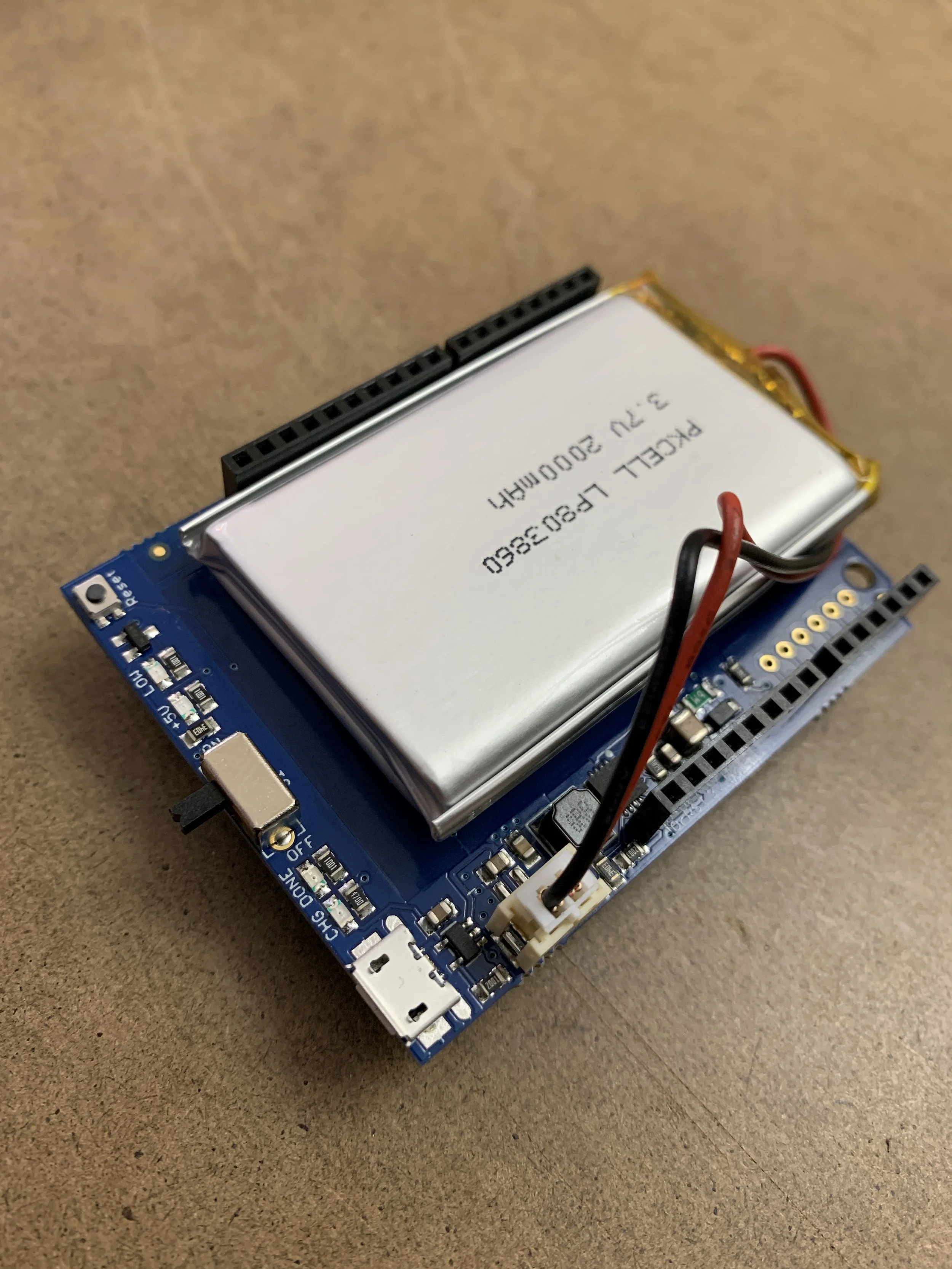
Implemented power distribution and signal routing for stable operation
-
This was a semester-long software engineering project focused on designing and delivering a complete, user-facing system from concept to implementation. Students were given flexibility to define their own problem space and system architecture, requiring independent decision-making across both software and hardware design.
For this project, I explored a novel application of RFID technology by developing a handheld system capable of reading, writing, and managing tagged objects, inspired by real-world inventory tracking systems.
-
Challenges:
Integrating multiple hardware modules within the limited resources of the Arduino platform required careful management of shared interfaces and library dependencies.
Additionally, combining multiple vendor libraries introduced memory constraints that led to instability, requiring selective modification of library code to reduce footprint and maintain reliable operation.
Outcome:
The final system successfully integrated RFID communication, a multi-screen user interface, and multiple peripheral interfaces into a cohesive handheld device. All core features—including tag registration, scanning, and data management—operated reliably.
This project demonstrated the feasibility of combining RFID technology with portable embedded systems and reinforced practical skills in system integration, resource optimization, and real-world problem solving.
Explore This Project
Software Design
The software was structured around a state machine architecture to manage user interaction and system behavior across multiple modes, including tag registration, scanning, and data editing. Button and joystick inputs drive state transitions, enabling a responsive and intuitive user interface.
RFID functionality was implemented through module configuration, authentication, and block-level read/write operations, with validation handling to ensure reliable communication. The system integrates multiple communication interfaces and libraries to coordinate user input, display output, and RFID transactions within a single microcontroller environment.


Hardware Design
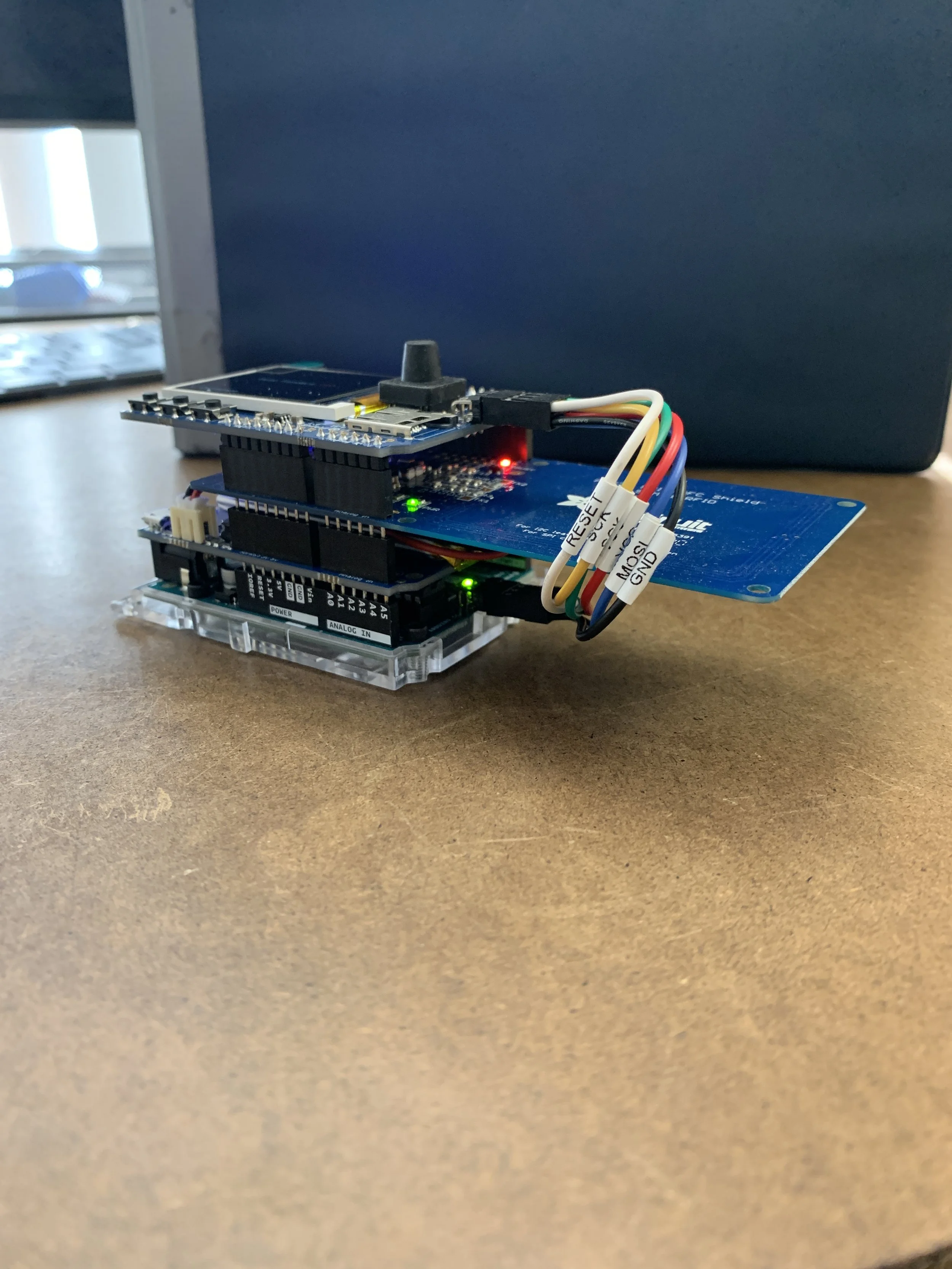
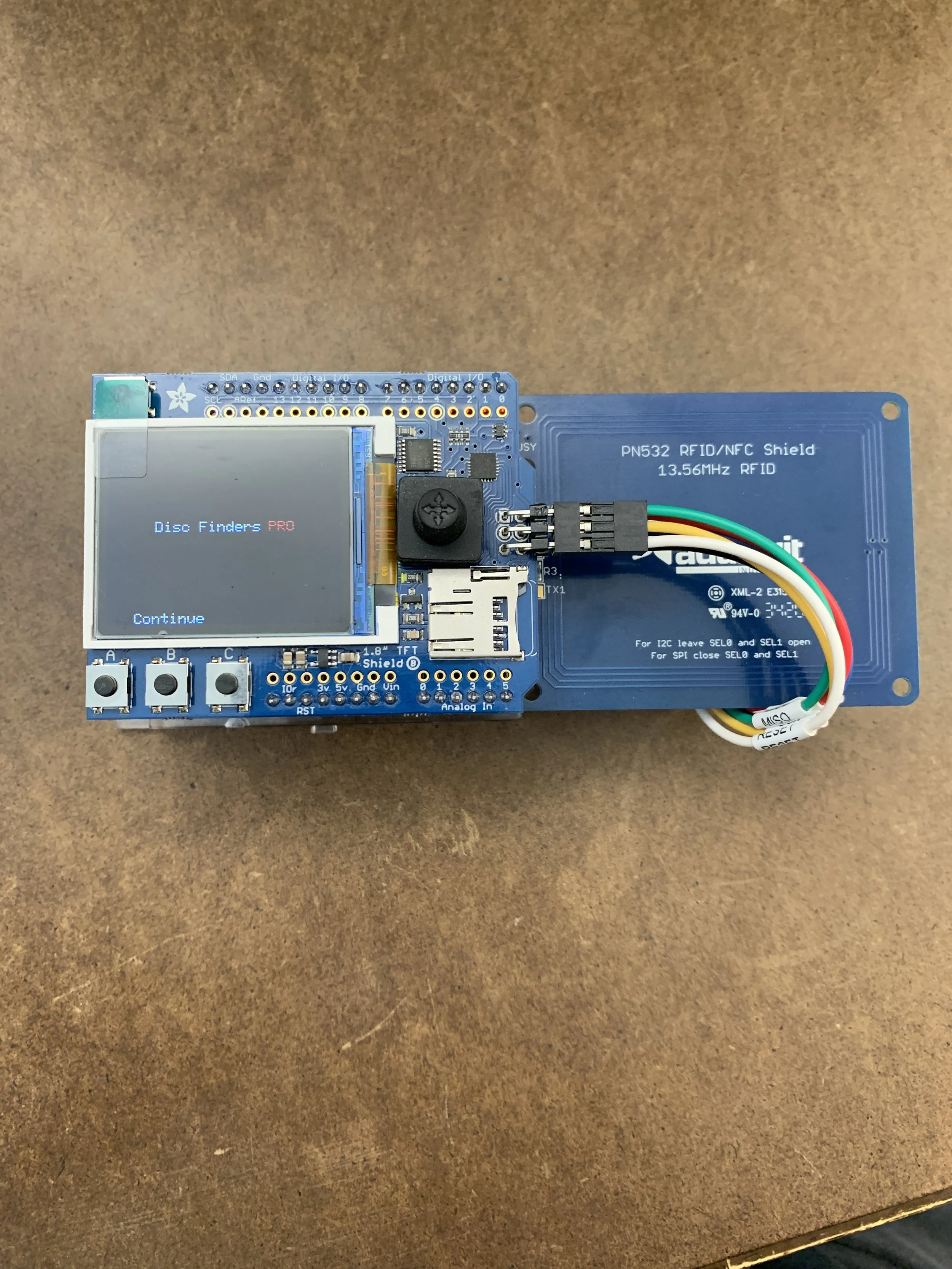
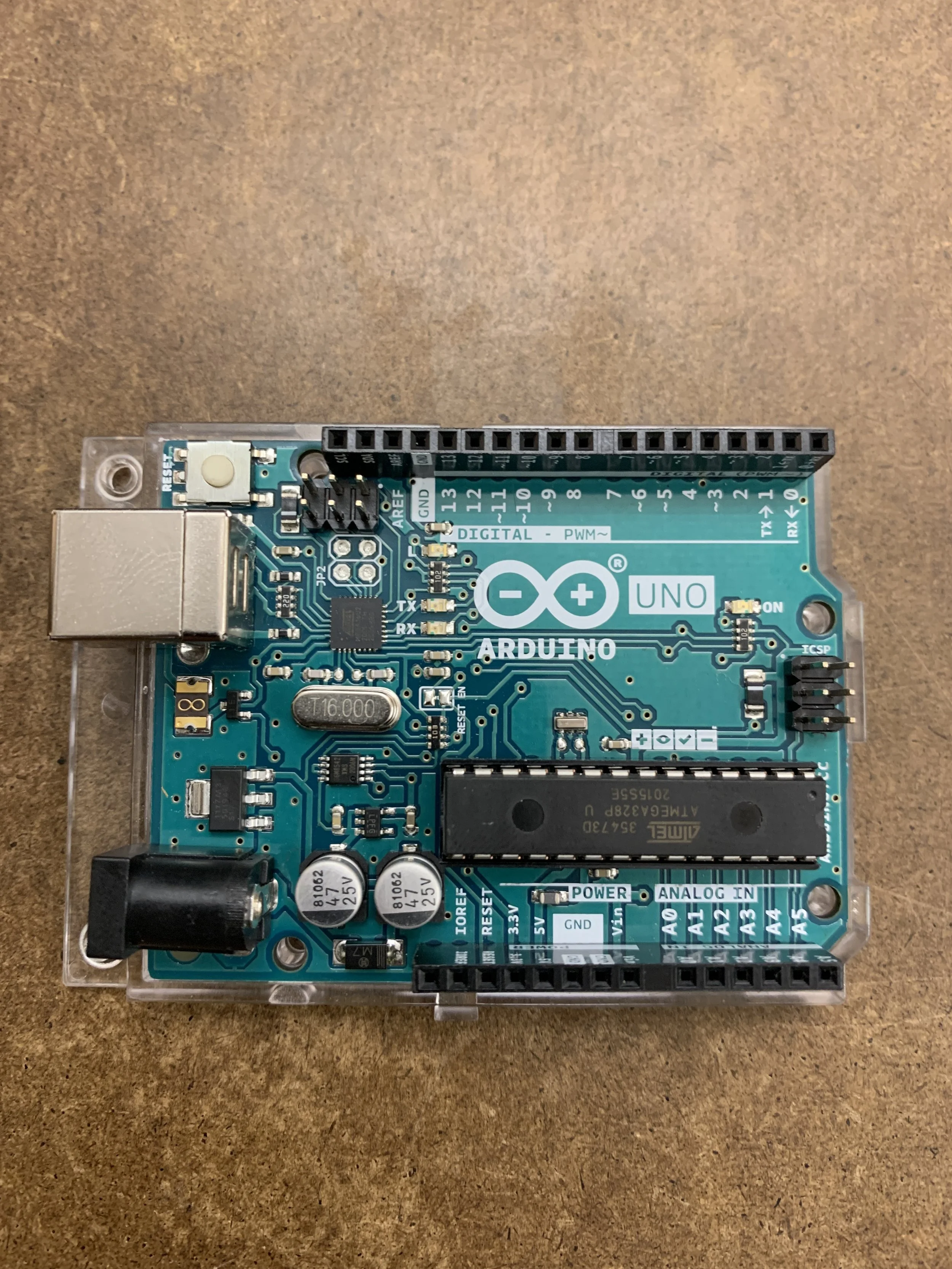
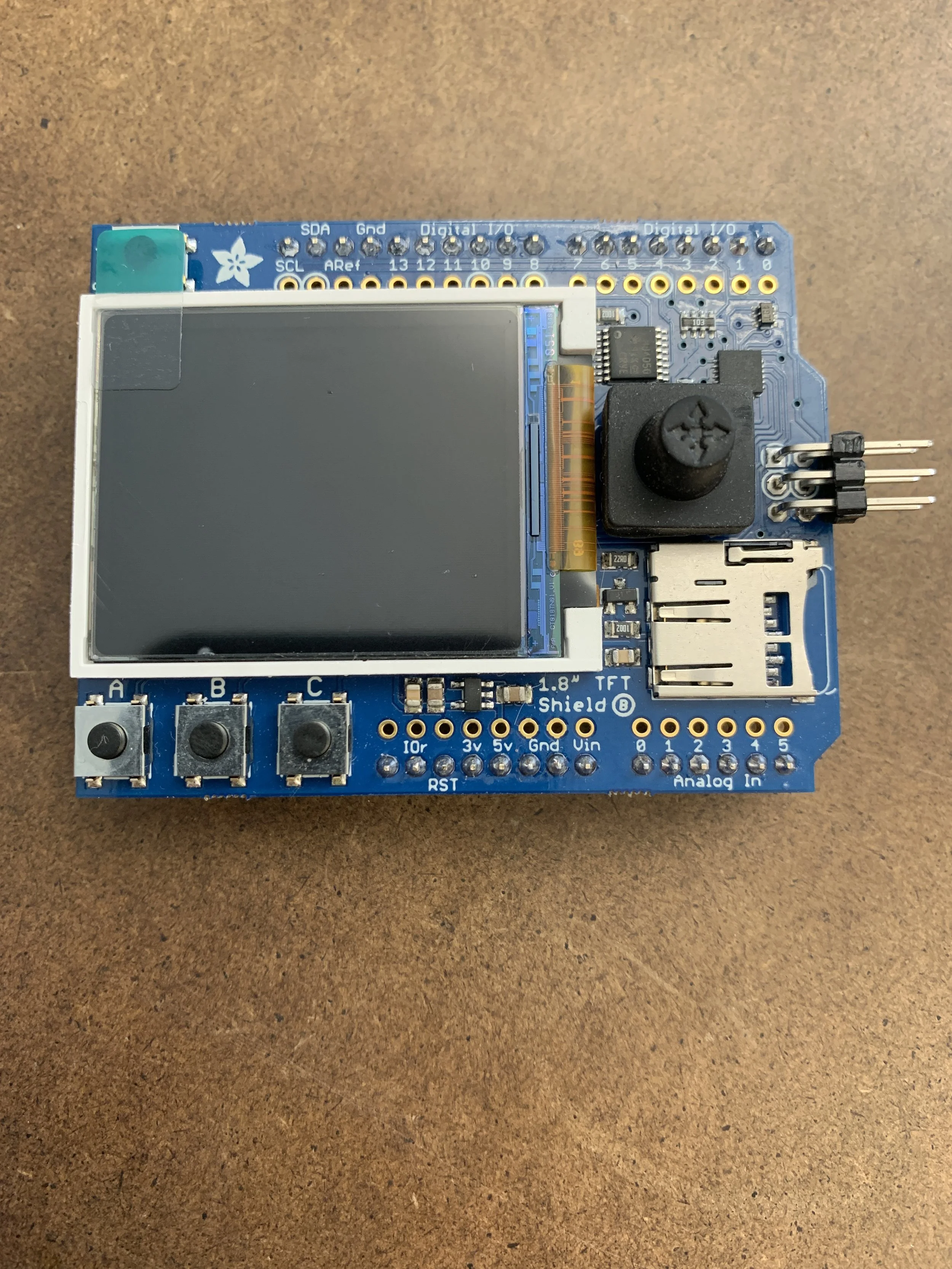
The system was built using stacked Arduino-compatible shields, including an RFID module and an LCD interface, requiring coordinated use of both I2C and SPI communication protocols. Pin assignments and signal routing were carefully managed to ensure compatibility across all modules within the limited I/O of the microcontroller.
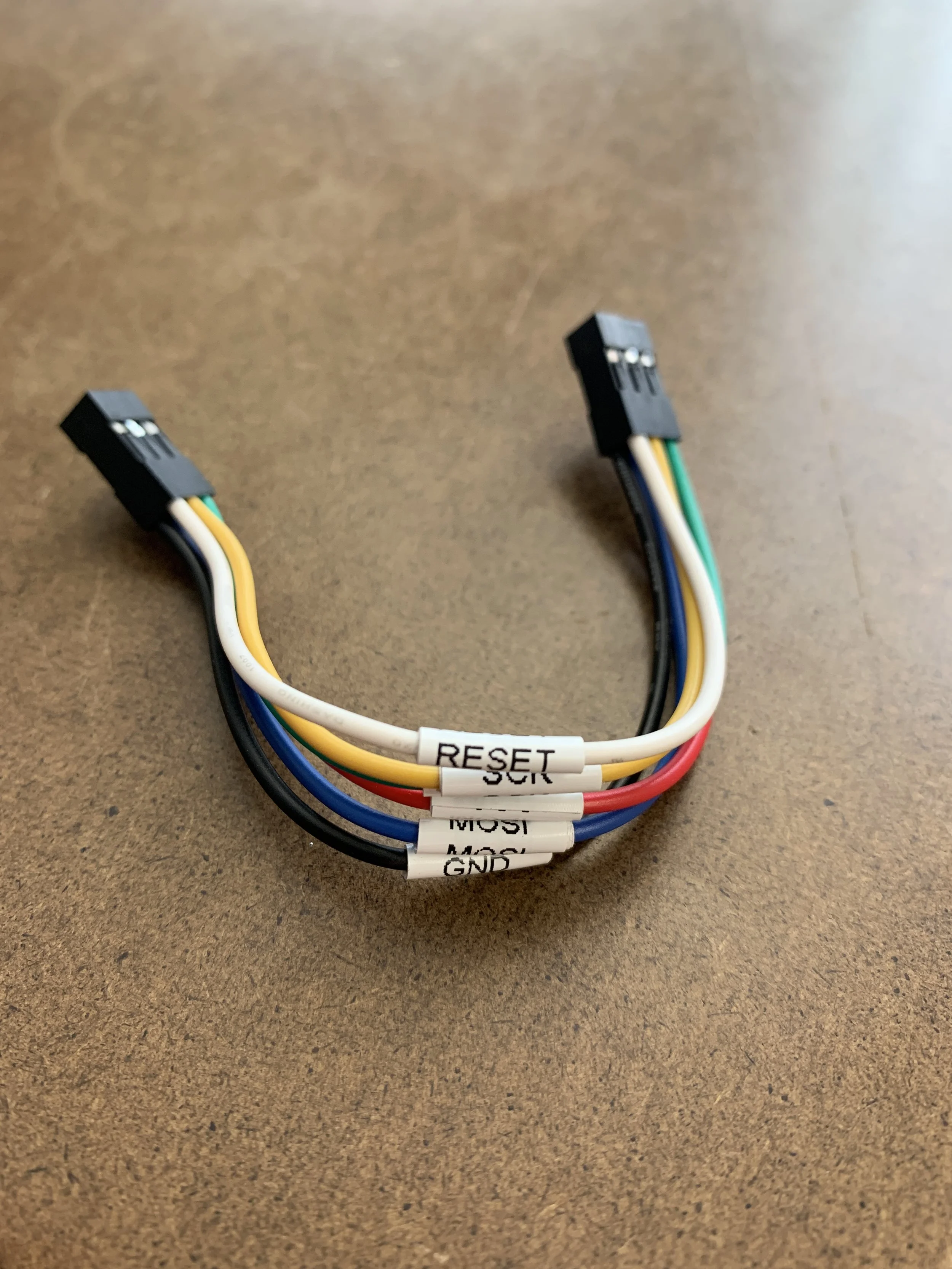
A custom wiring harness was implemented to support stable connections between the display and controller, enabling reliable operation of user input, display output, and RFID communication within a compact handheld form factor.



GUI Screens
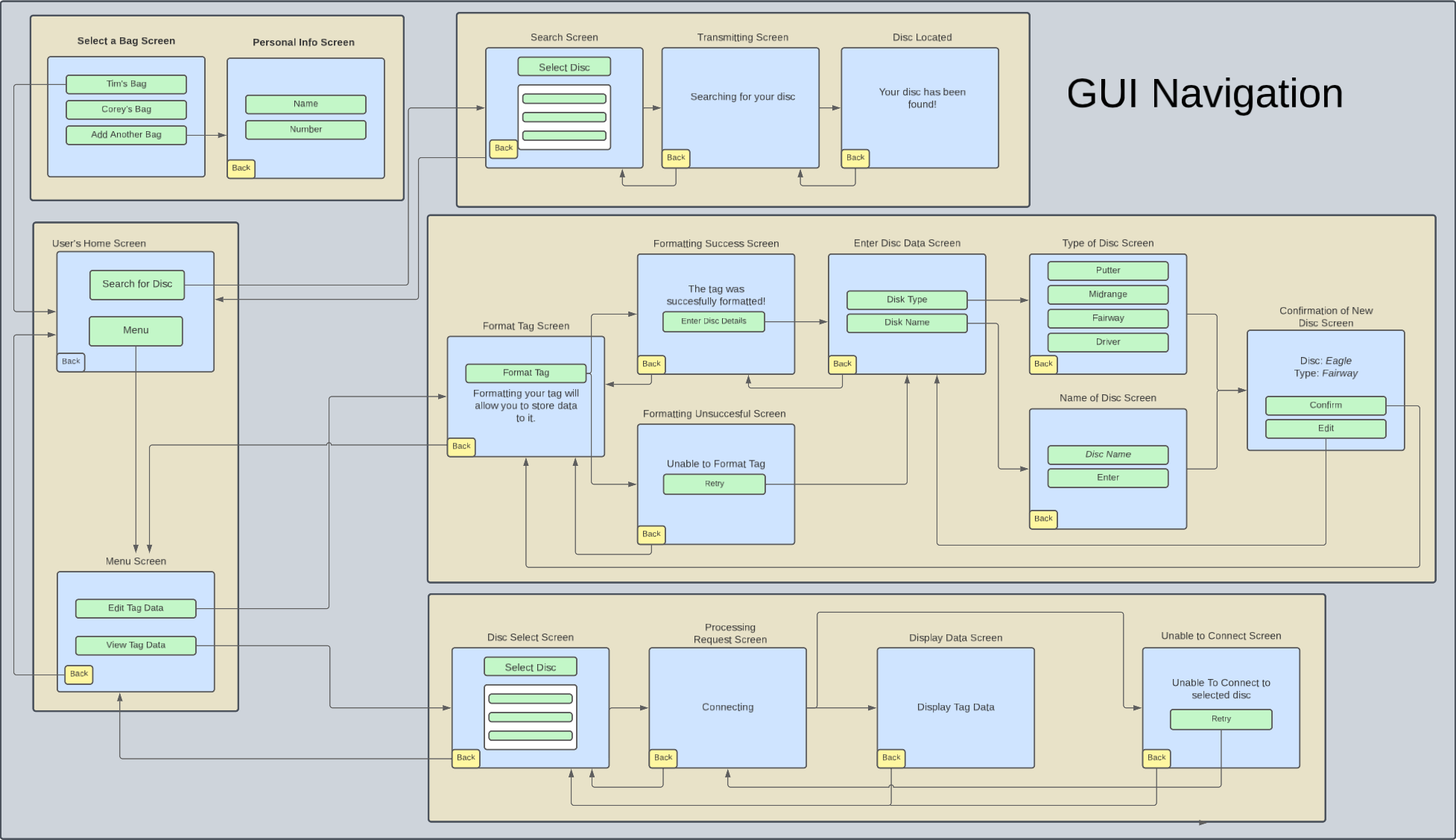
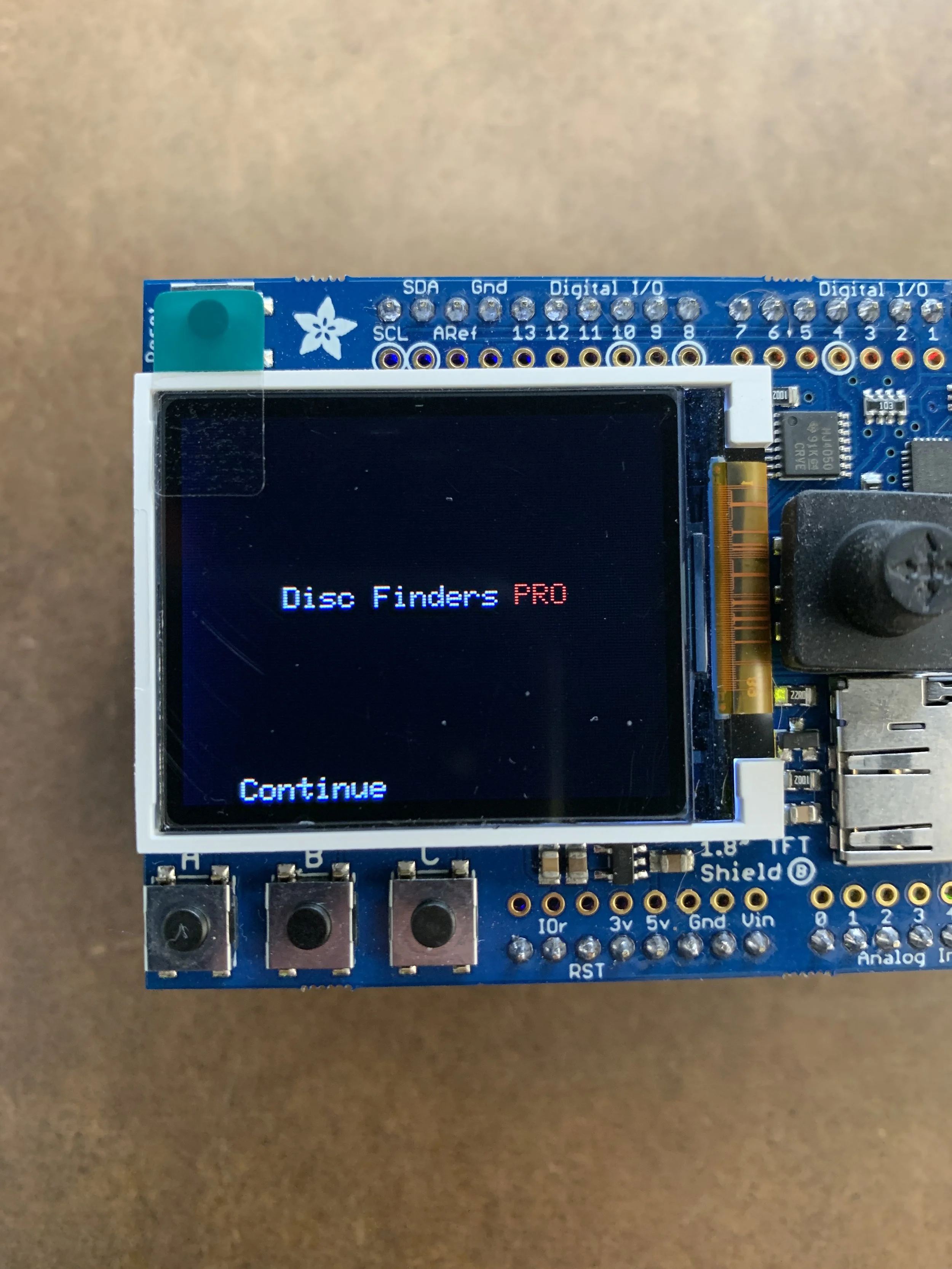
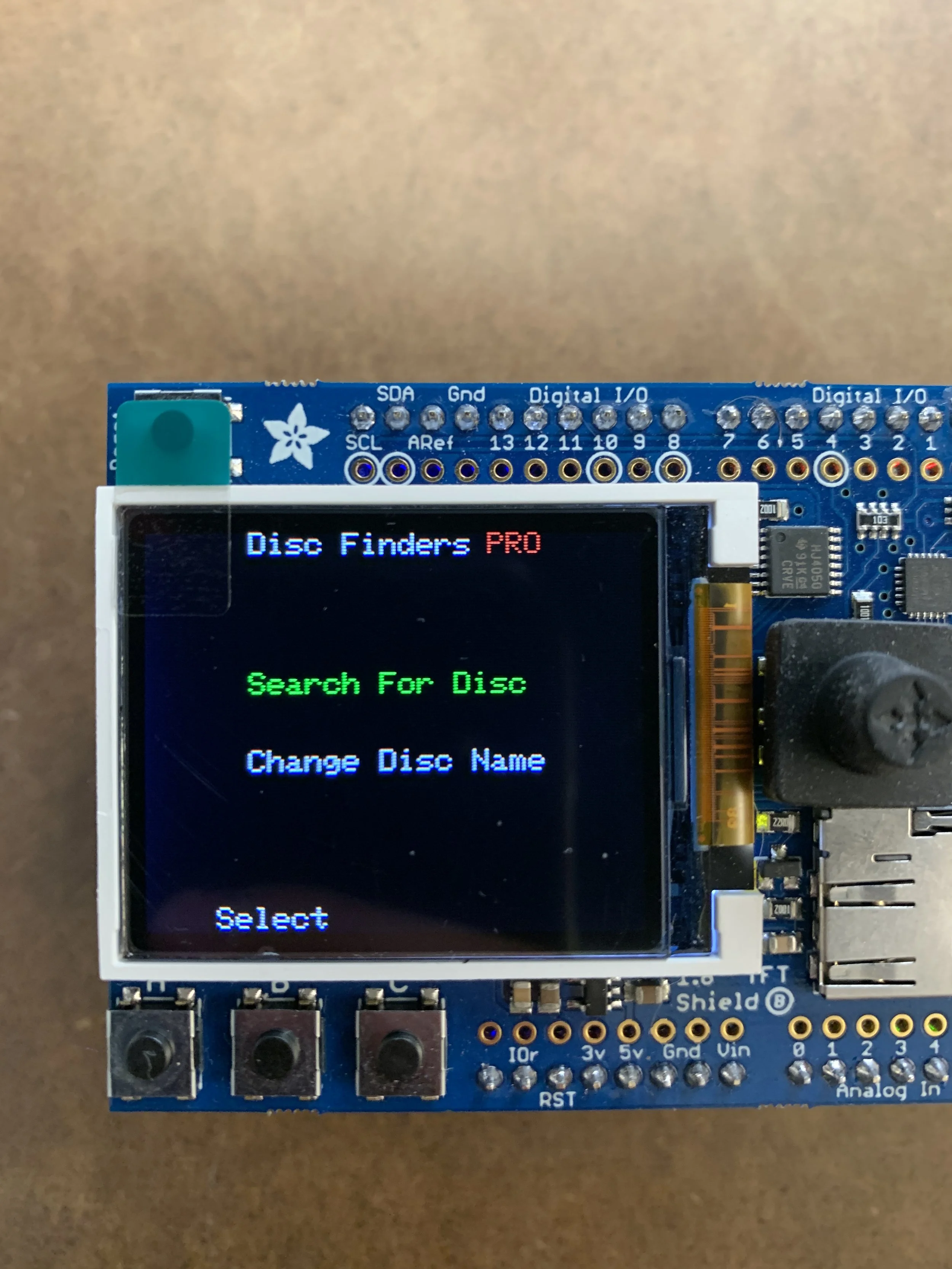
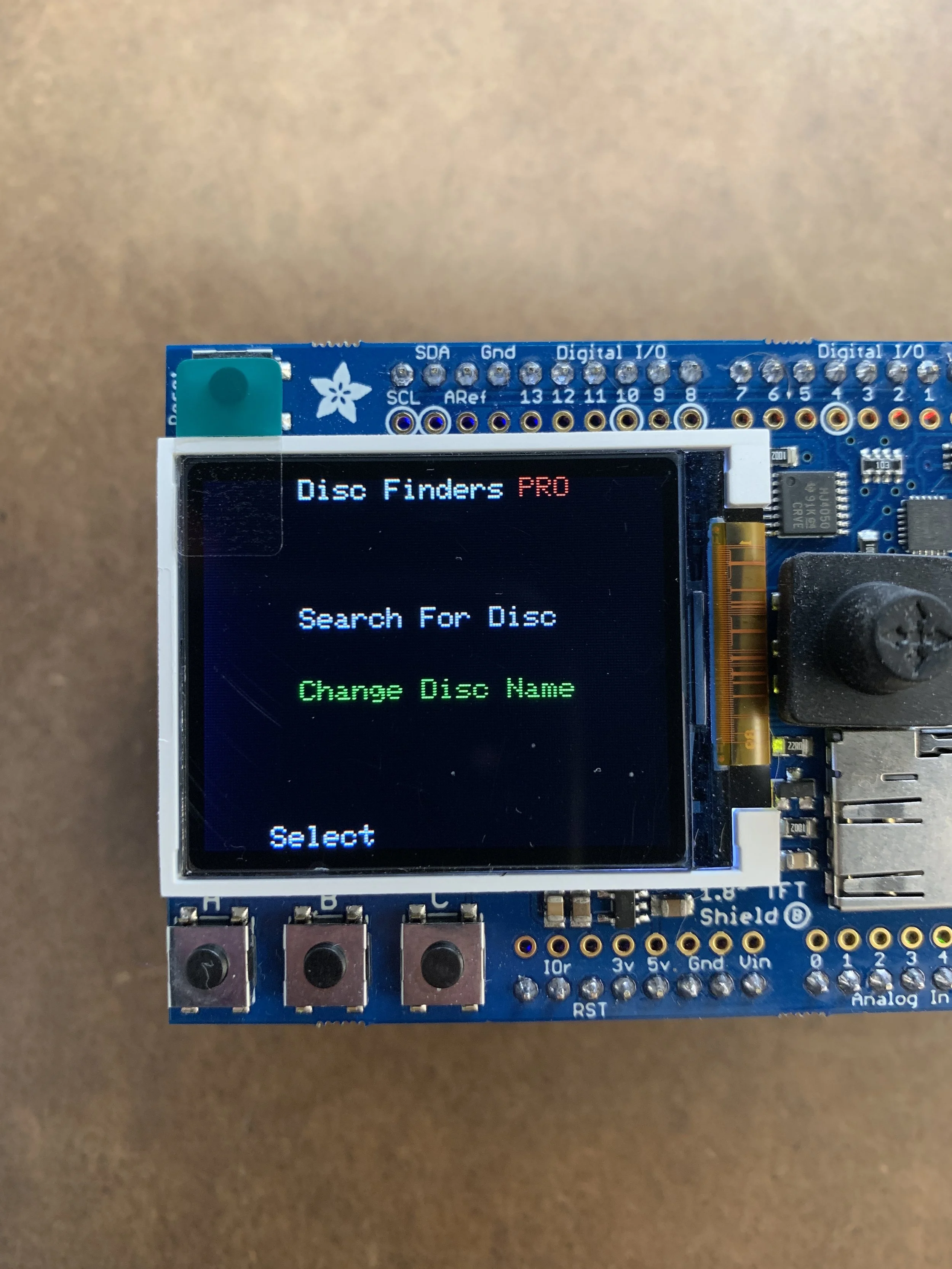
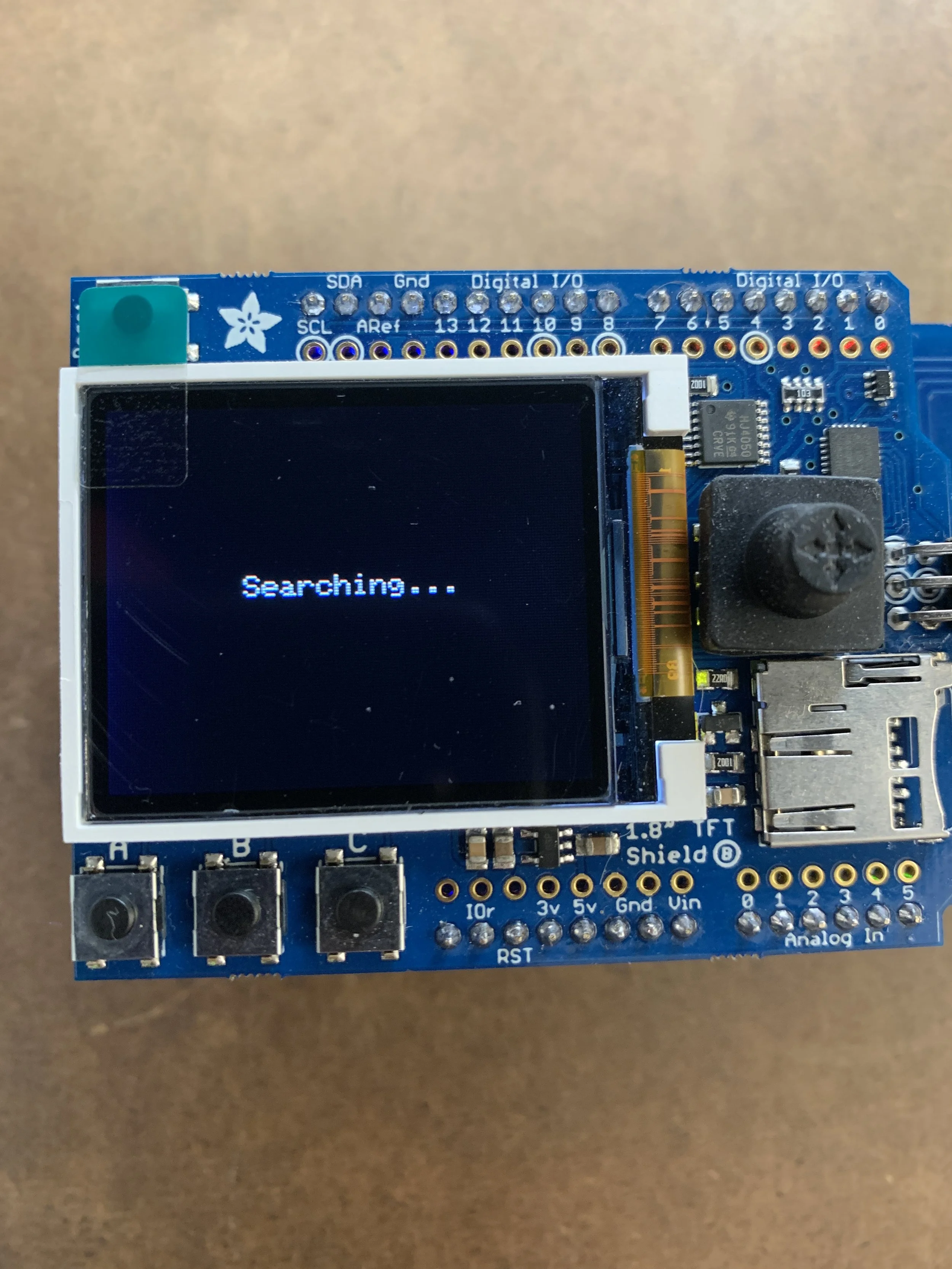
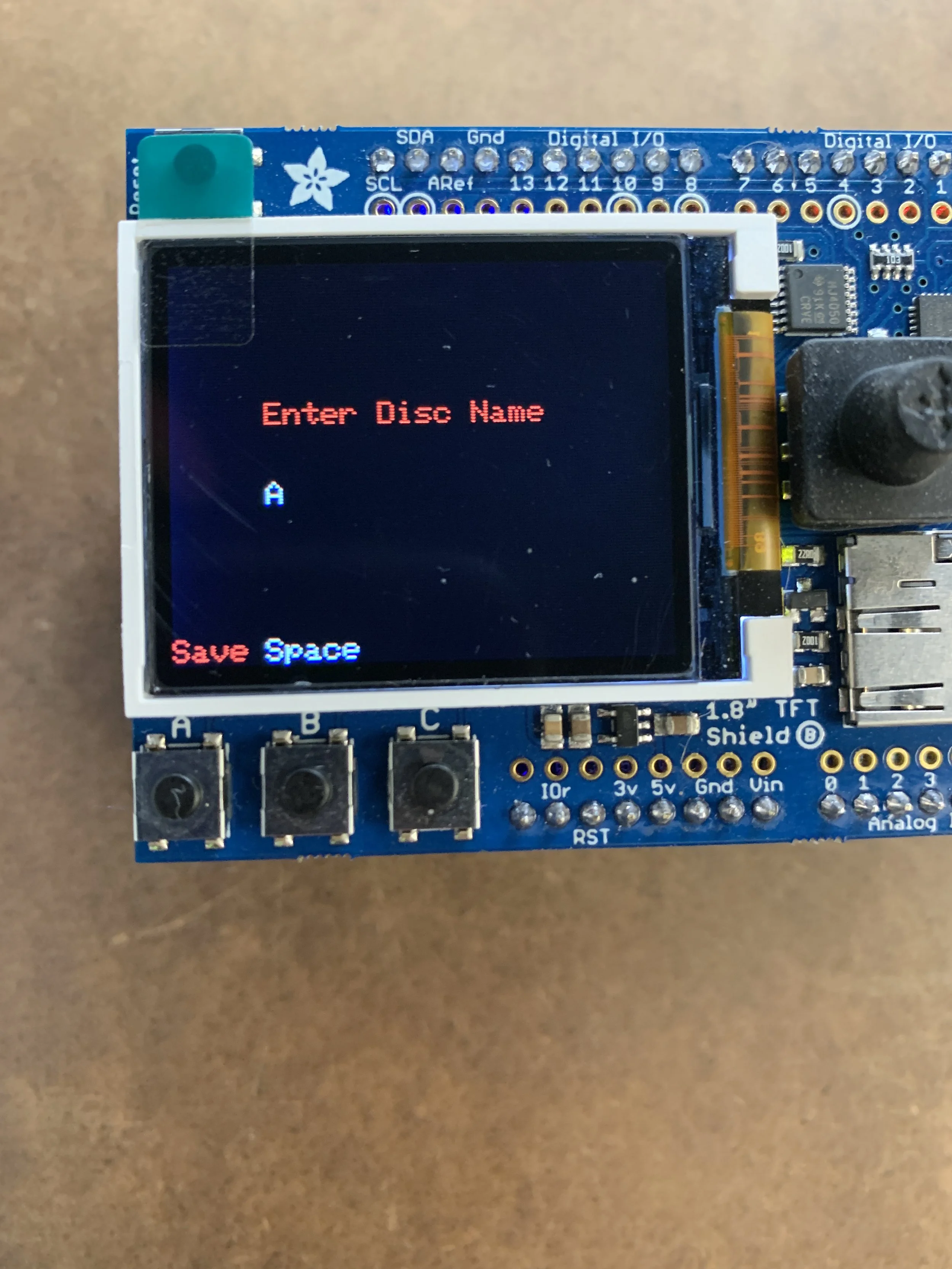
The user interface was designed as a menu-driven system that guides interaction through three primary tasks: searching for a disc, writing new tag data, and modifying existing entries. Navigation is controlled through a joystick and button inputs, allowing intuitive movement between screens and actions.
The sequence begins with a top-level menu, where the user selects a function. From there, the system guides the user through tag detection, data entry, and confirmation states. Visual feedback is provided at each step, including success and failure messages during RFID read/write operations. Once data is written, the system allows immediate verification by scanning and displaying the stored disc name.


Result
The final system was implemented as a compact, handheld device integrating RFID scanning, data storage, and a user-driven interface. While the hardware design remained intentionally simple, the project successfully demonstrated a complete embedded workflow, from tag configuration and data management to real-time user interaction.
The form factor reflects a conceptual field device, illustrating how RFID-based tracking could be applied in a practical setting such as locating lost disc golf discs.
Videos
Watch on YouTube
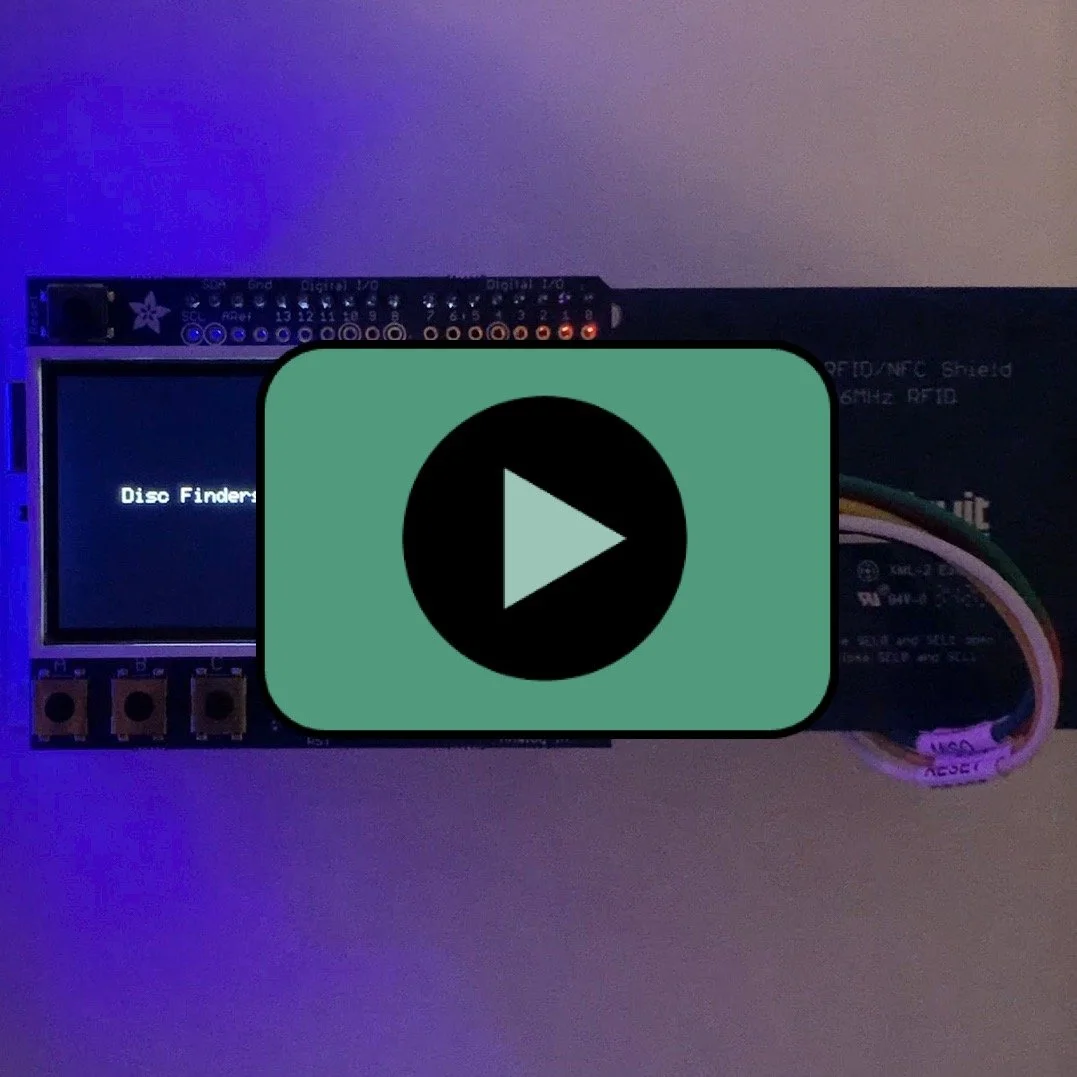
Demo