Disc Golf Cart Design & Fabrication
Sep 2019
Overview
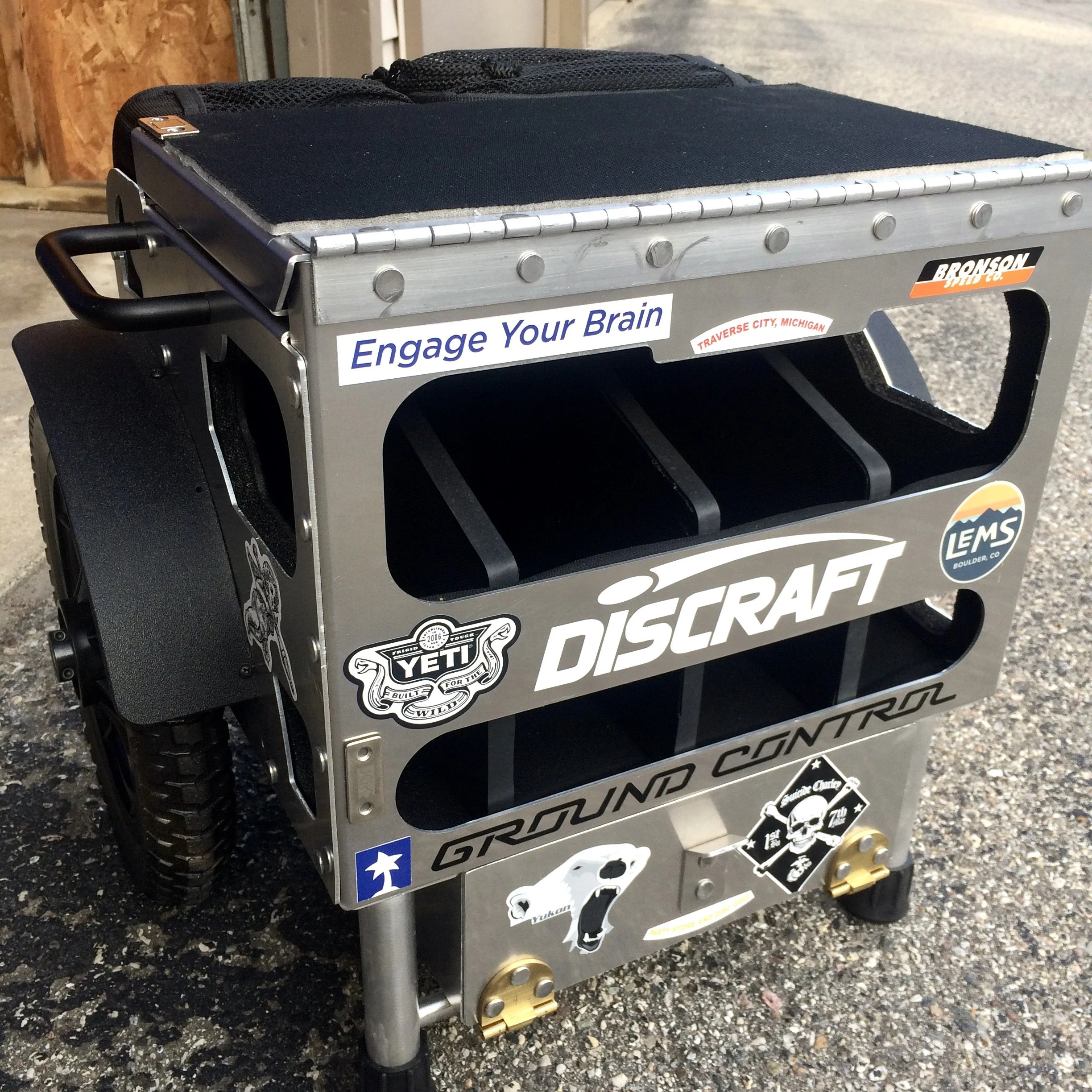
A custom aluminum disc golf cart designed and fabricated by reverse engineering a discontinued commercial product using only reference images.
The design emphasizes durability, manufacturability, and usability, integrating storage, transport, and seating into a single field-ready system.
-
The cart was designed in SolidWorks using sheet metal features, beginning with dimensional estimation from reference images of a discontinued commercial design. Initial proportions and capacity were validated through cardboard prototyping before transitioning into CAD.
The design was iterated to accommodate a minimum of 15 discs while integrating storage for gear such as water, snacks, and weather protection. Structural requirements were driven by the need for the cart to function as a stable seating platform, requiring careful consideration of material thickness, reinforcement, and load distribution.
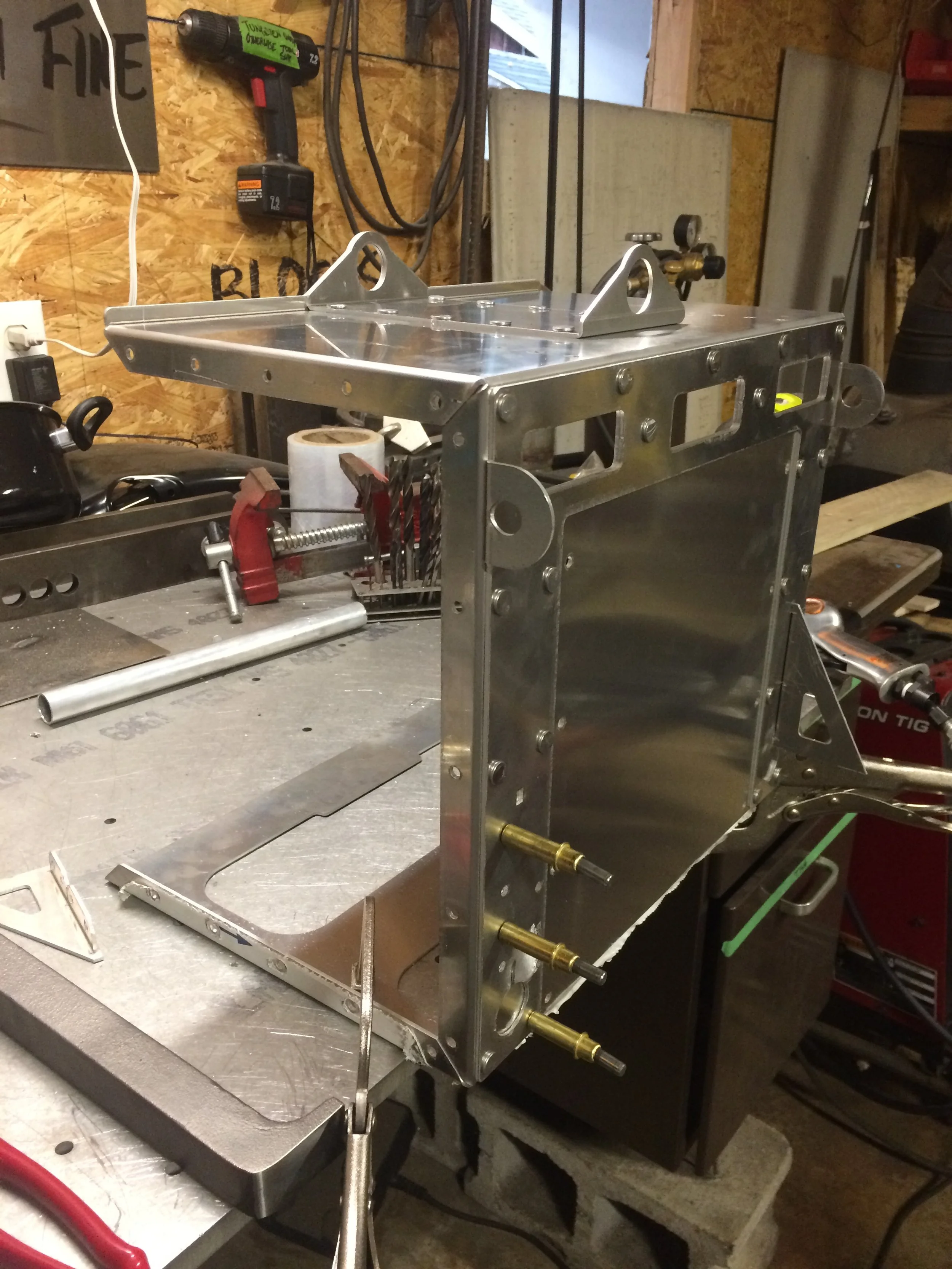
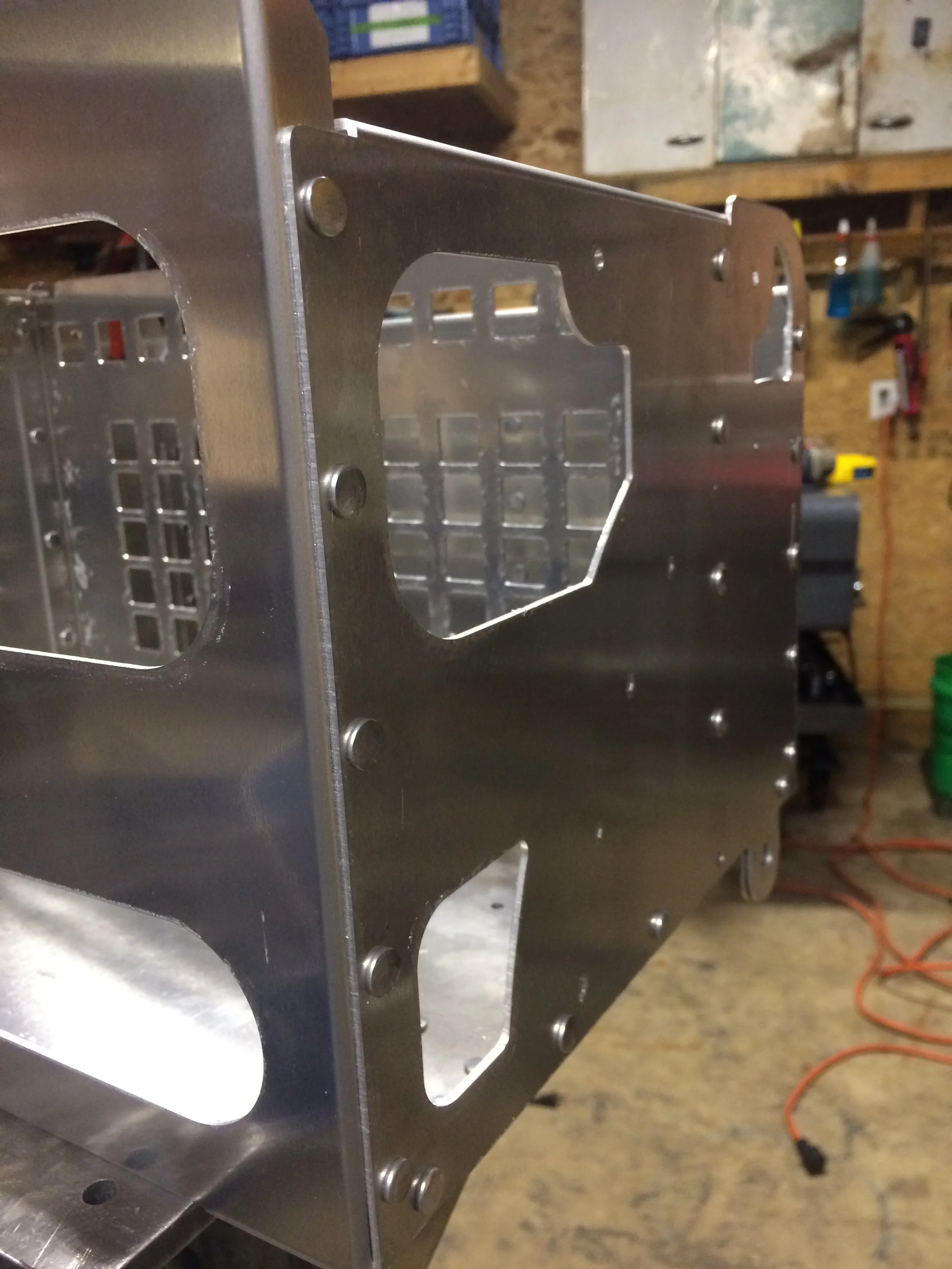
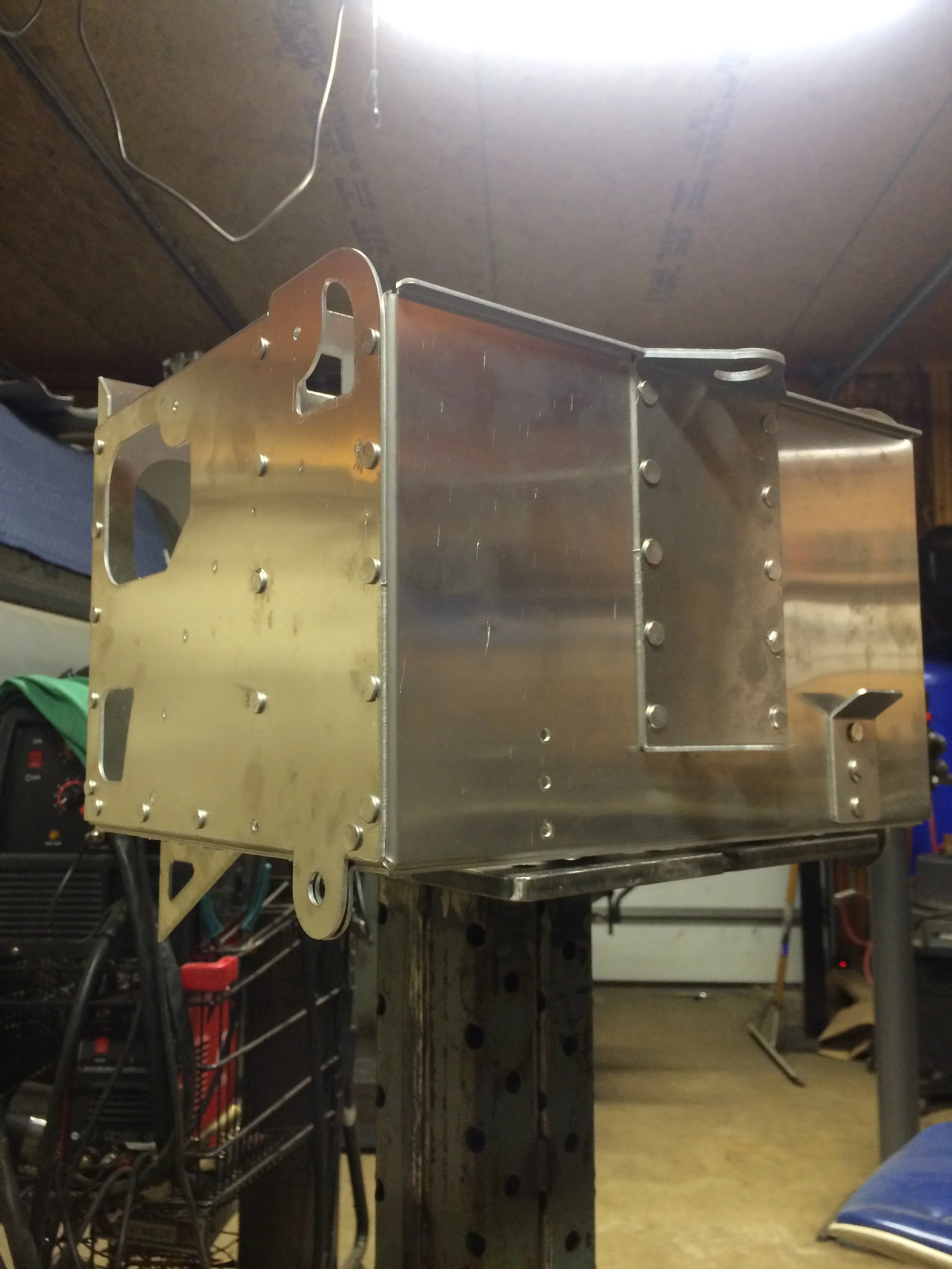
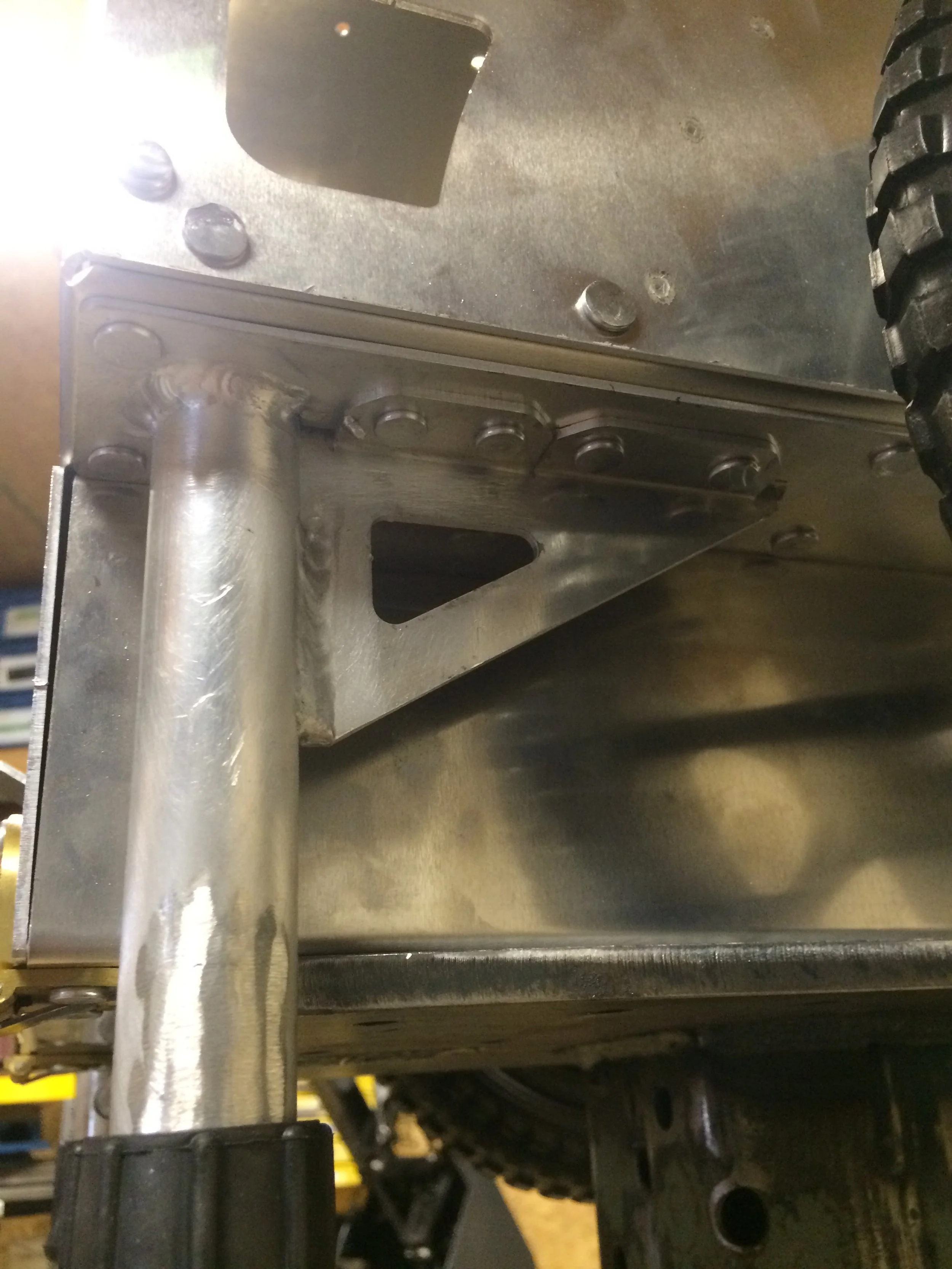
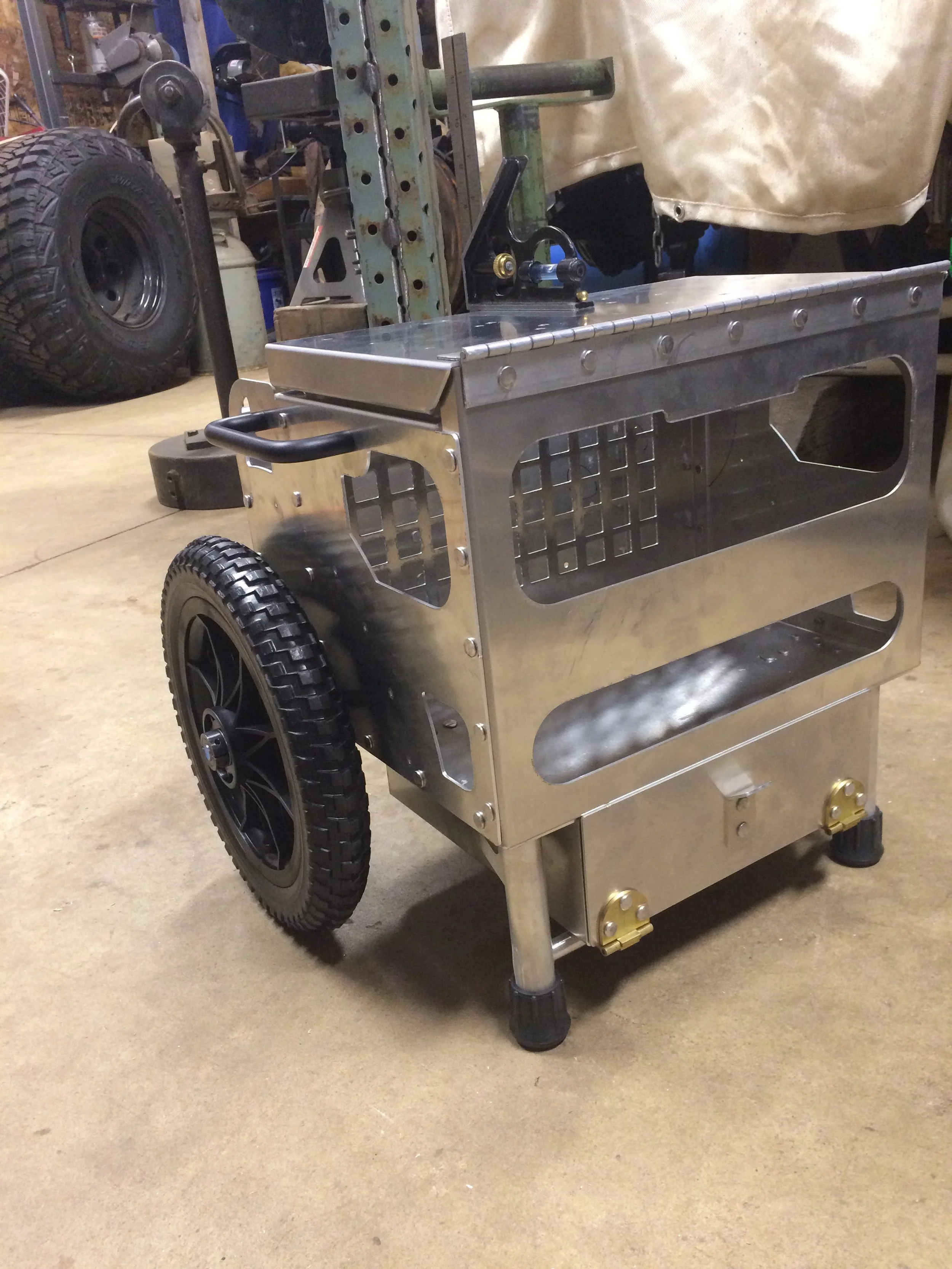
Fabrication was completed using laser-cut aluminum sheet metal, press brake forming, and riveted assembly, with welded elements added for structural support. Design decisions were made in collaboration with a sheet metal fabricator to ensure compatibility with bending constraints, tolerances, and available tooling.
-
Designed in SolidWorks using sheet metal tools
Laser-cut and press brake formed aluminum construction
Riveted assembly with reinforced structural elements
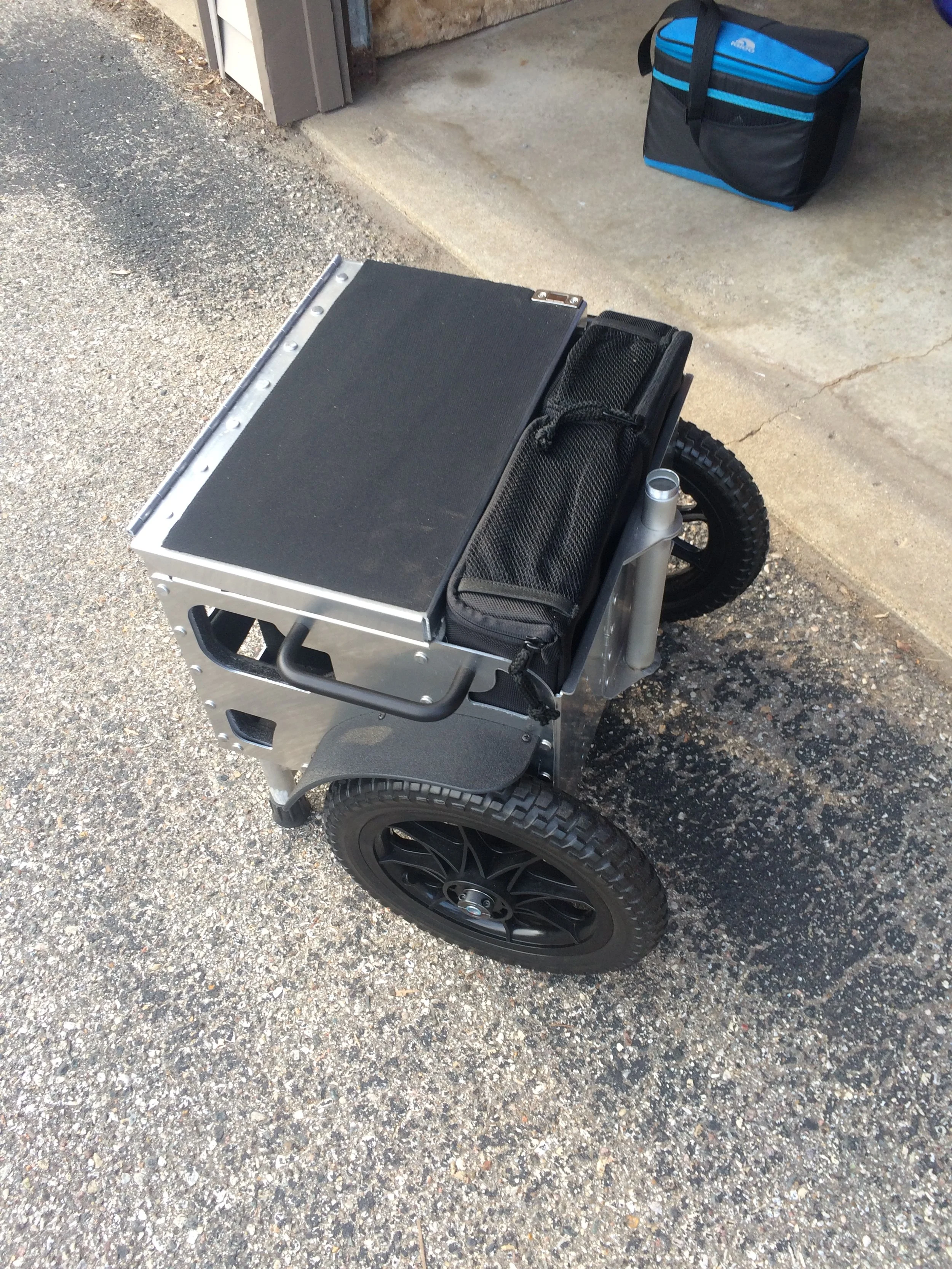
Designed to function as a stable seating platform
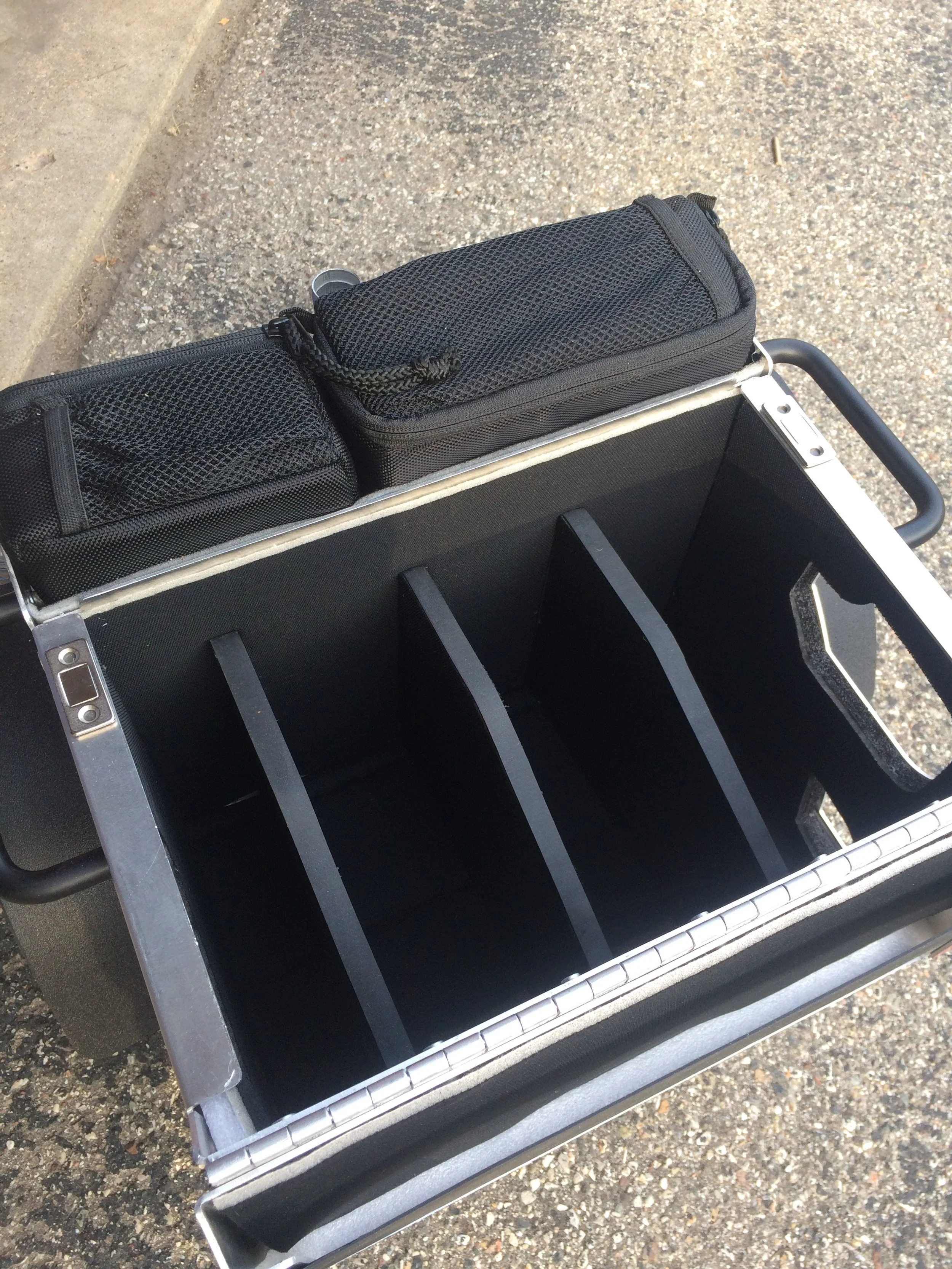
Magnetic lid retention (open and closed positions)
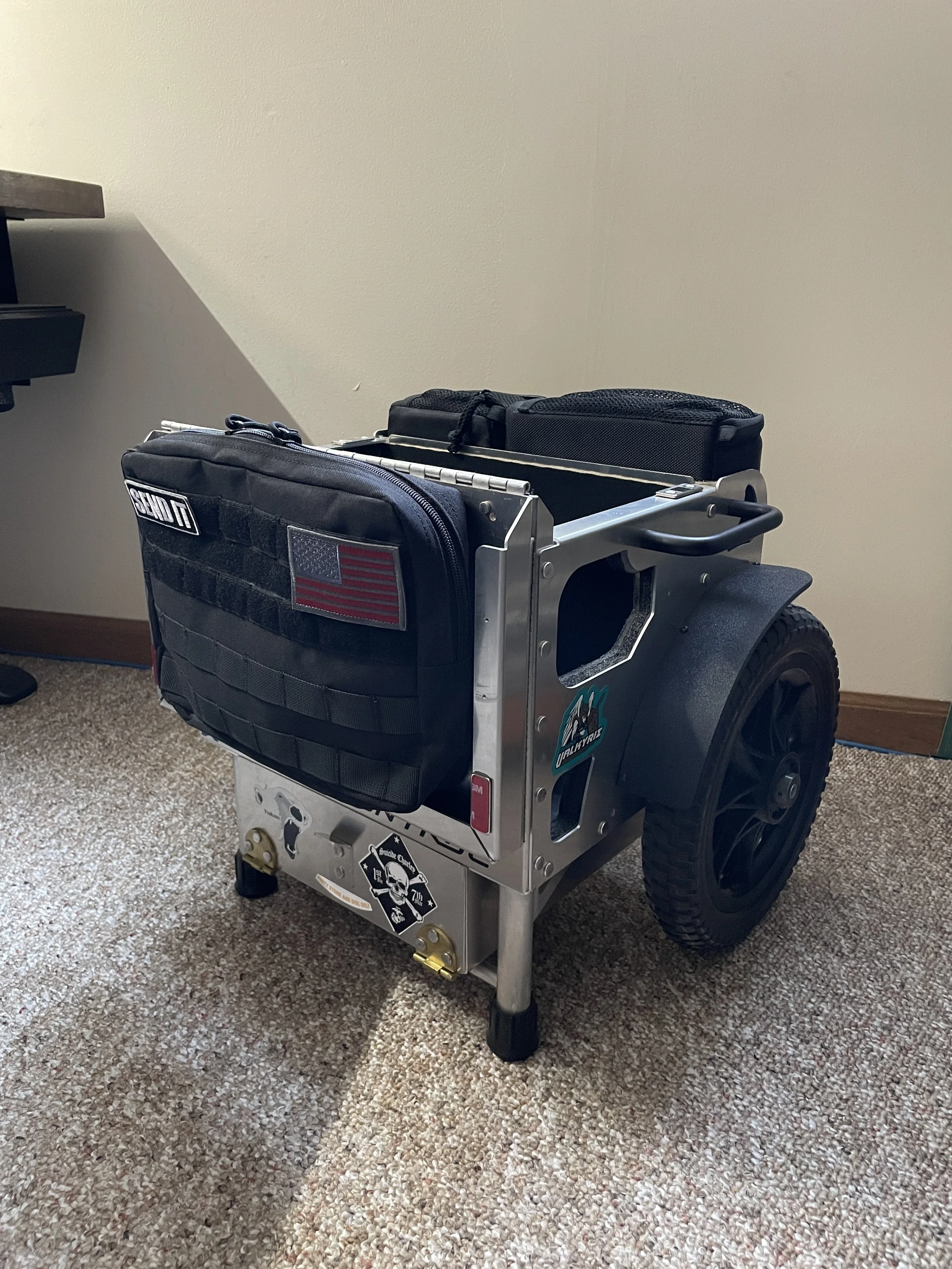
Rear storage system with modular bag and cooler integration
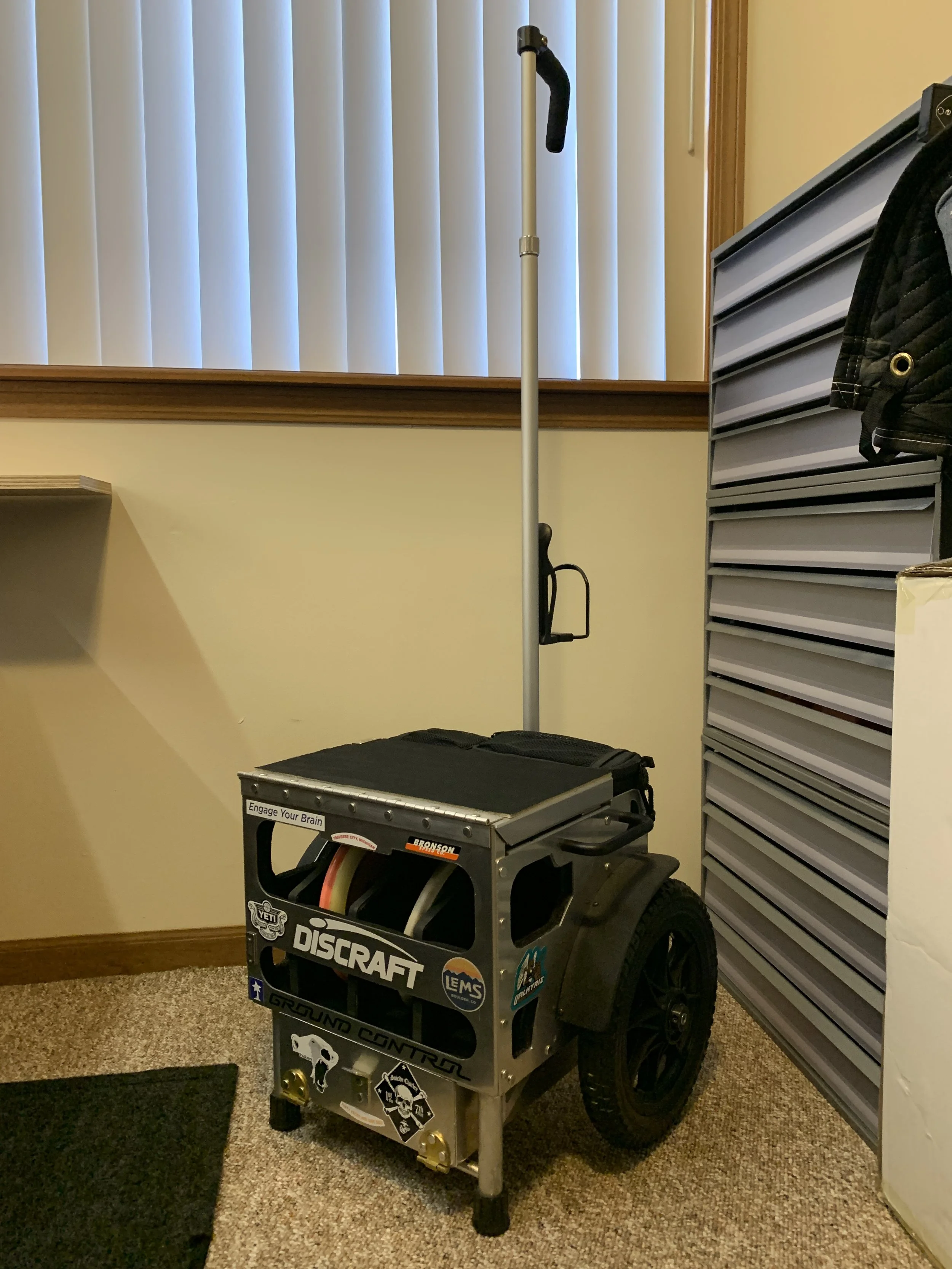
Under-chassis storage compartment
Additional storage integrated into lid interior
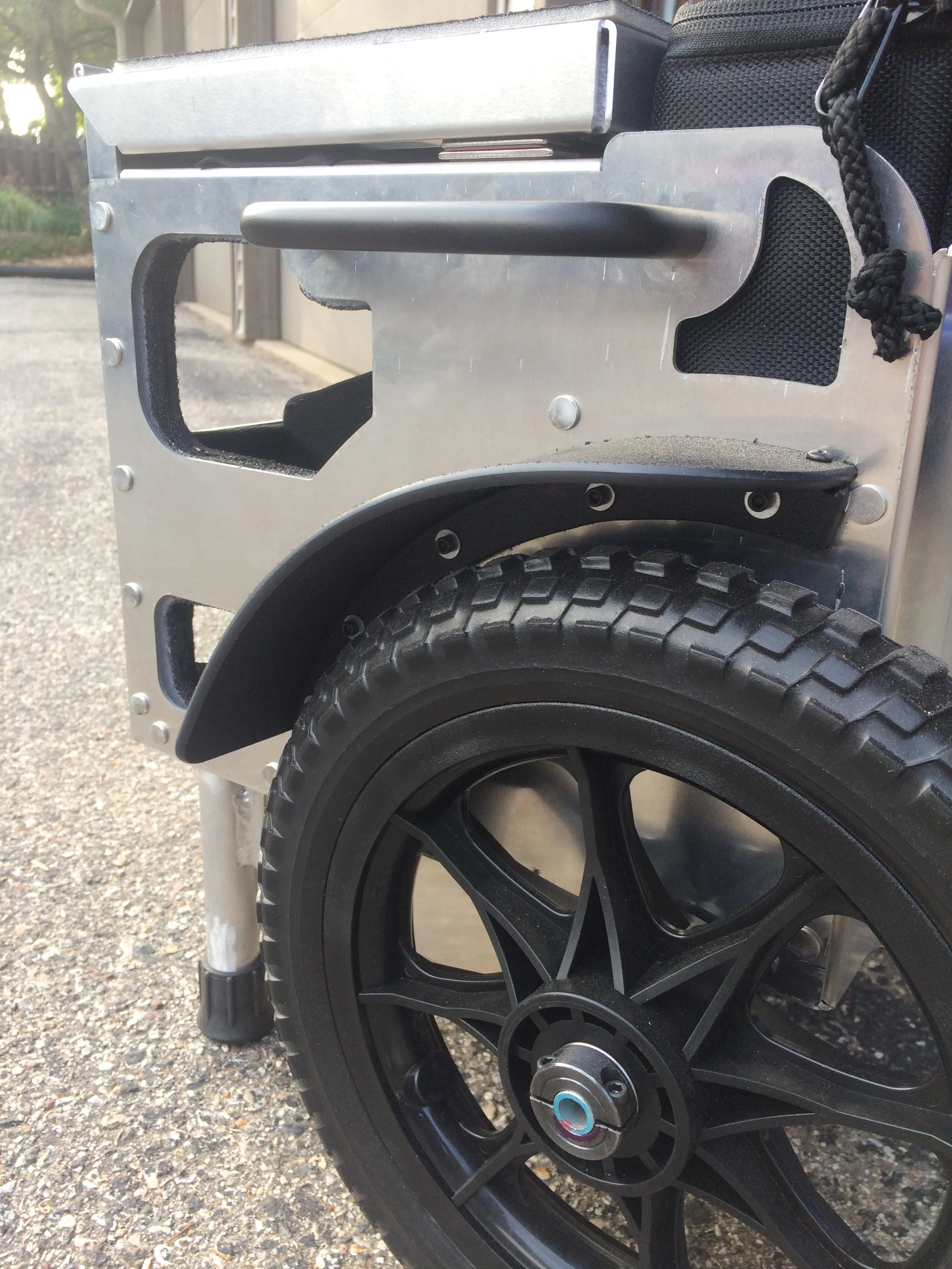
14-gauge 6061 aluminum construction
Full-length piano hinge main lid
Side carry handles for transport
12” tubeless wheels with bearing-supported axle
Rigid mudflaps for debris protection
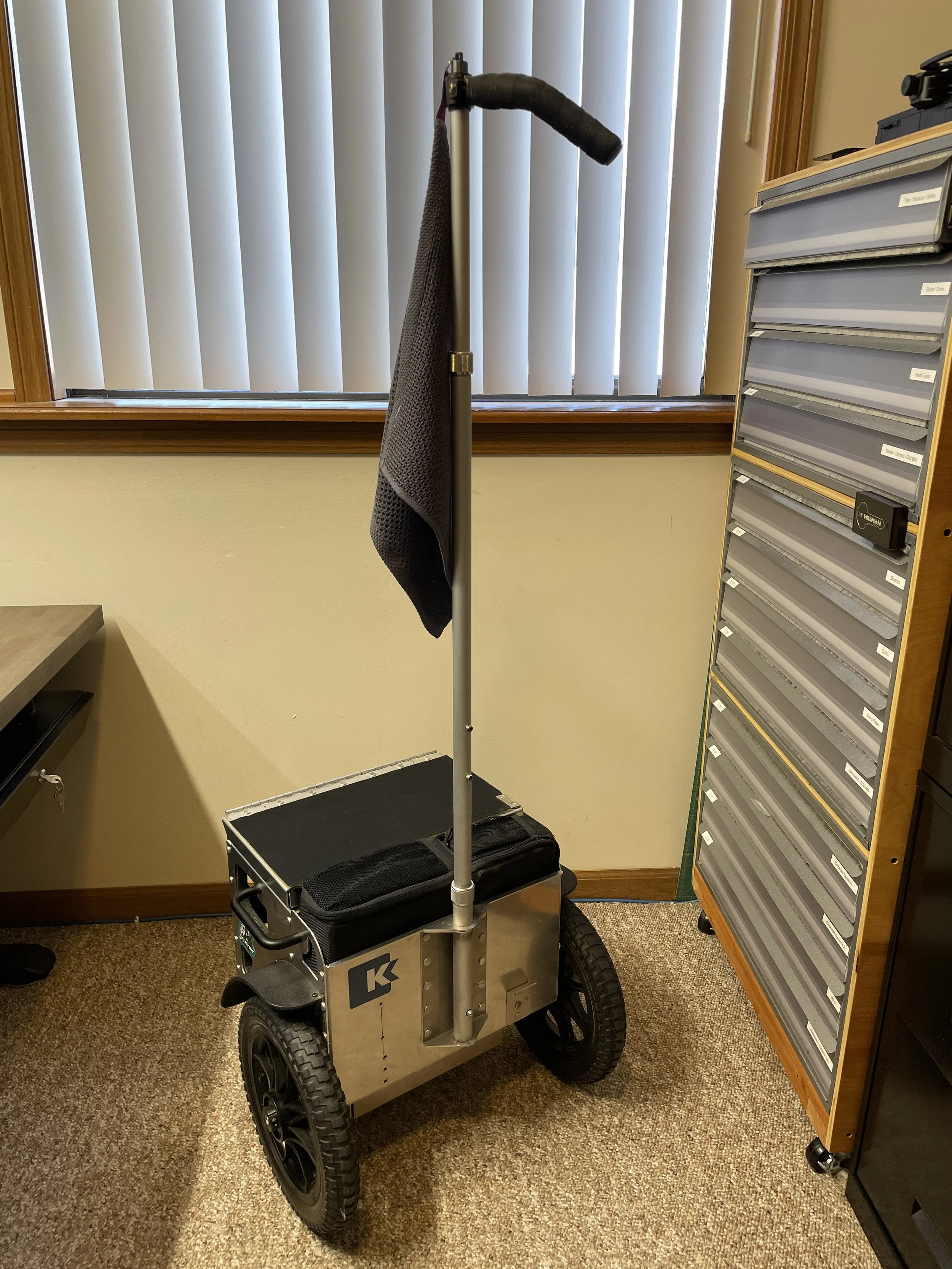
Telescoping, detachable handle with ergonomic grip
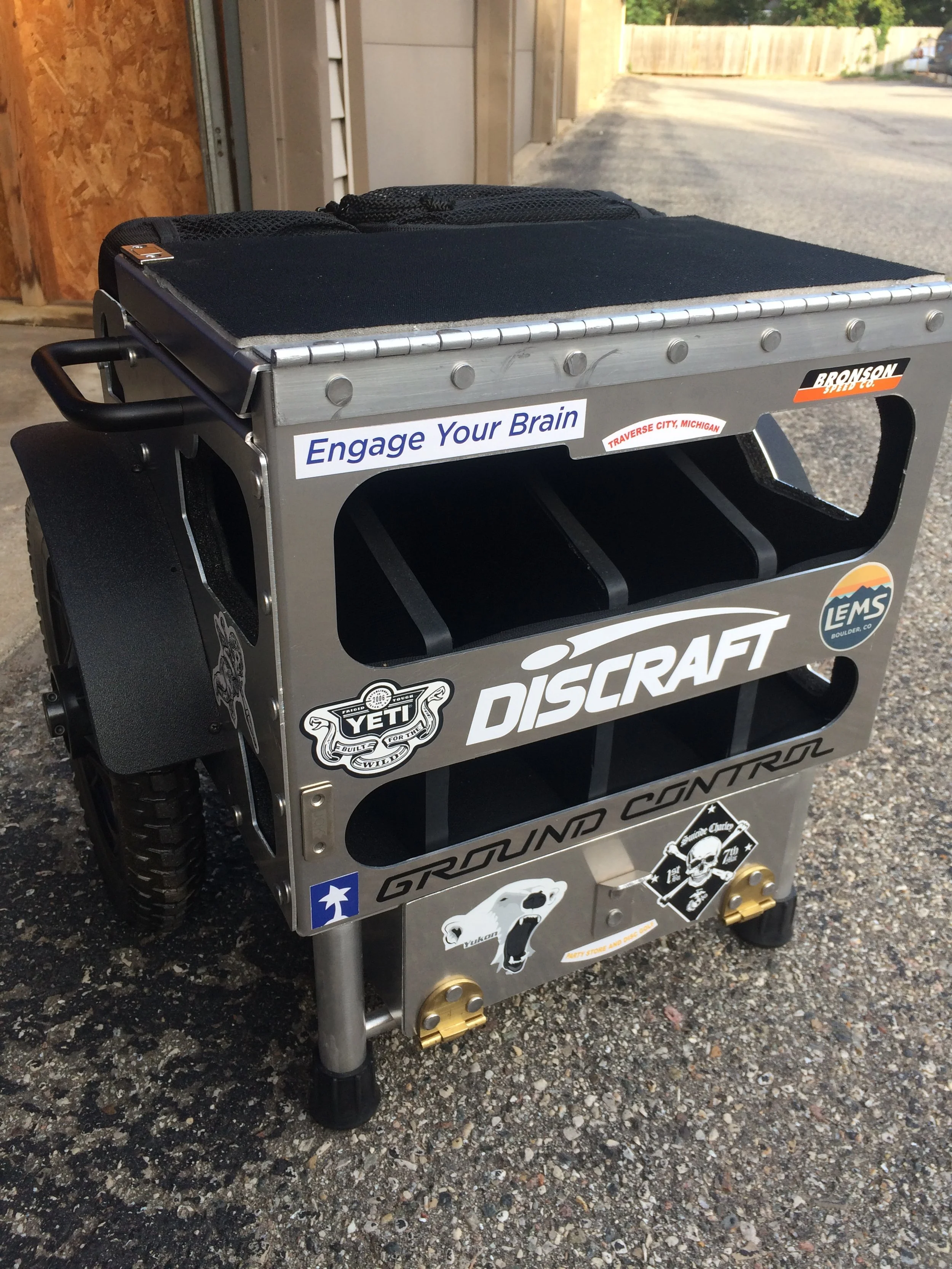
Internal padded dividers for disc organization
-
Challenges:
Designing for sheet metal fabrication required careful consideration of tooling limitations, bend constraints, and achievable tolerances. Early coordination with the fabricator was critical to ensure the CAD model aligned with available press brake tooling and manufacturing capabilities.
Additionally, the design needed to balance structural strength with weight while maintaining functionality as both a transport system and a seating platform.
Outcomes:
The final design required no post-fabrication revisions, and assembly was completed smoothly. The riveted aluminum construction provided a rigid and durable structure, validating the design approach.
The cart has been extensively field-tested over multiple years of use, consistently performing as intended without structural issues or failures.
Explore This Project
Prototype
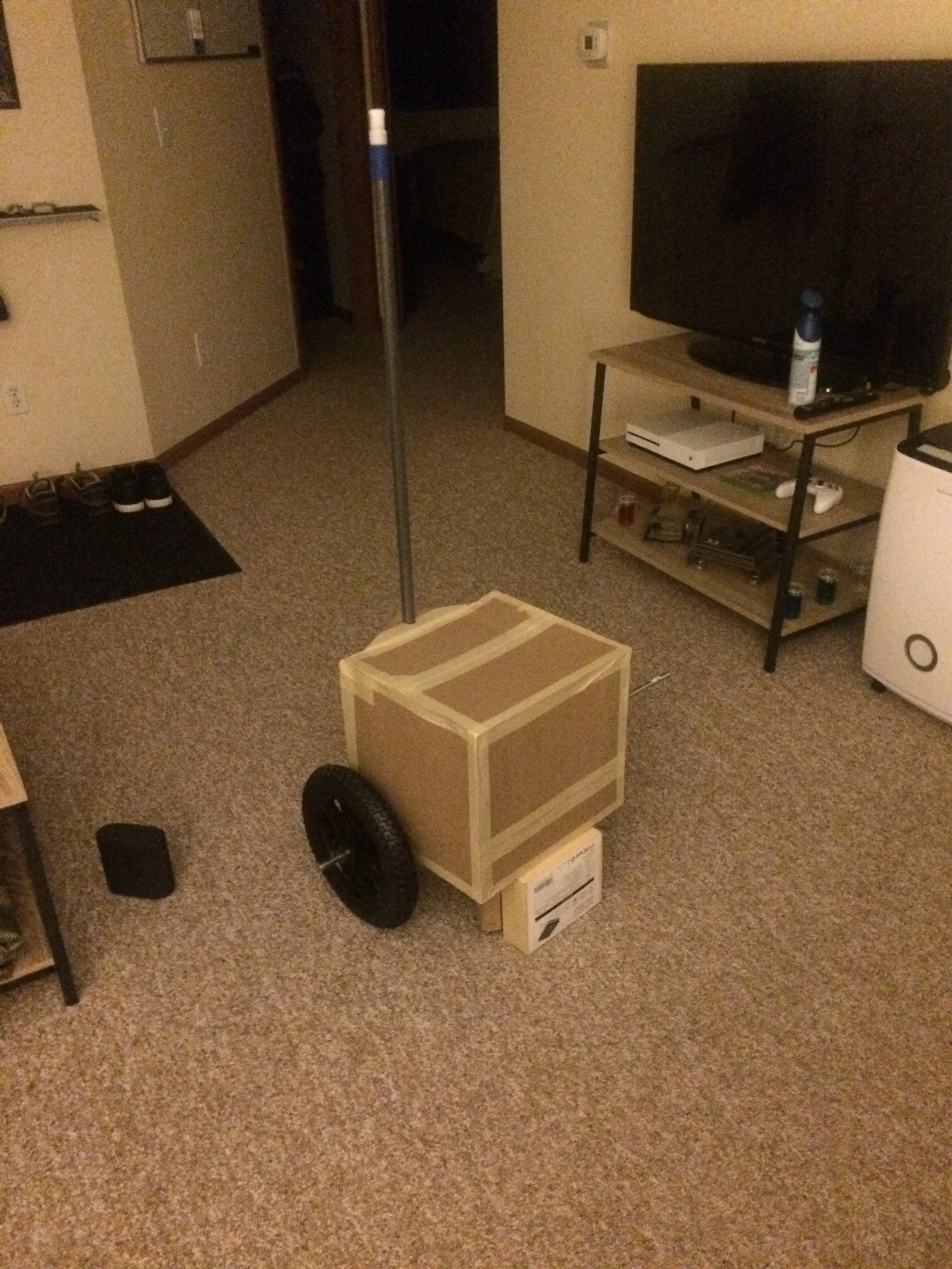
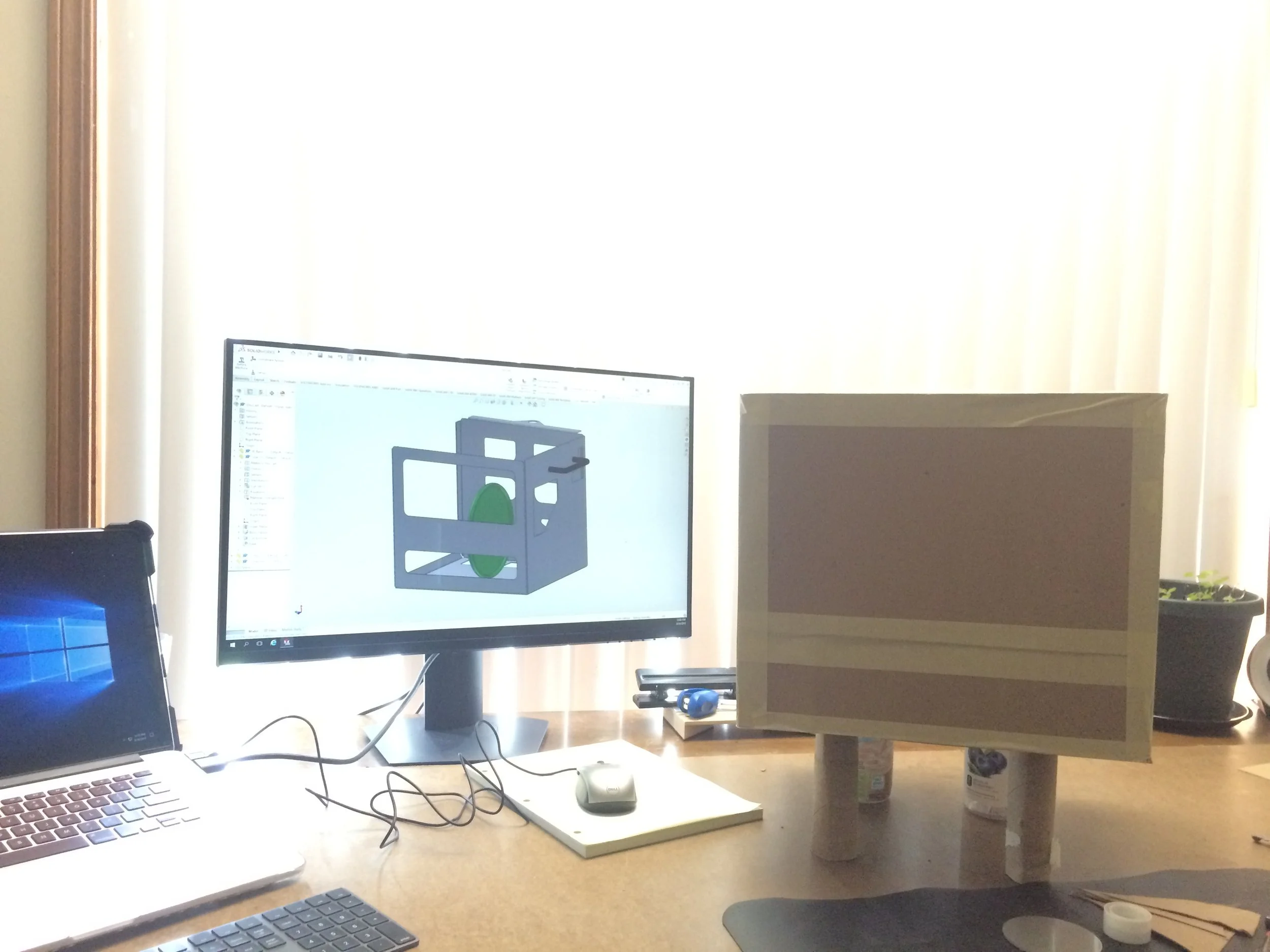
A low-fidelity prototype was constructed using cardboard and household materials to validate overall dimensions, proportions, and usability prior to CAD development.
This physical mockup was used to evaluate key factors such as storage capacity, handle height, and general form factor, while ensuring the design would fit within a standard vehicle trunk.
Insights from this prototype were carried forward into the SolidWorks model, reducing the need for major dimensional revisions later in the design process.
Mechanical Design
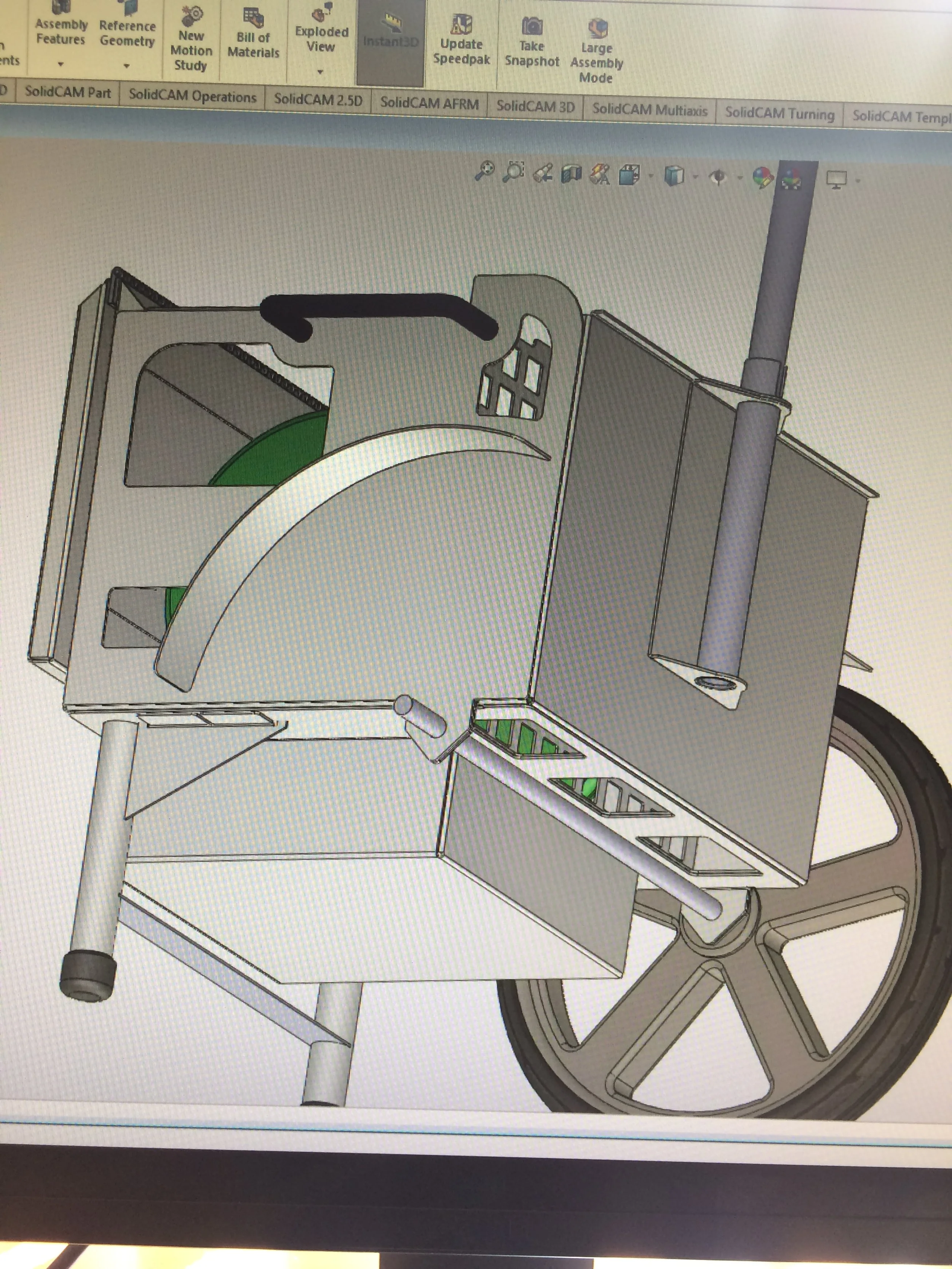
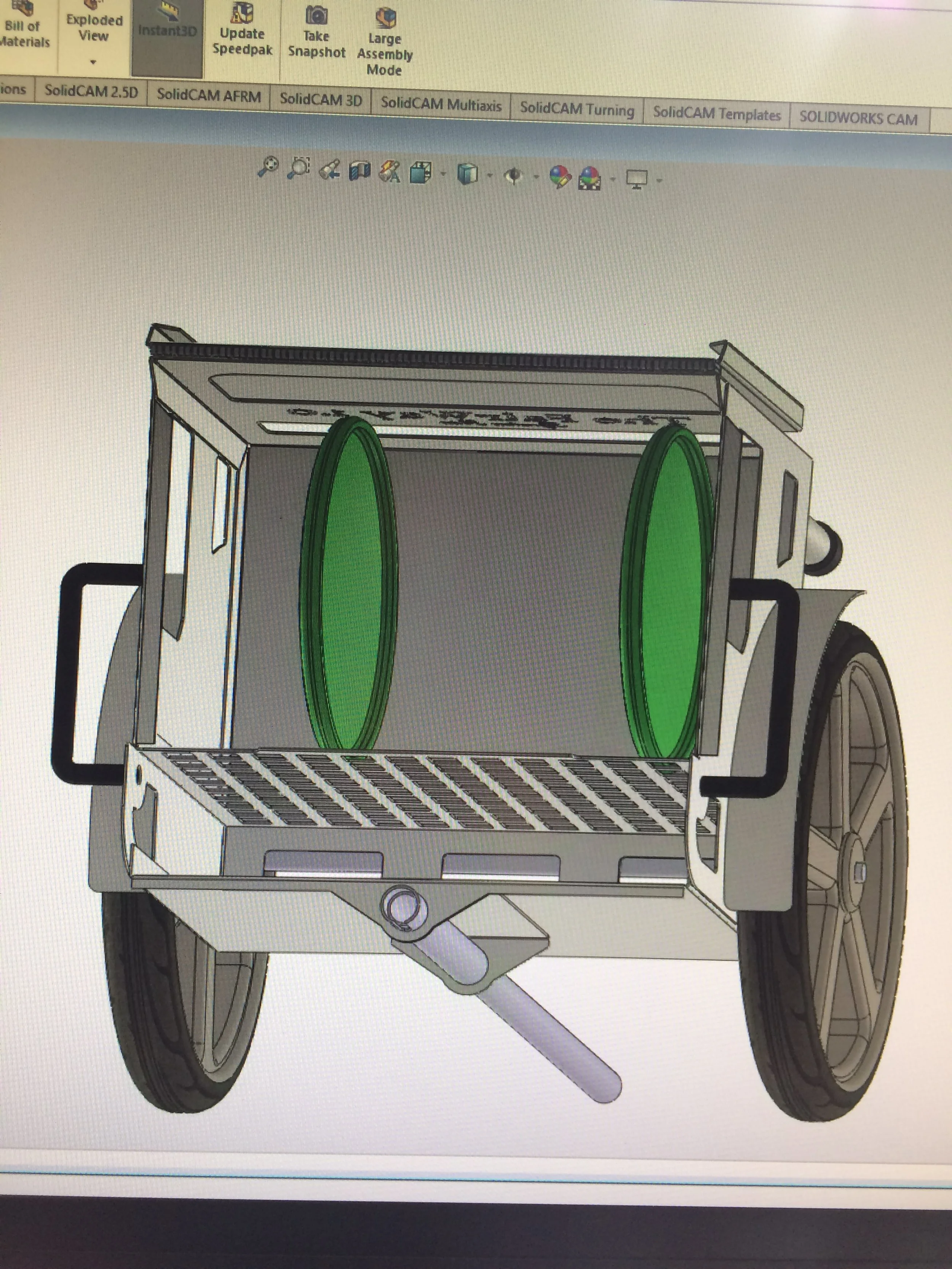
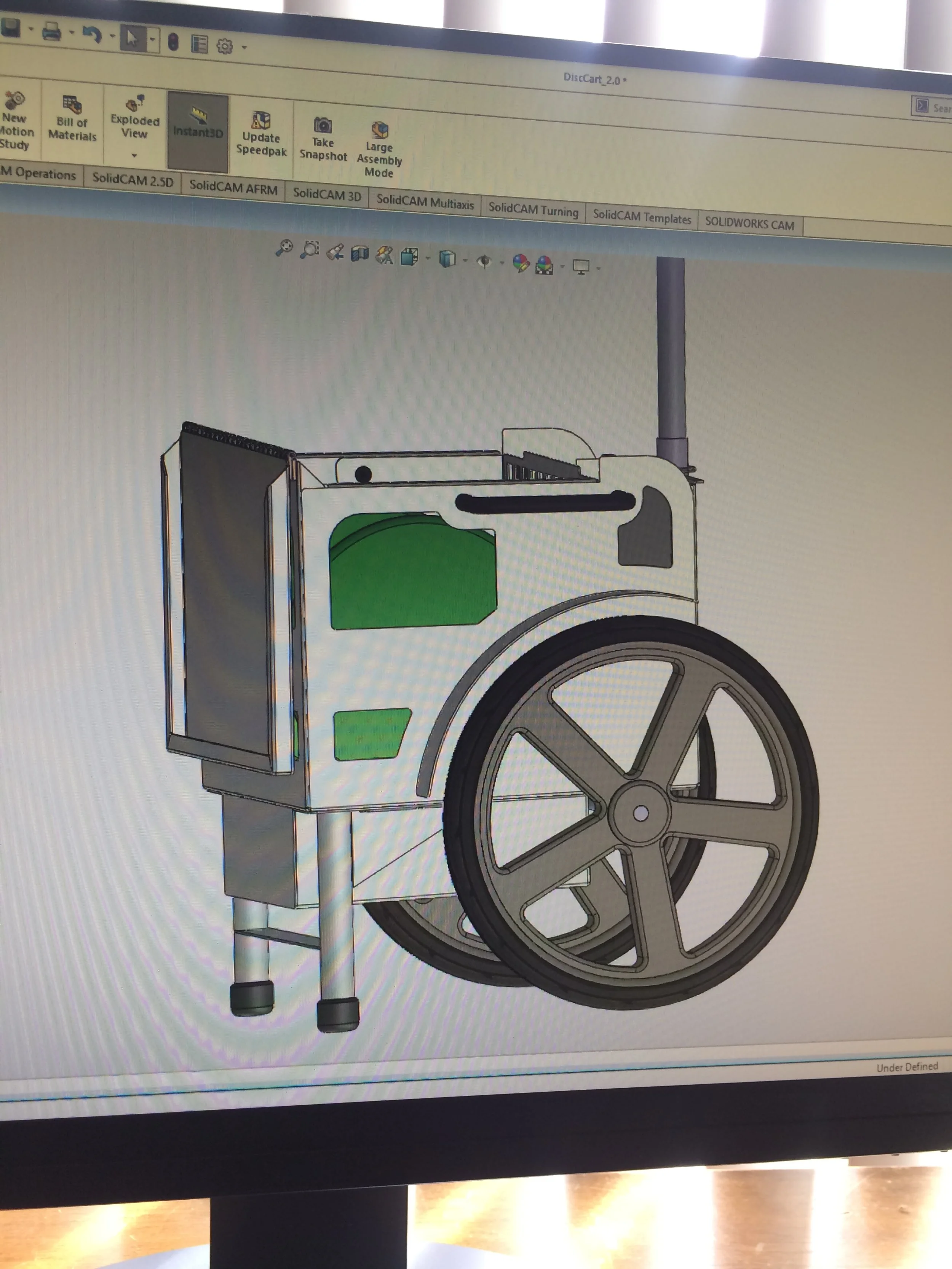
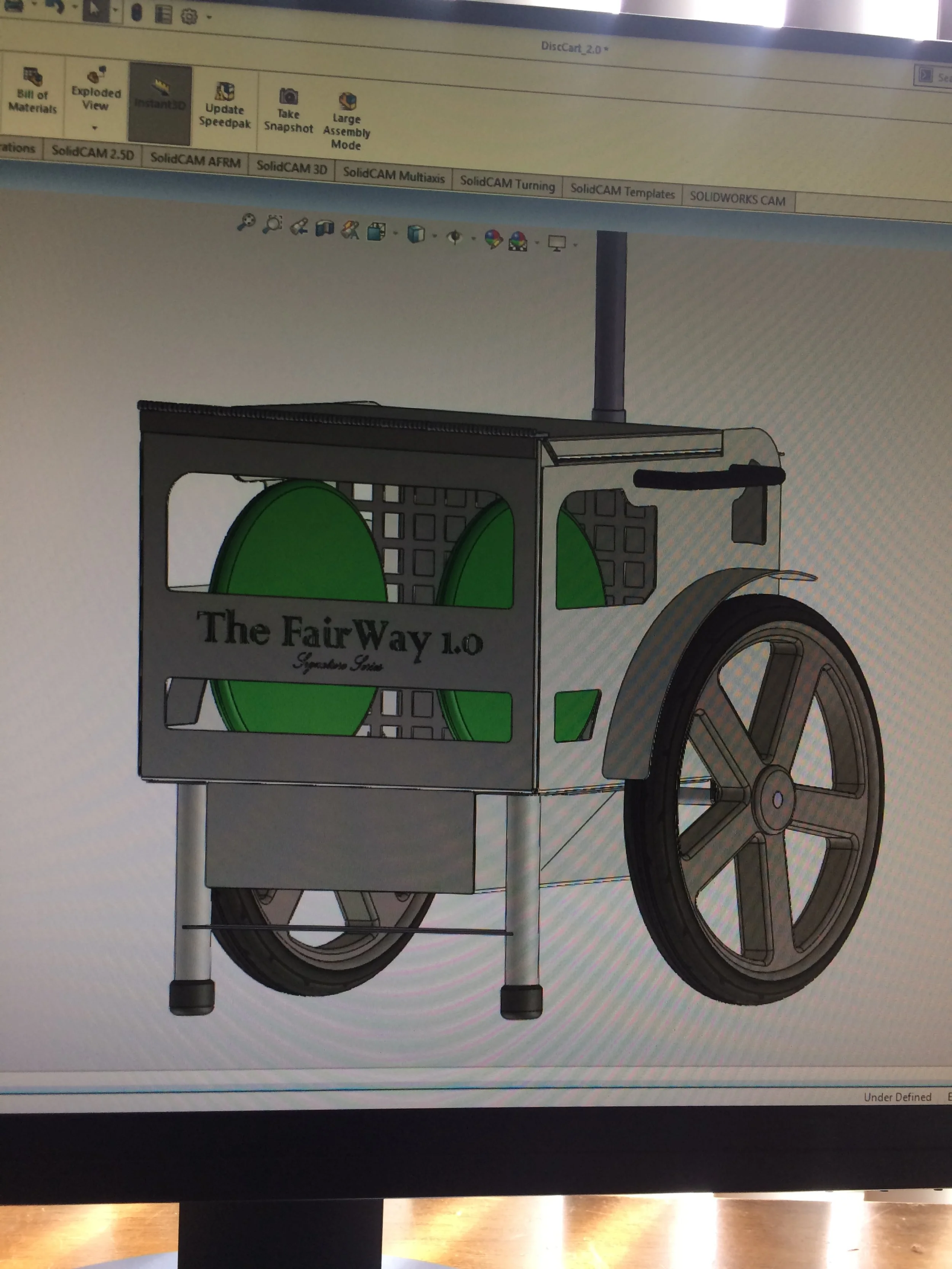
The mechanical design was developed by reverse engineering a discontinued commercial disc golf cart using reference images as the primary source of dimensional guidance. Key proportions and geometry were approximated and refined through iterative CAD modeling.
The design was created in SolidWorks using sheet metal tools, with multiple iterations to optimize internal storage layout, structural rigidity, and manufacturability. Several custom features were introduced to improve functionality over the original design, including integrated storage compartments, reinforced structural elements, and modular accessory compatibility.
Production / Assembly
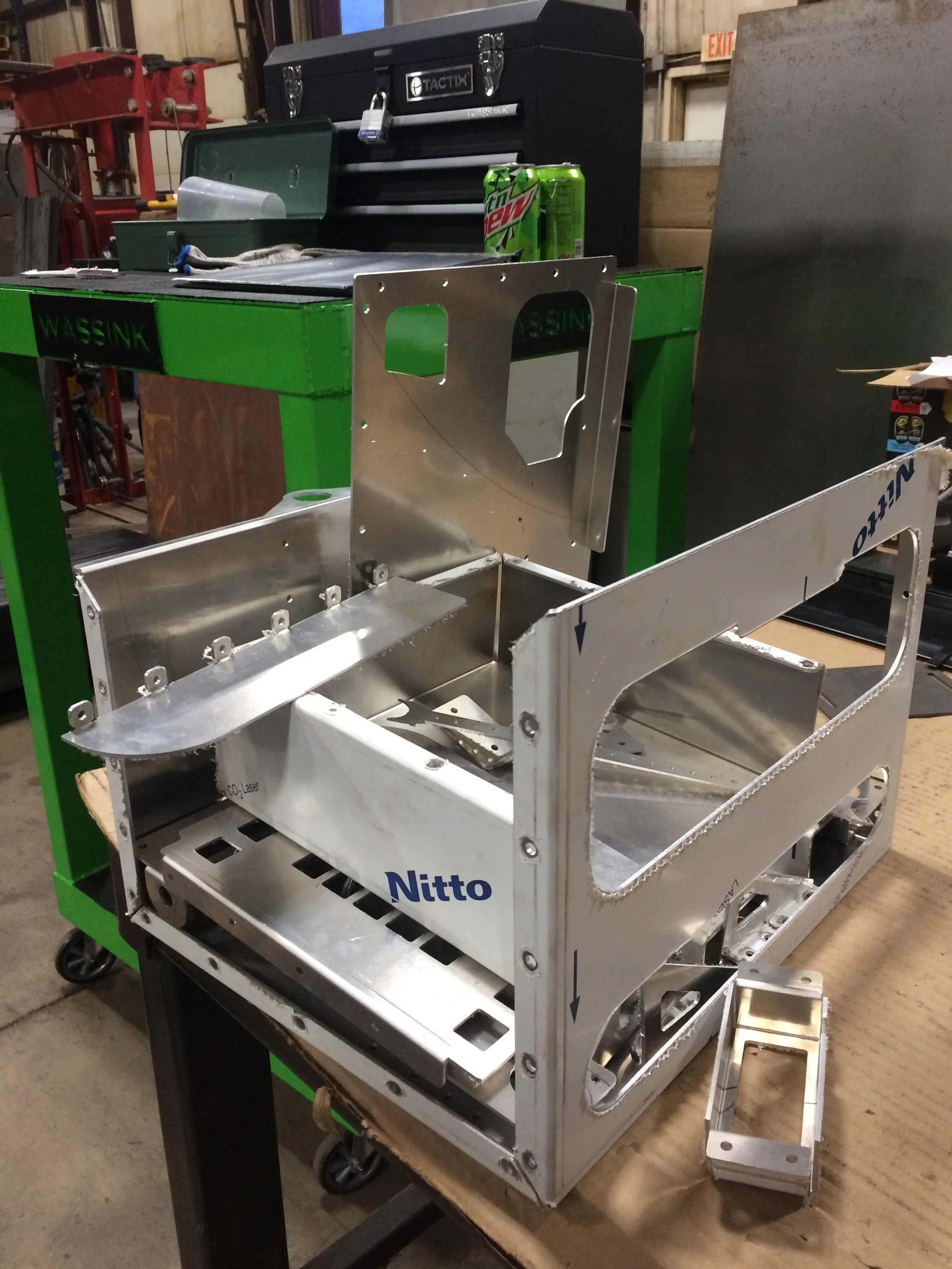
CAD models were exported as DXF files and nested for efficient material utilization during laser cutting. Bend allowances and forming dimensions were verified using fabrication drawings and applied using a CNC hydraulic press brake.
During assembly, clecos were used to temporarily fixture panels and maintain alignment prior to final fastening. Components were permanently joined using aluminum rivets, with select structural elements reinforced through welding.
This process resulted in a rigid, lightweight structure with consistent alignment and strong joint integrity across the full assembly.
Results
After 3+ seasons of real-world use, the cart has proven to be highly reliable, durable, and comfortable in a variety of course conditions.
The structure has maintained its integrity with no noticeable deformation or joint failure, validating the riveted construction and material selection. Storage, transport, and seating functions have consistently performed as intended, with no required design revisions since initial fabrication.
This project demonstrates a successful transition from concept through fabrication to a field-tested, long-term use product.
Videos
Watch on YouTube
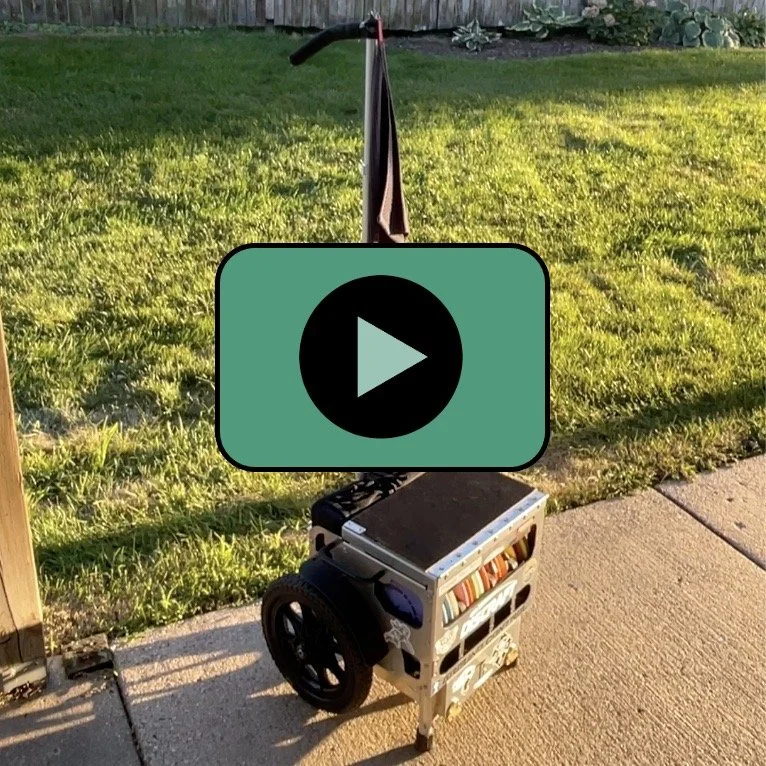
Quick Tour