Deck & Retaining Wall Retrofit
Sept 2023 - Nov 2023
Overview
This project involved rehabilitating an existing deck and surrounding hillside to improve structural integrity and accessibility. The solution combined structural reinforcement, retaining wall construction, and terrain leveling, along with a custom gantry lifting system for safe installation of structural members.
-
Restore structural integrity and improve accessibility of an existing deck and surrounding hillside by correcting improper modifications and creating a stable, usable outdoor space.
-
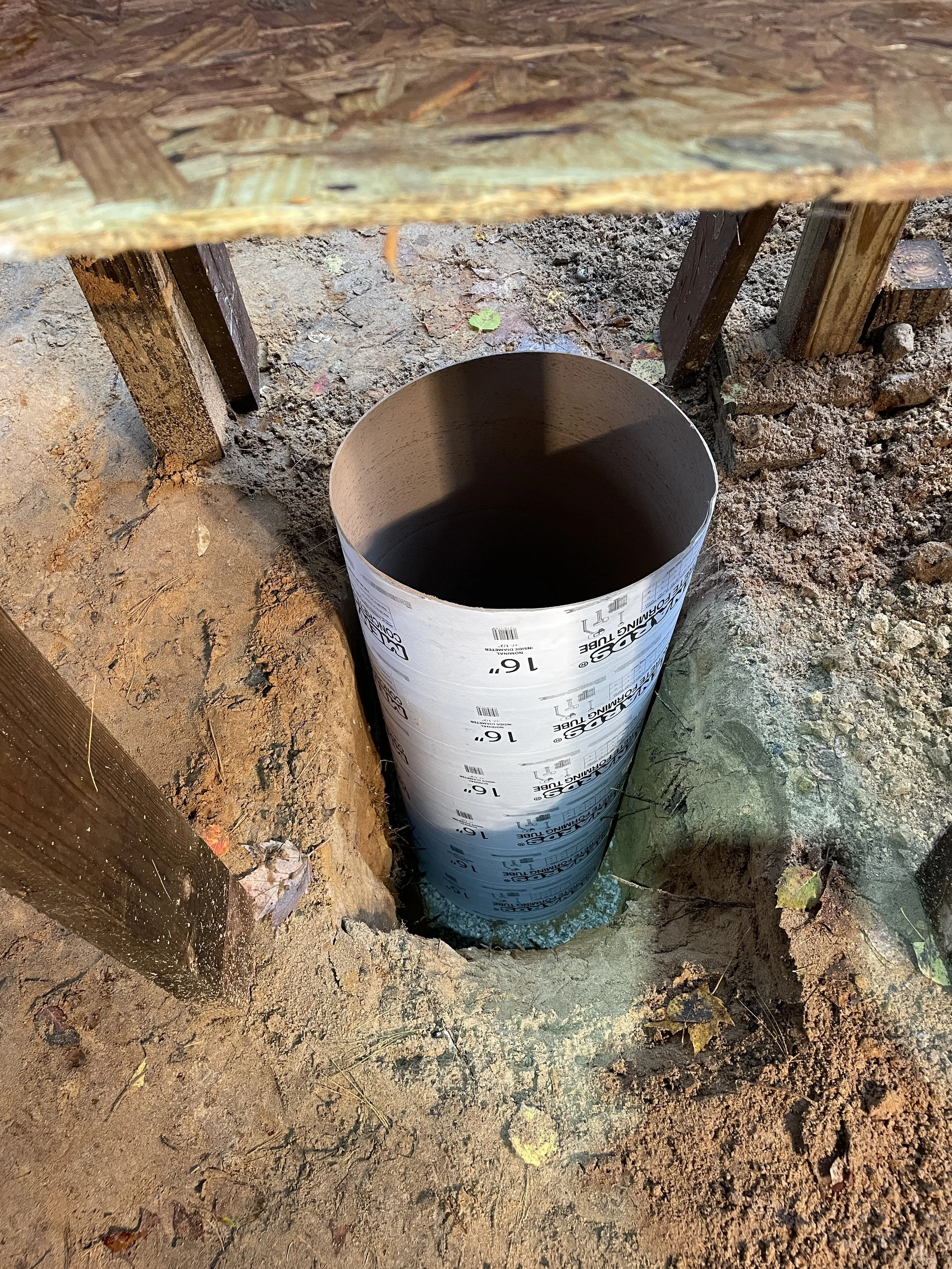
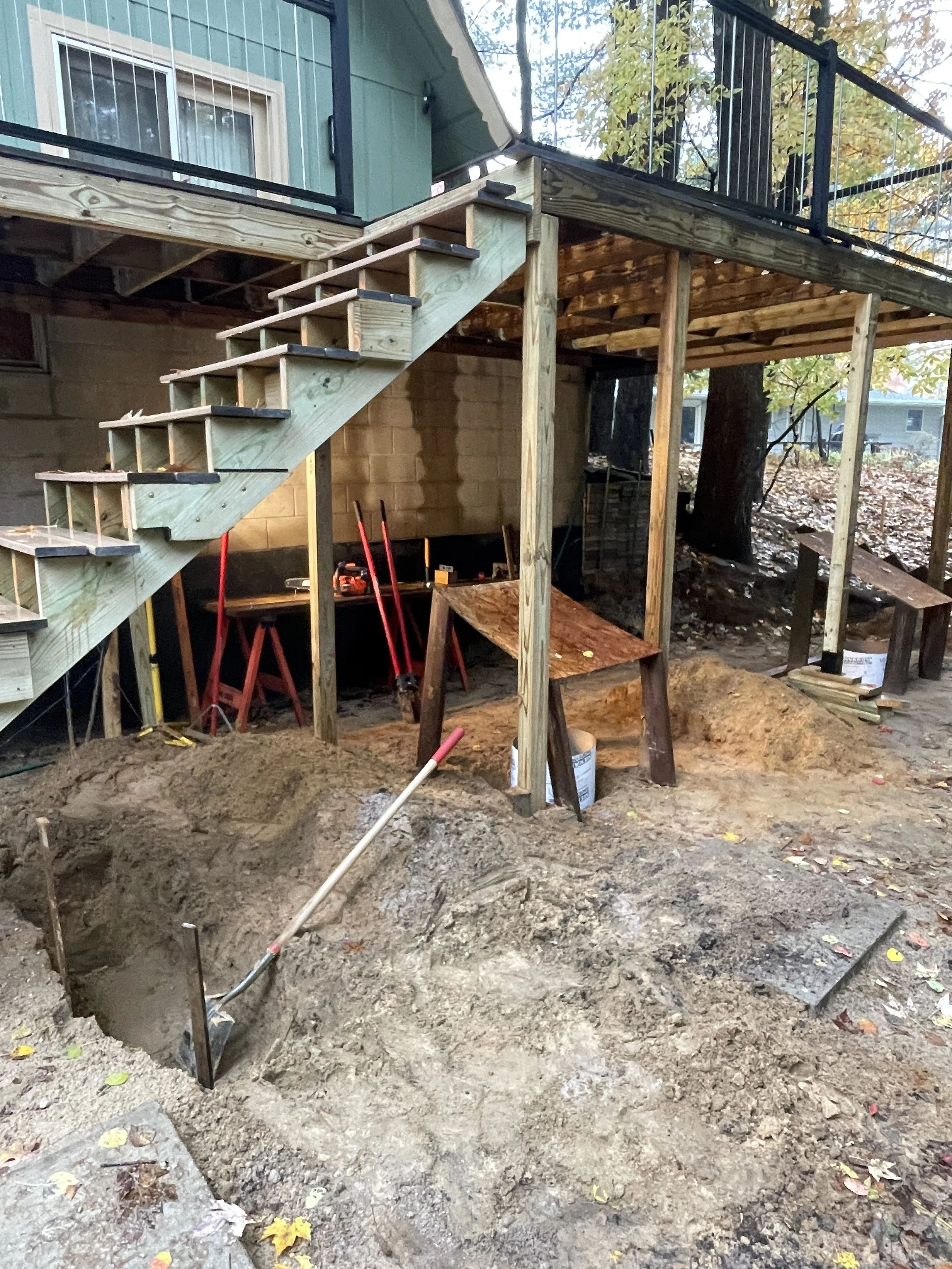
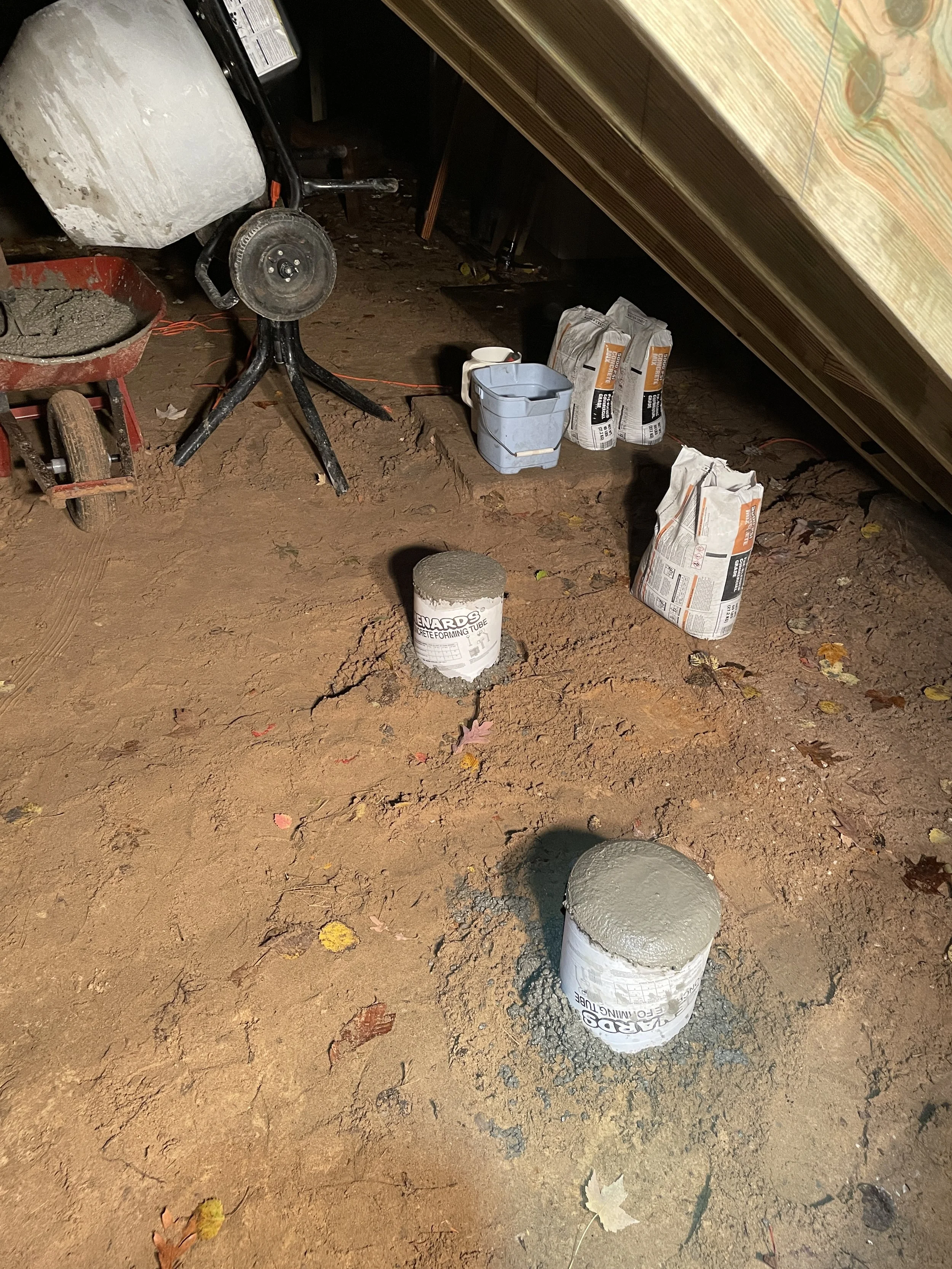
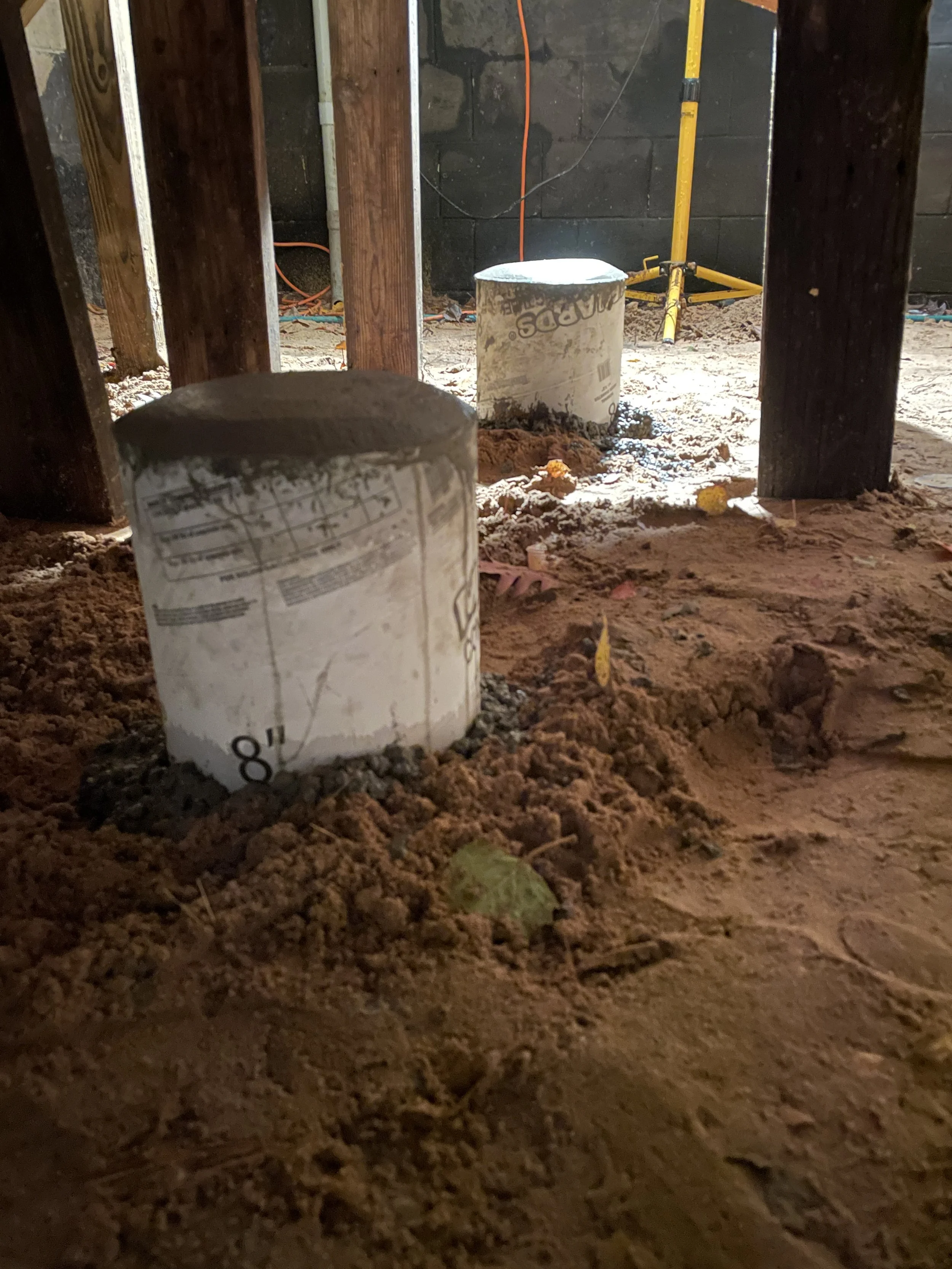
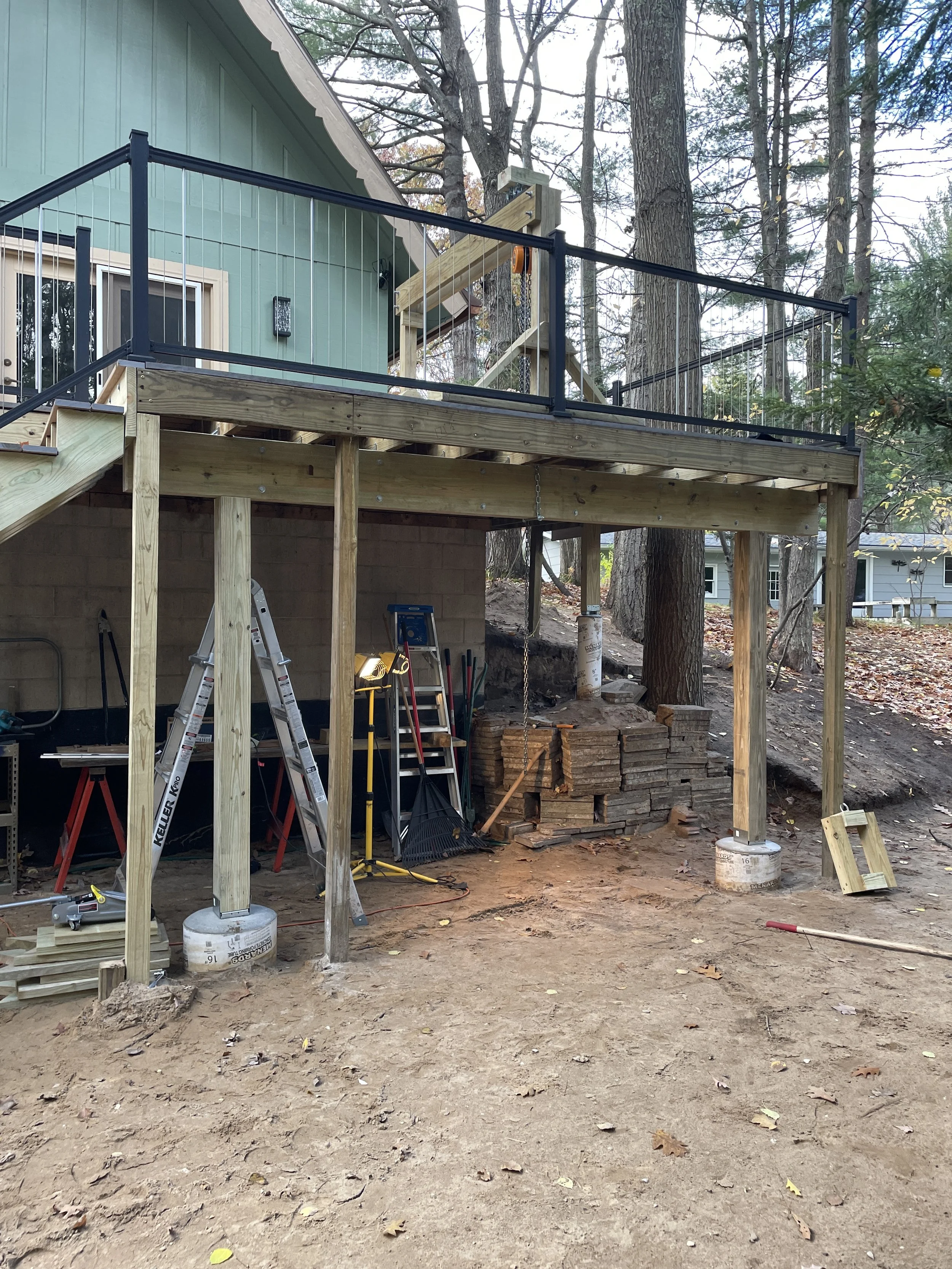
Structural reinforcement of existing deck with new footings and properly supported load-bearing members
Construction of large retaining wall to stabilize terrain and create a level working and access area
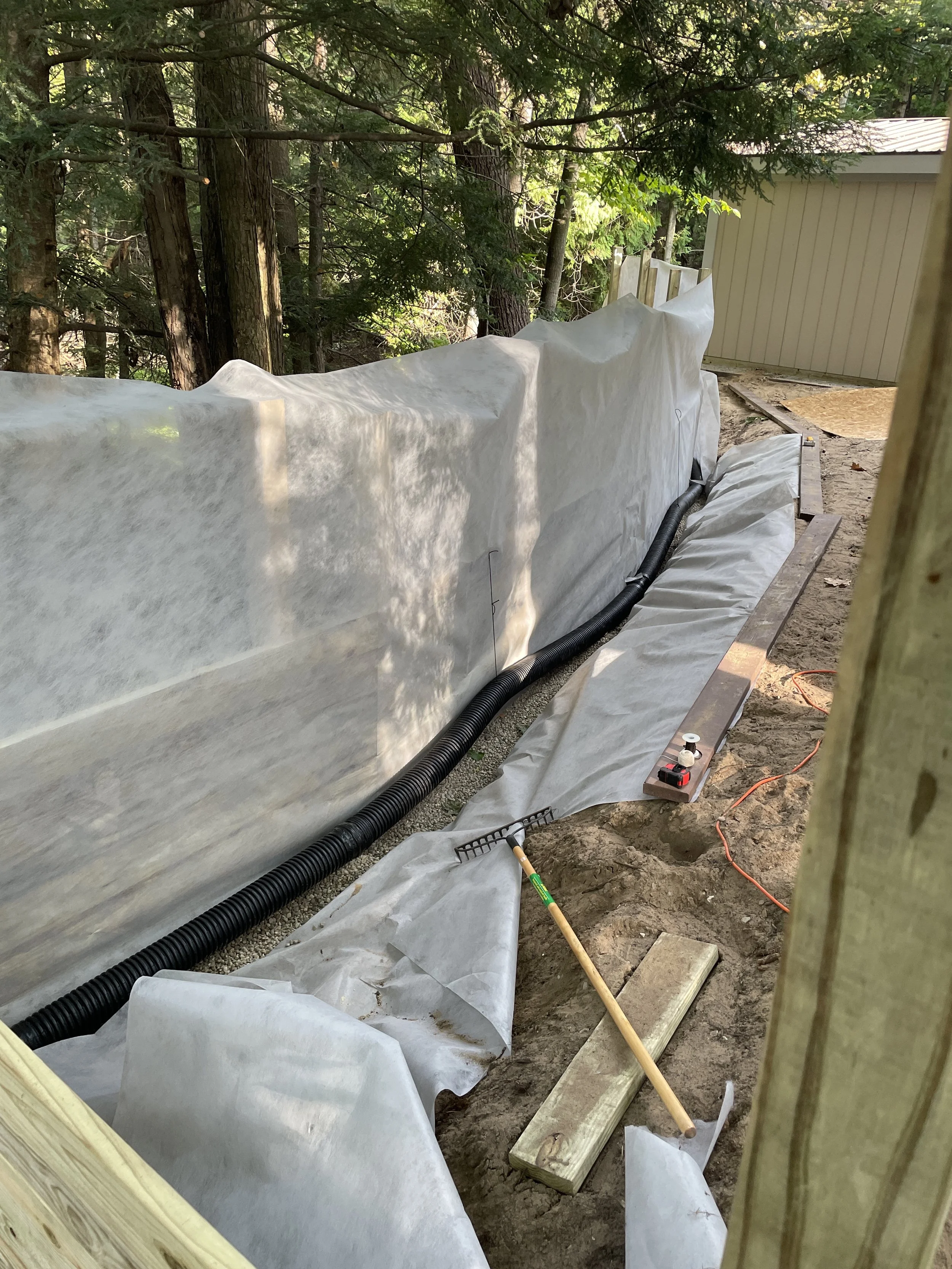
Integration of French drain system behind primary retaining wall to collect and redirect water after terracing
Use of gravel backfill drainage behind secondary retaining wall to allow passive water dissipation
Rebuild of secondary retaining wall to accommodate new structural supports and improve long-term stability
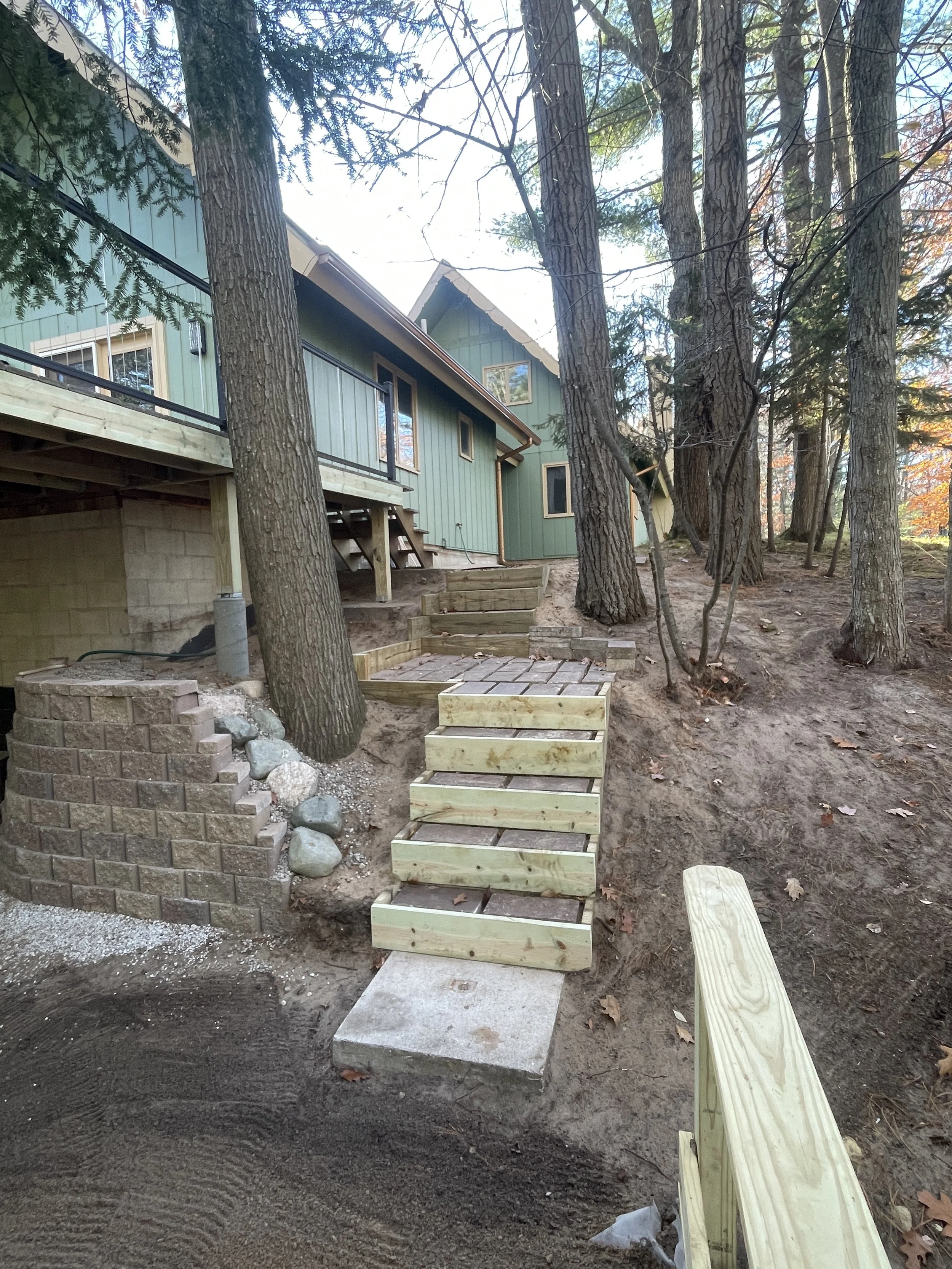
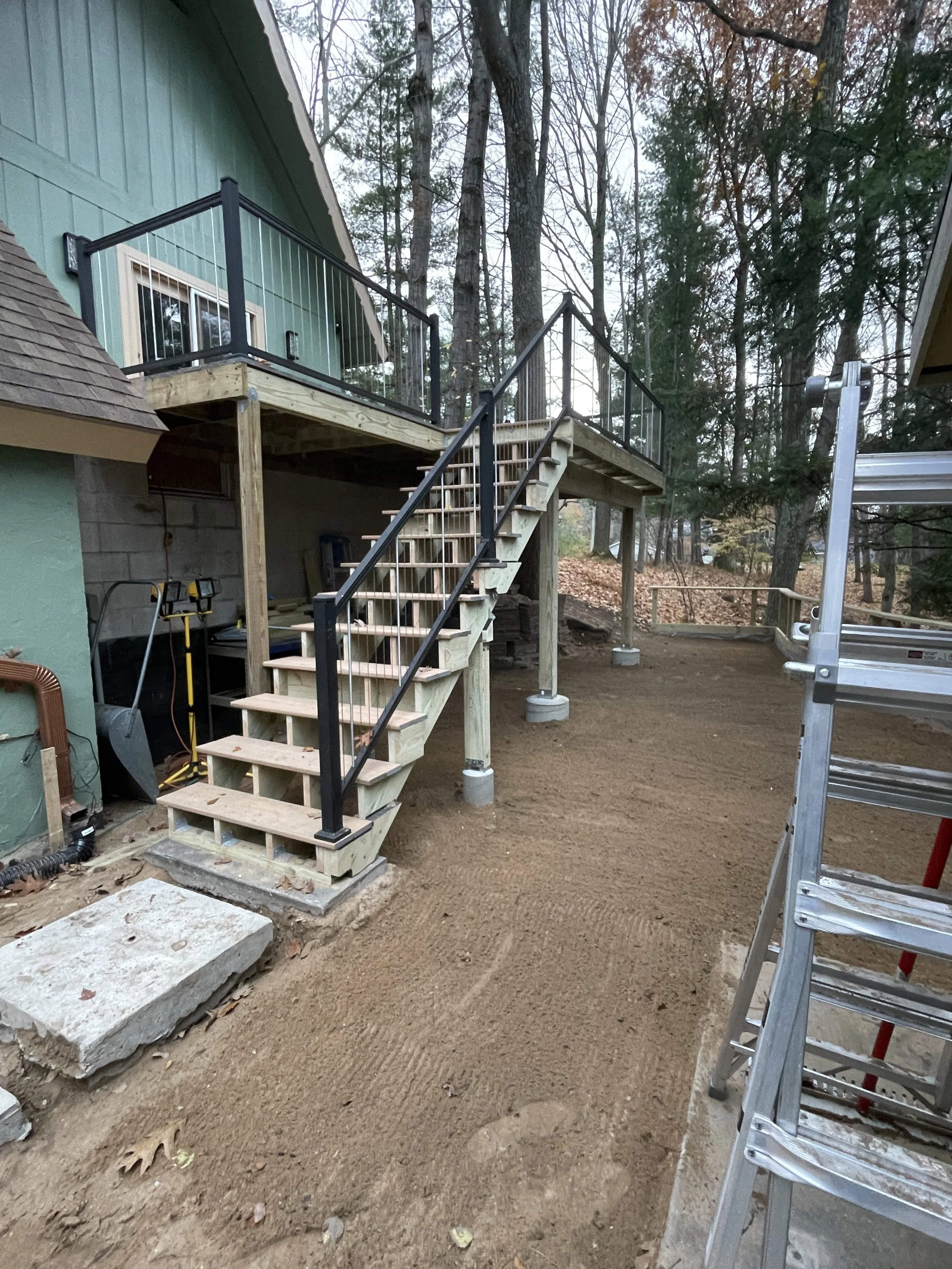
Addition of hillside staircase to improve safe access across steep terrain
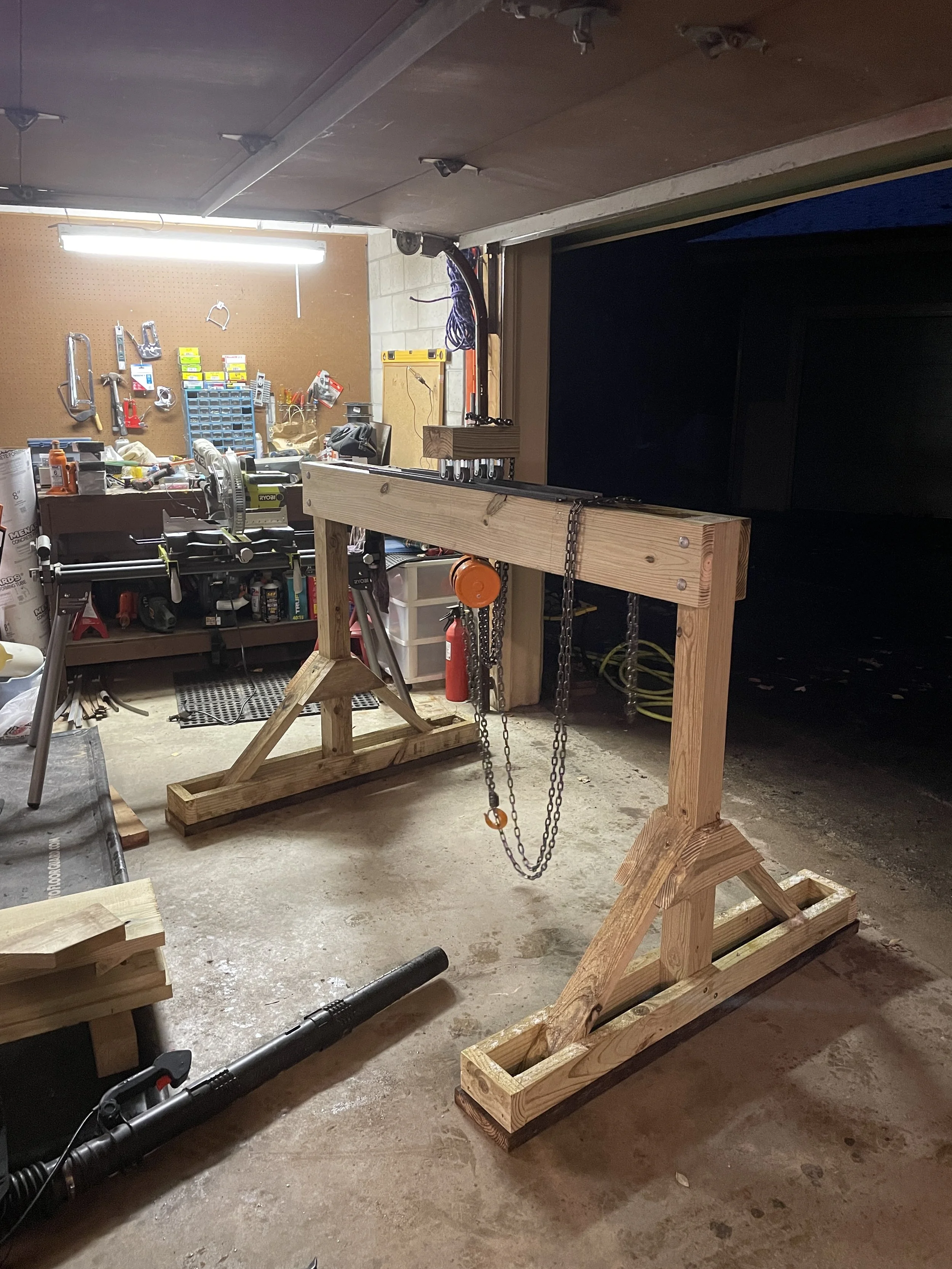
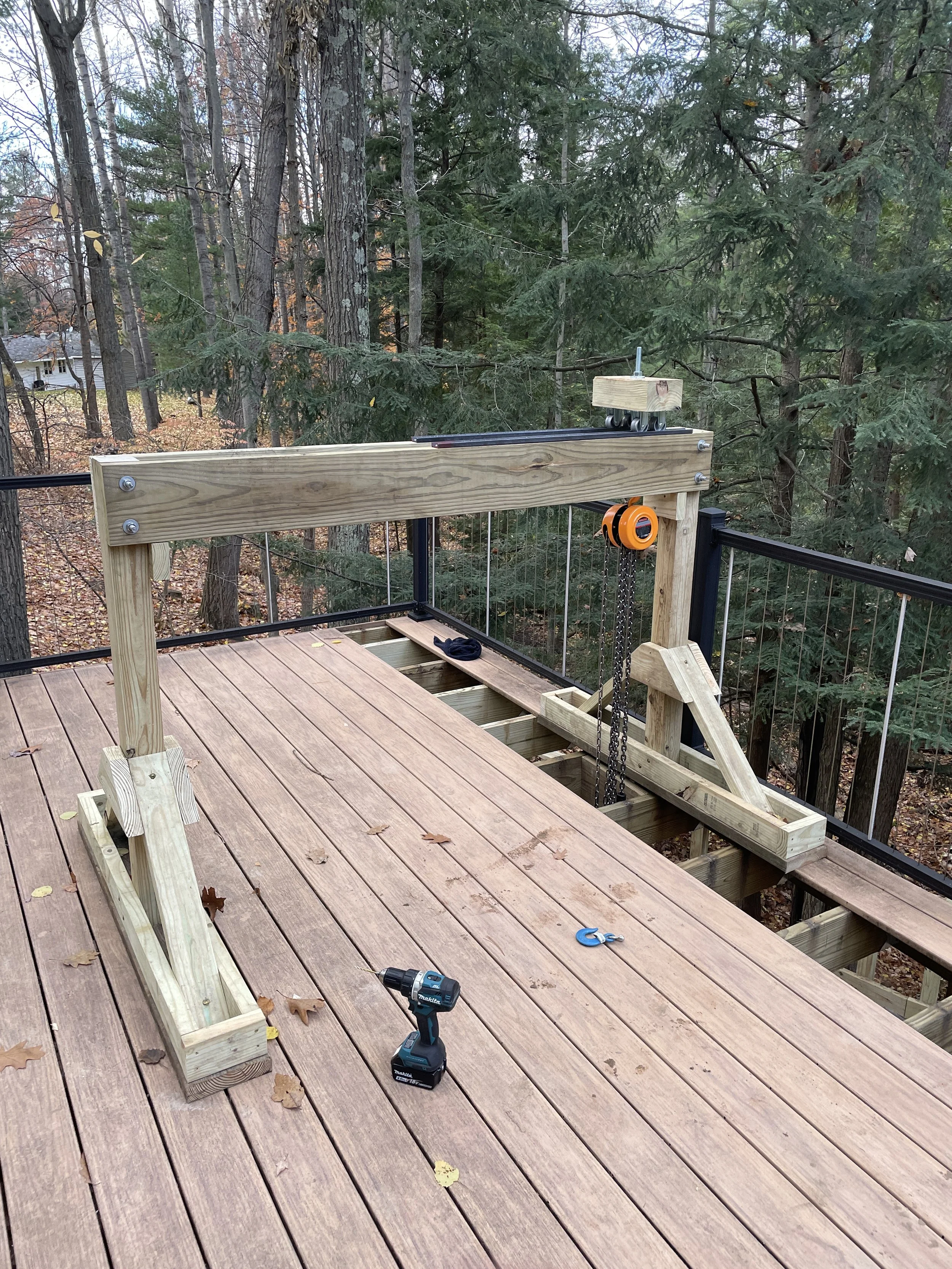
Custom-built gantry lifting system for controlled placement of heavy structural components without additional manpower
Use of load considerations and code-based practices to guide structural layout and support spacing
-
Challenges:
Executing the project independently required developing methods to handle and position heavy structural components without additional manpower
Installing joists and beams in a single-person workflow required creative fixturing, including clamps and temporary supports, to maintain alignment during fastening
Establishing level reference points on a steep, uneven hillside required adapting measurement techniques, using the existing deck structure as a baseline for consistent elevation
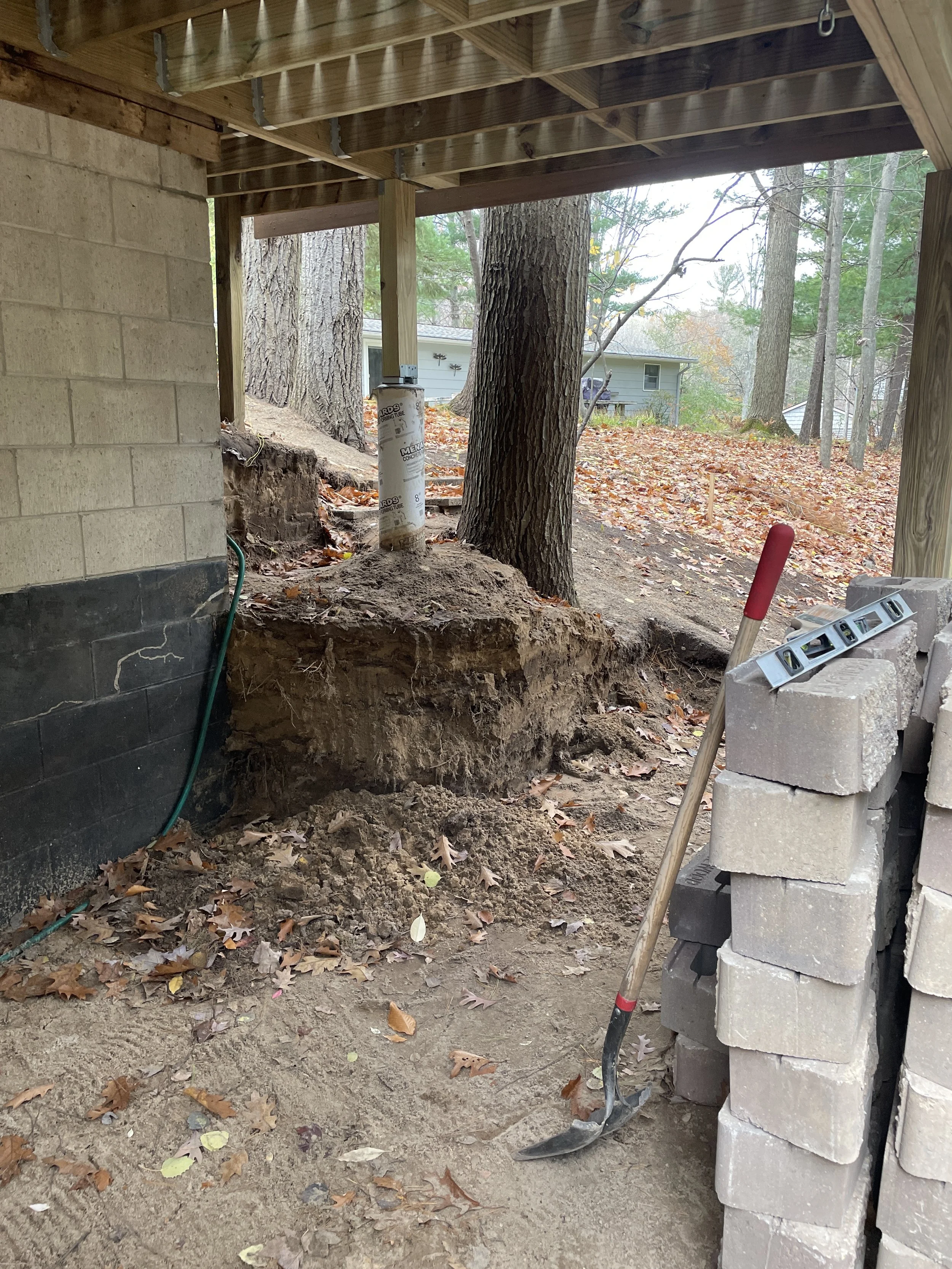
Excavation for deep footings was complicated by dense soil and tree root systems, making accurate placement and depth control difficult
Material planning and cost estimation required careful calculation of quantities and coordination with suppliers to avoid delays
Logistics, including long-distance material sourcing and transport of heavy stone and lumber, added complexity to scheduling and execution
Outcomes:
Successfully completed full structural rehabilitation and terrain improvement as a single-operator project through custom workflows and tooling
Developed a custom gantry lifting system to safely and precisely position heavy beams and materials, eliminating the need for additional labor
Achieved consistent structural alignment and elevation across new footings and supports despite uneven terrain
Implemented practical material planning and logistics strategies to manage cost and minimize disruption during construction
Delivered a stable, code-conscious structure with significantly improved accessibility and long-term reliability
Explore This Project
Site Conditions & Assessment
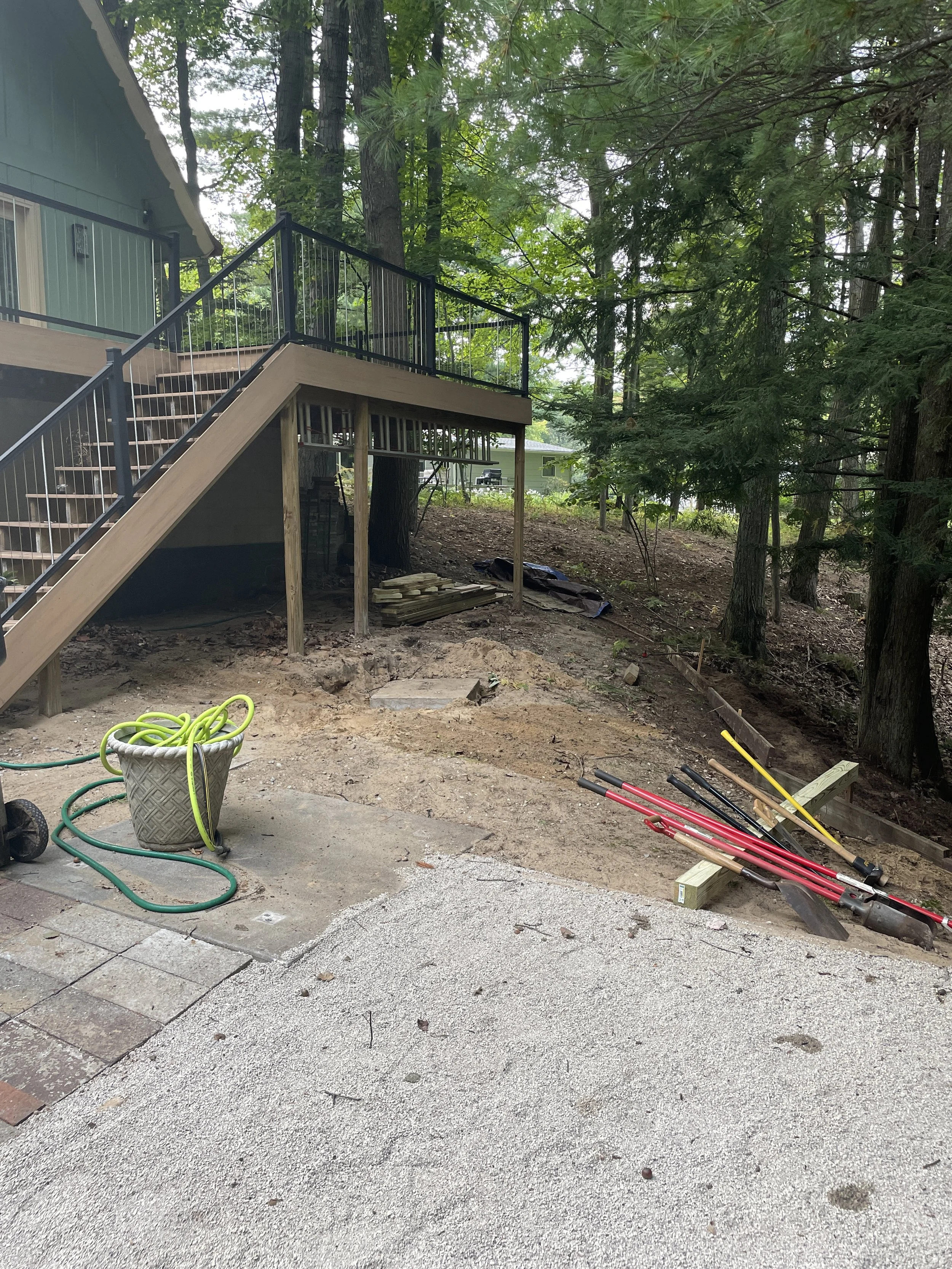
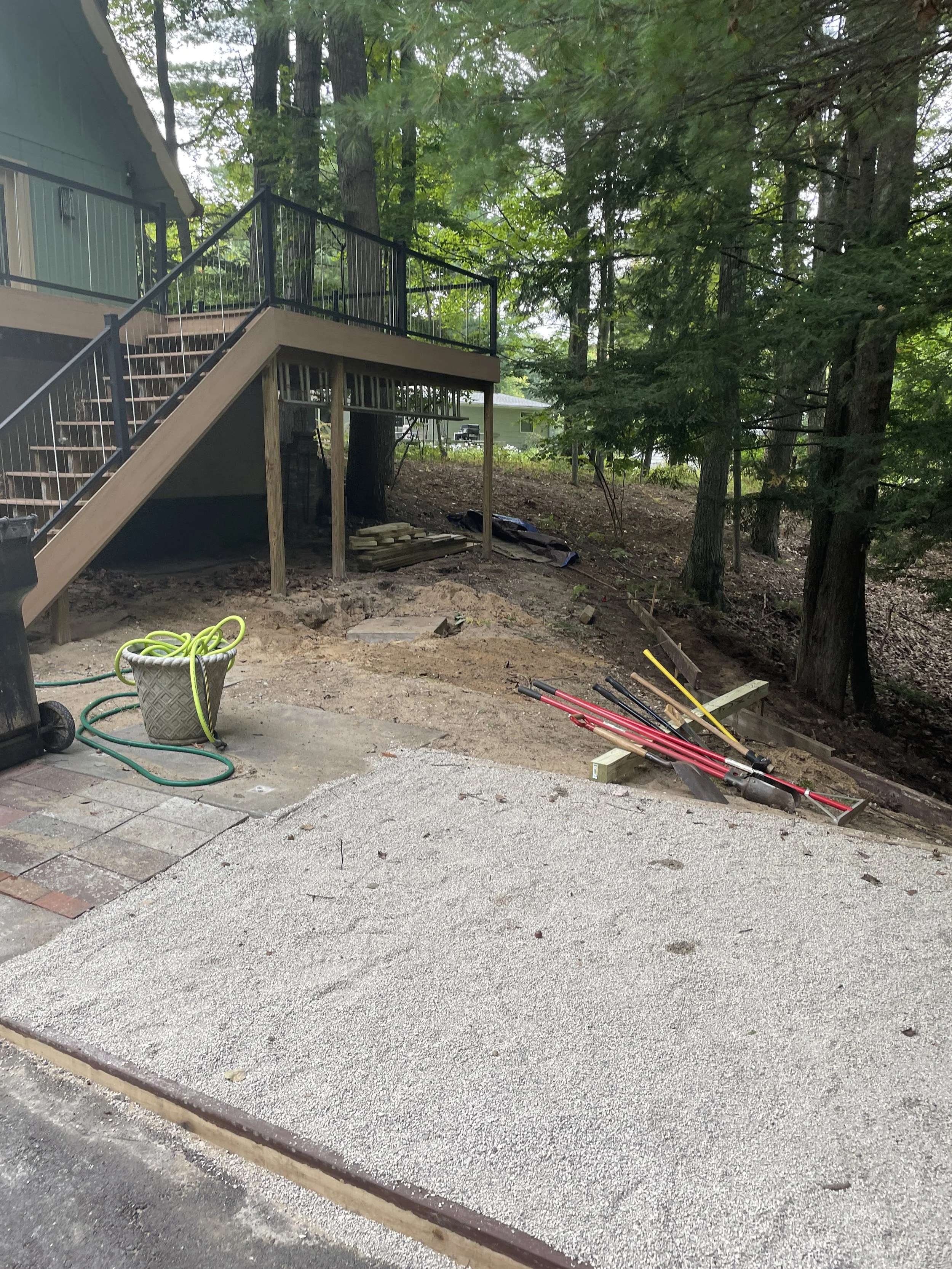
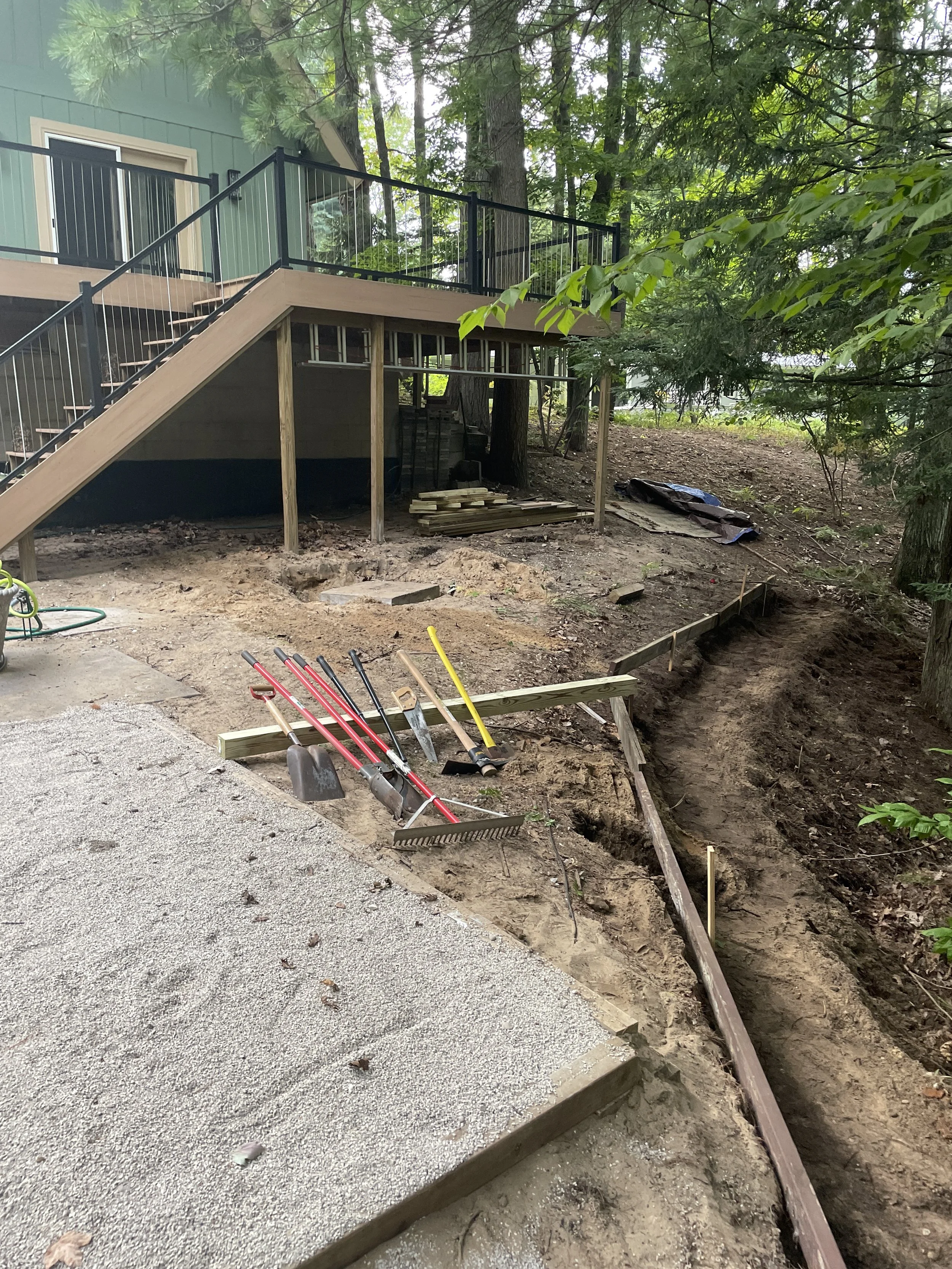
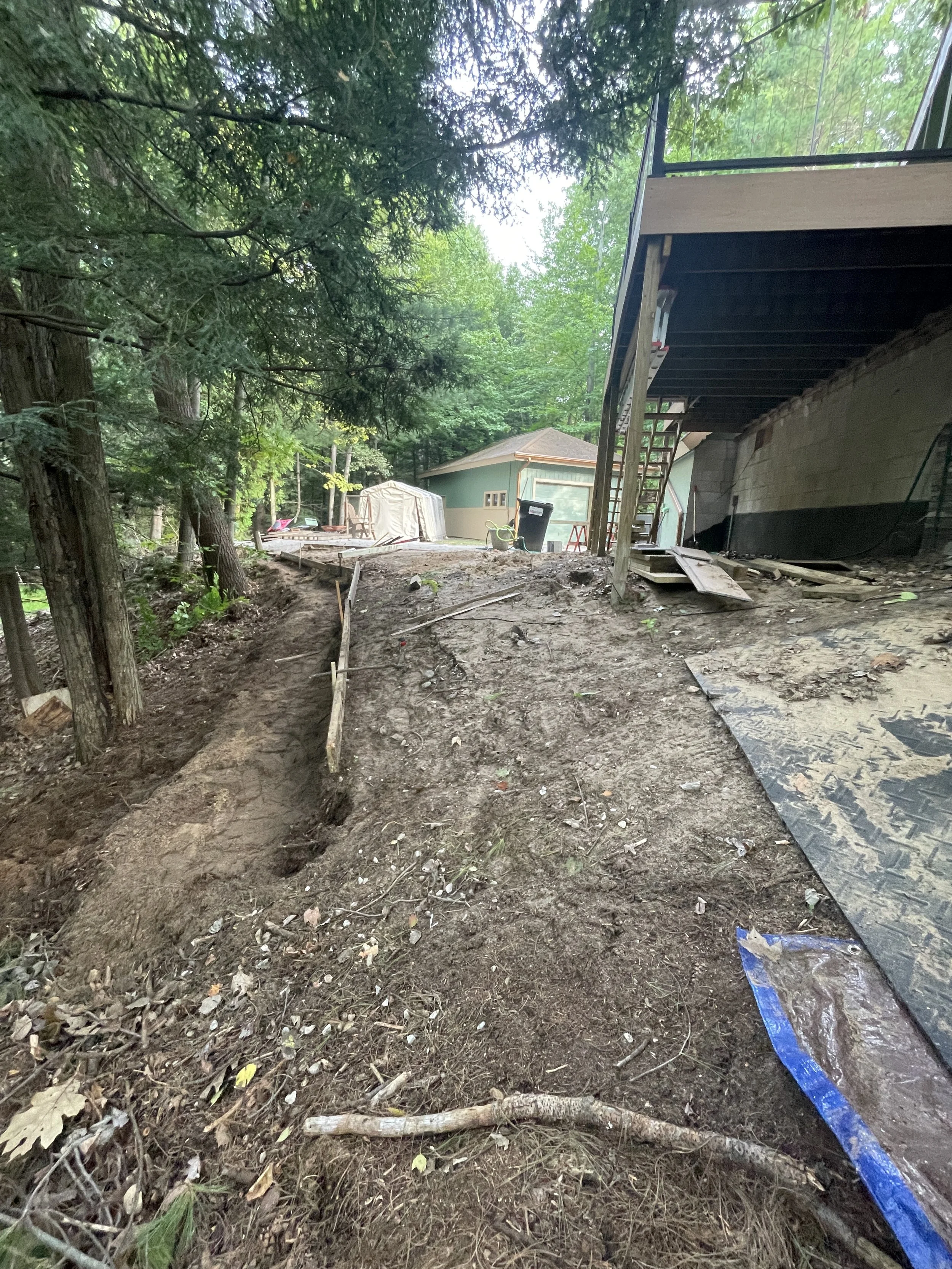
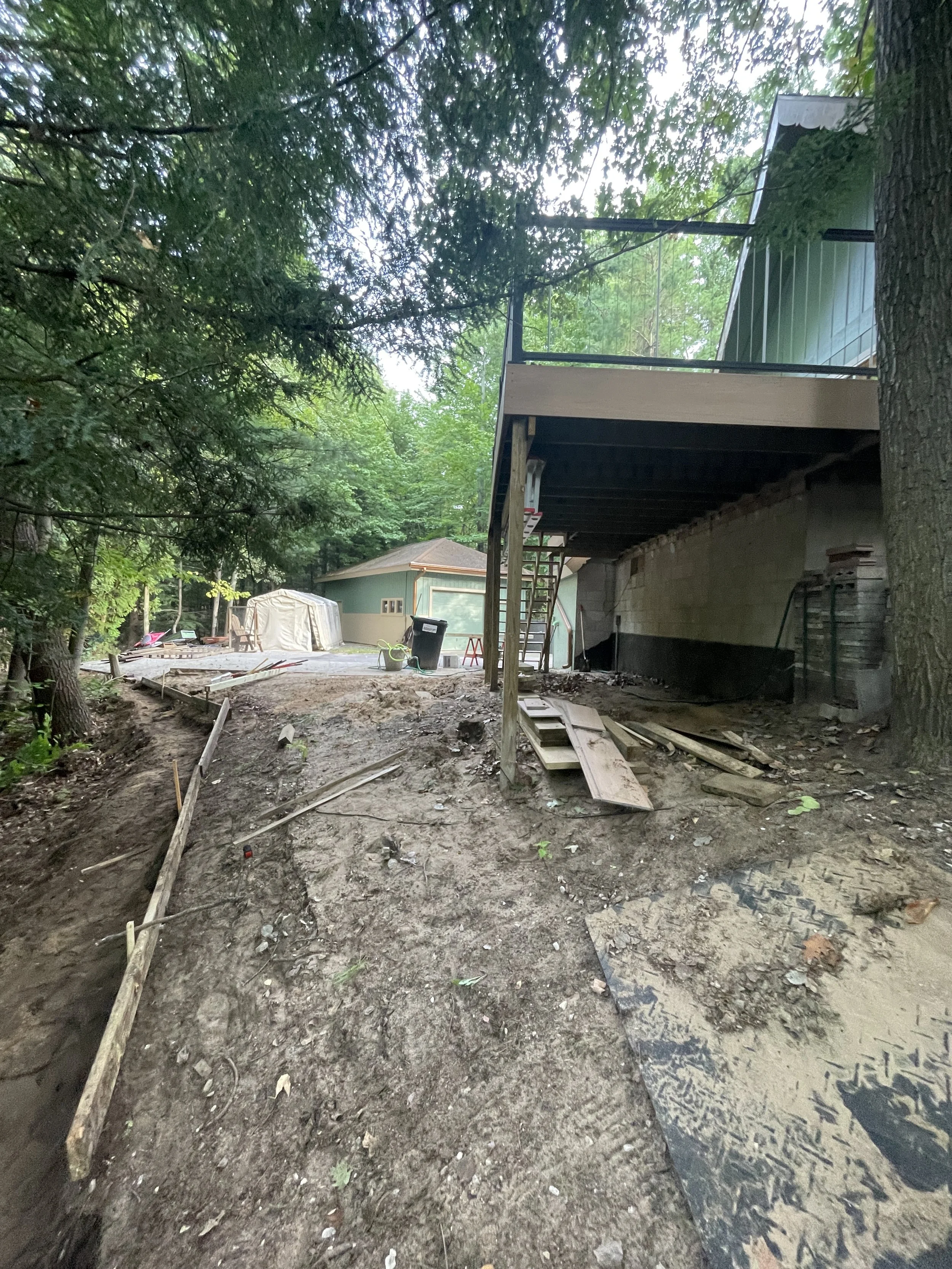
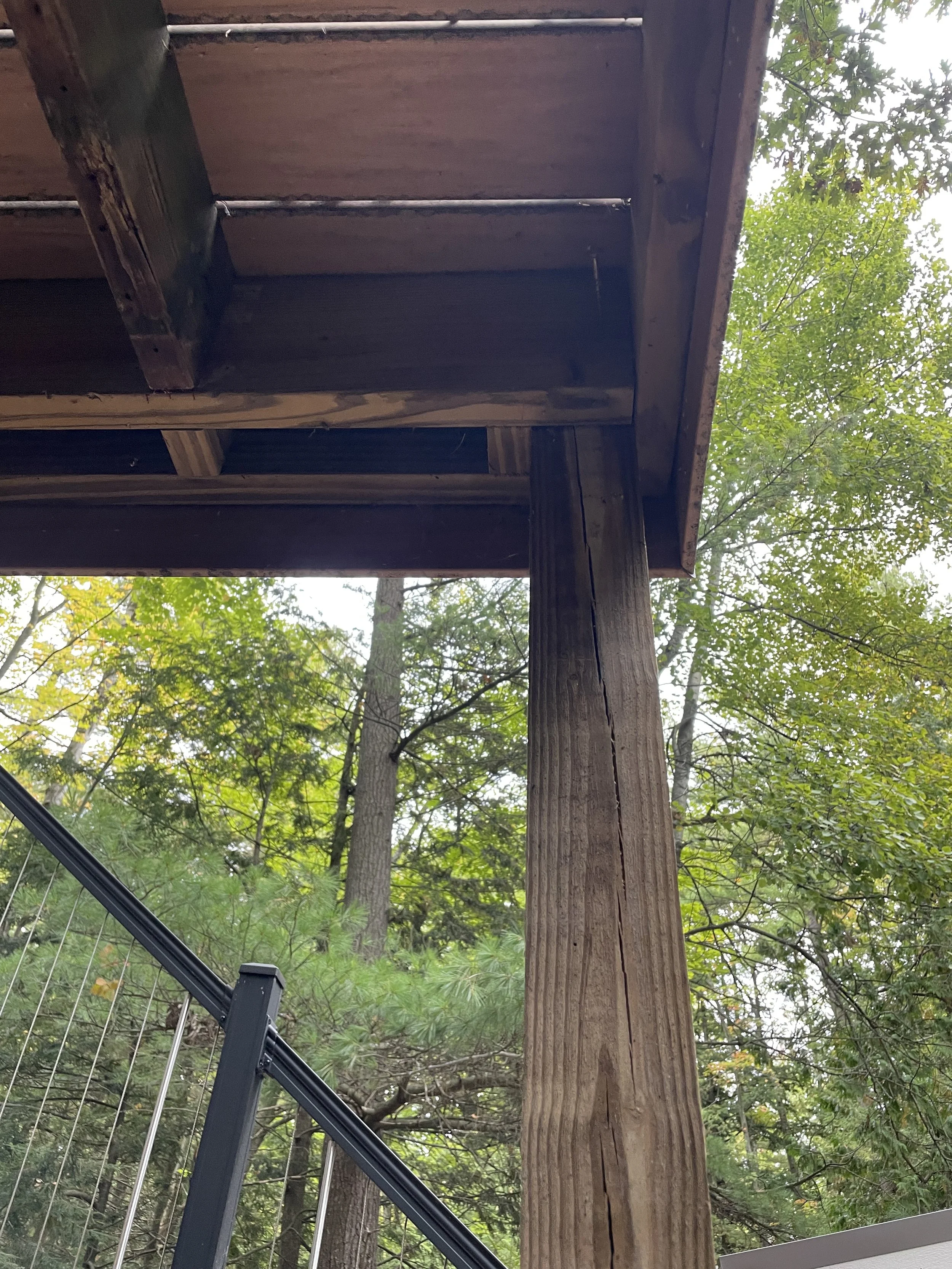
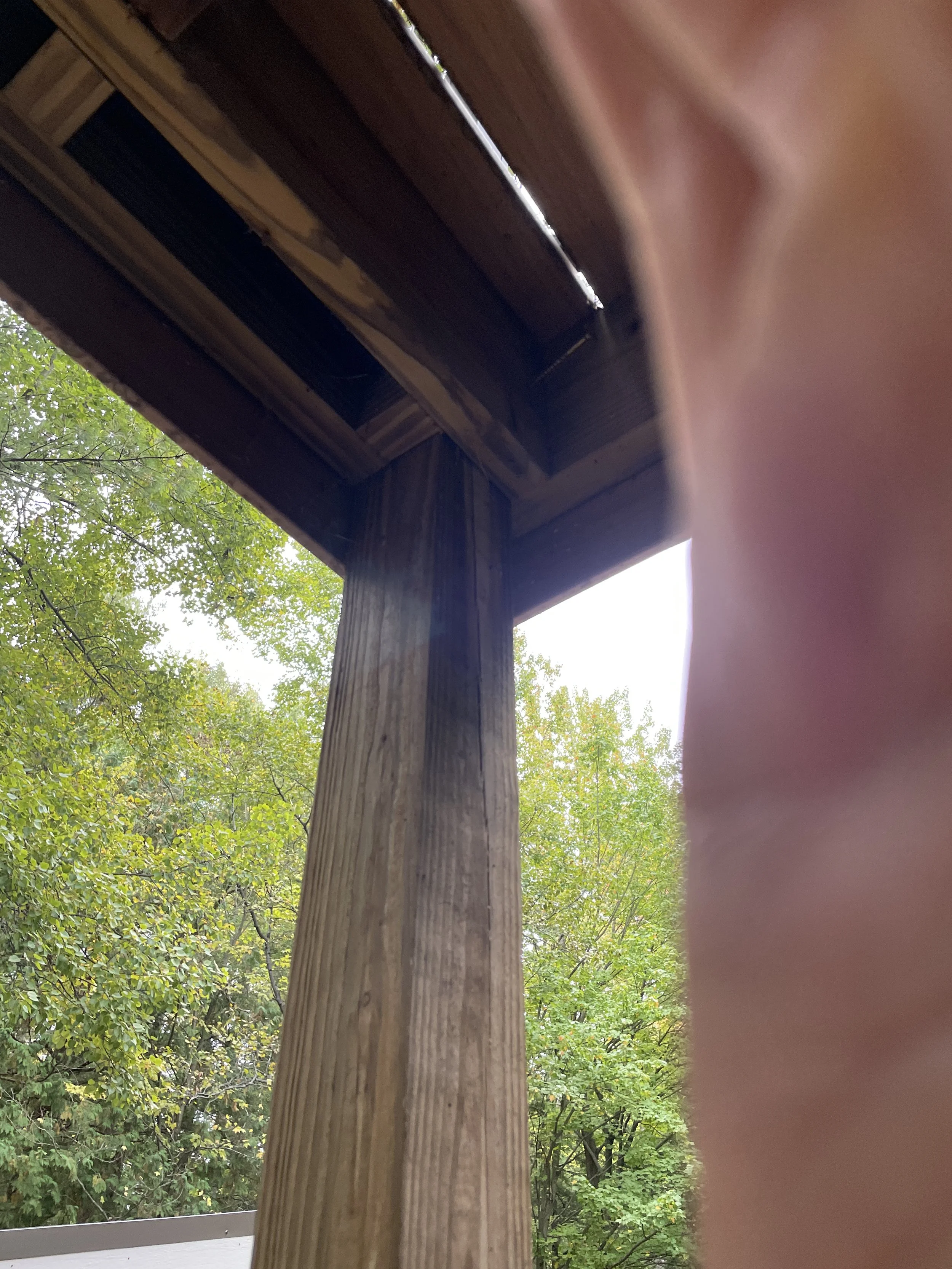
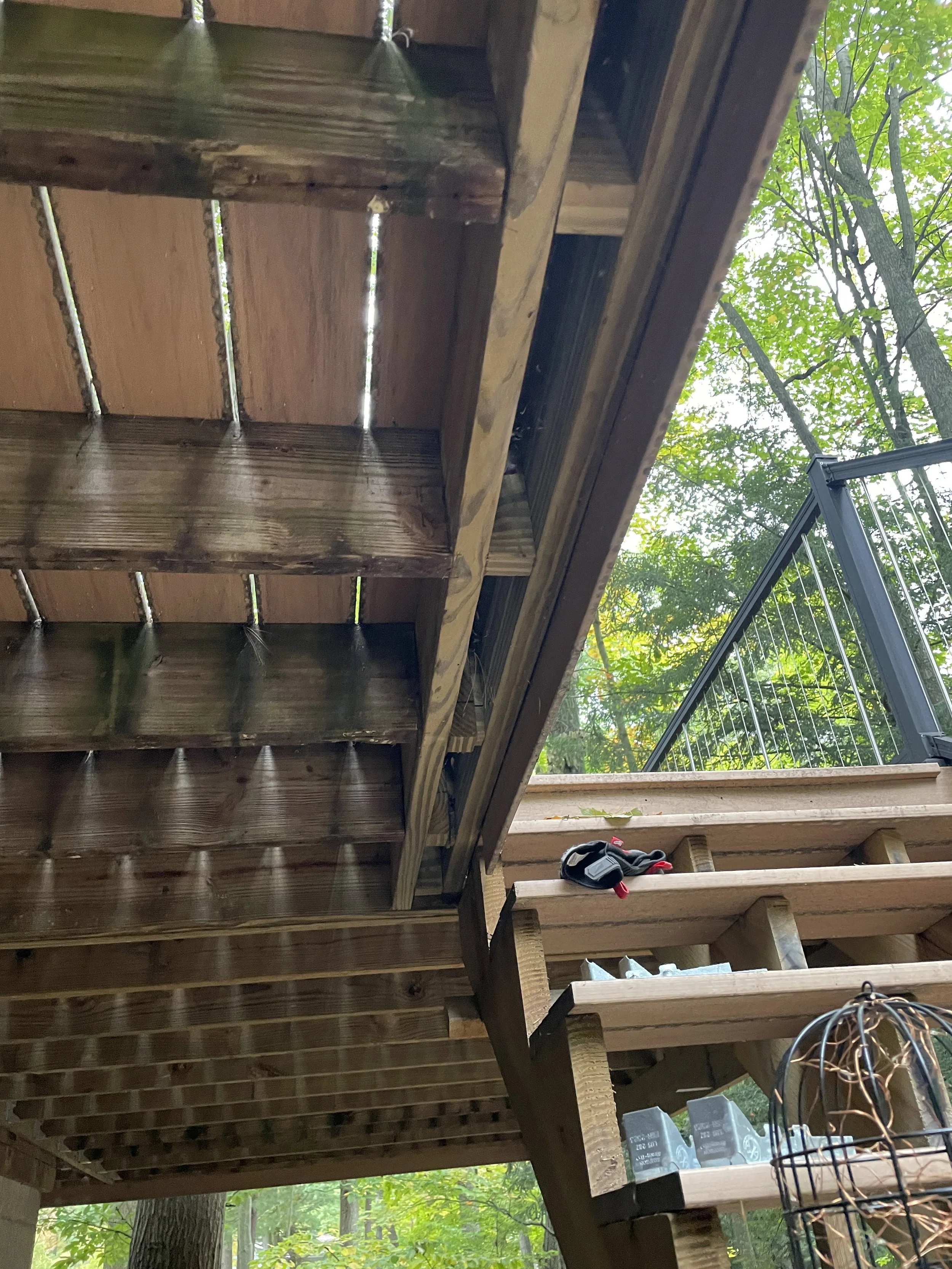
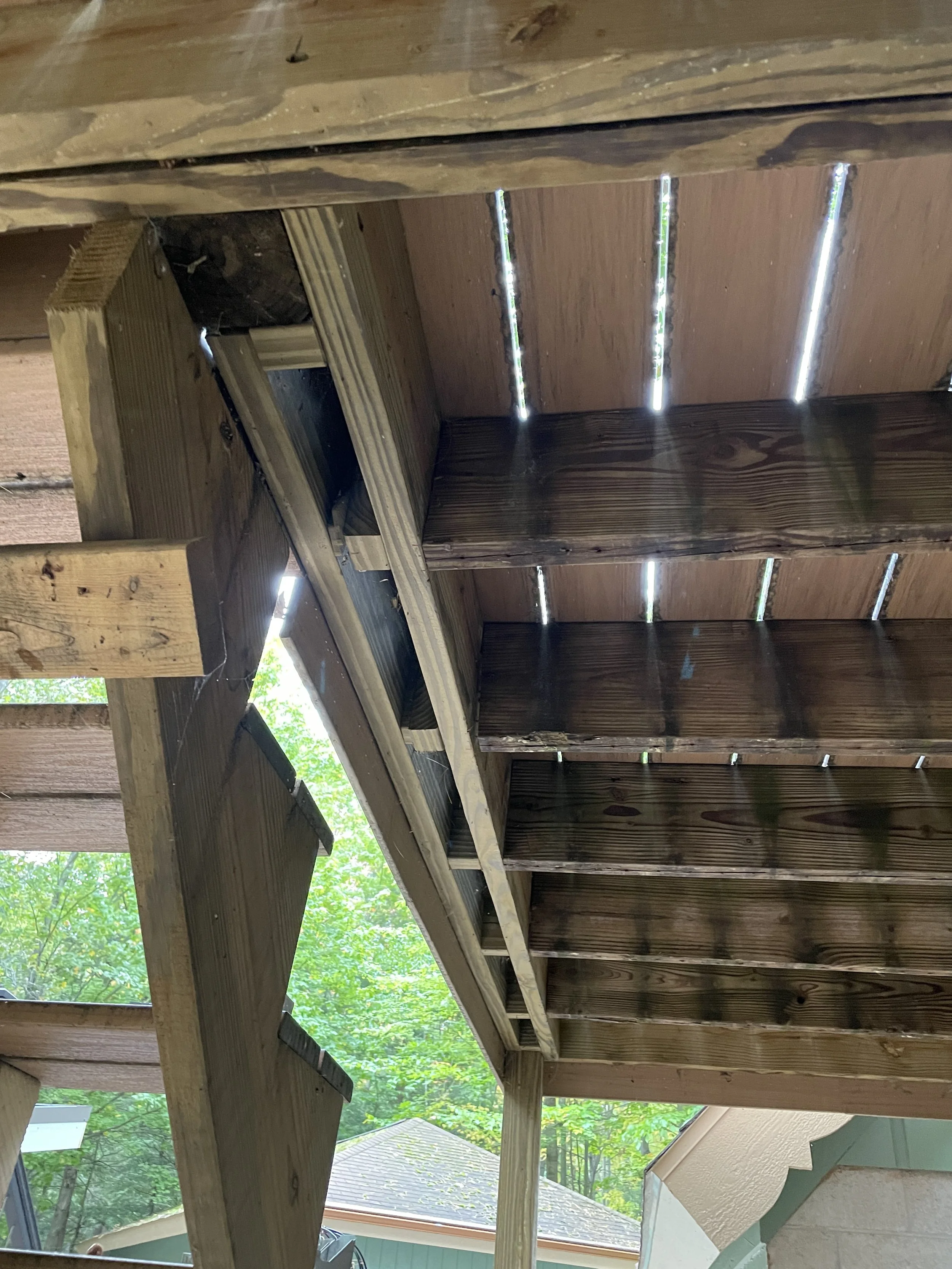
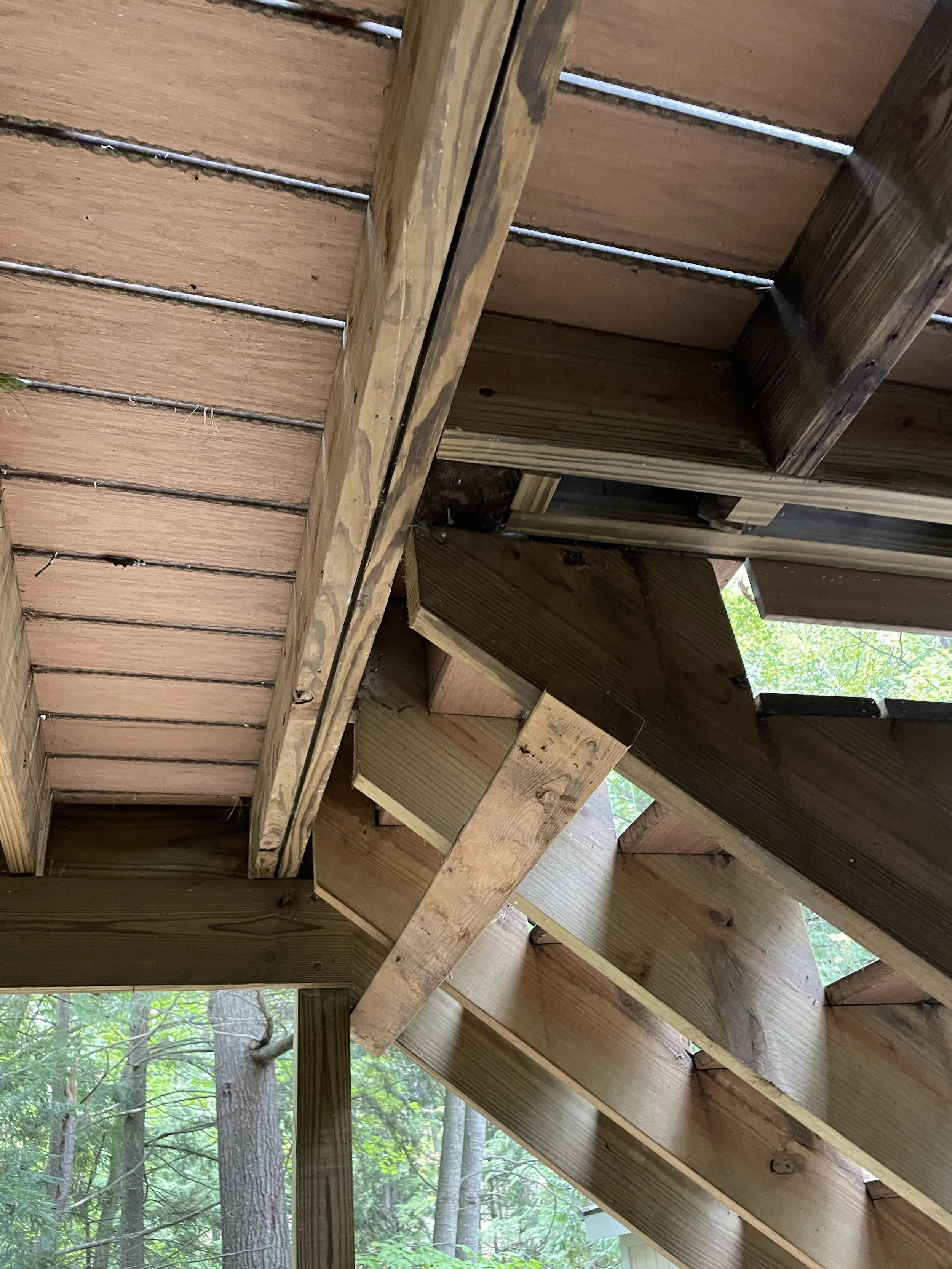
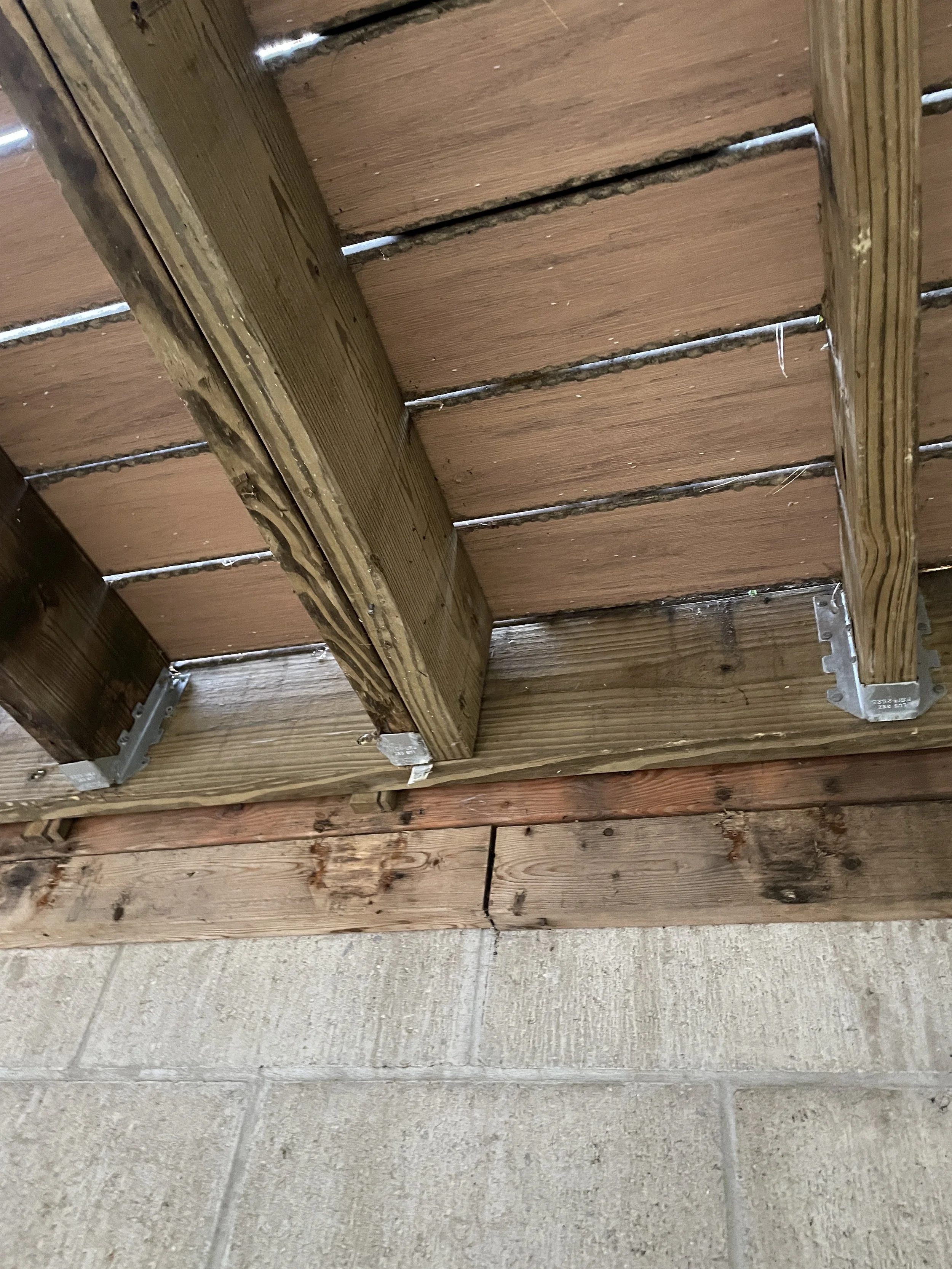
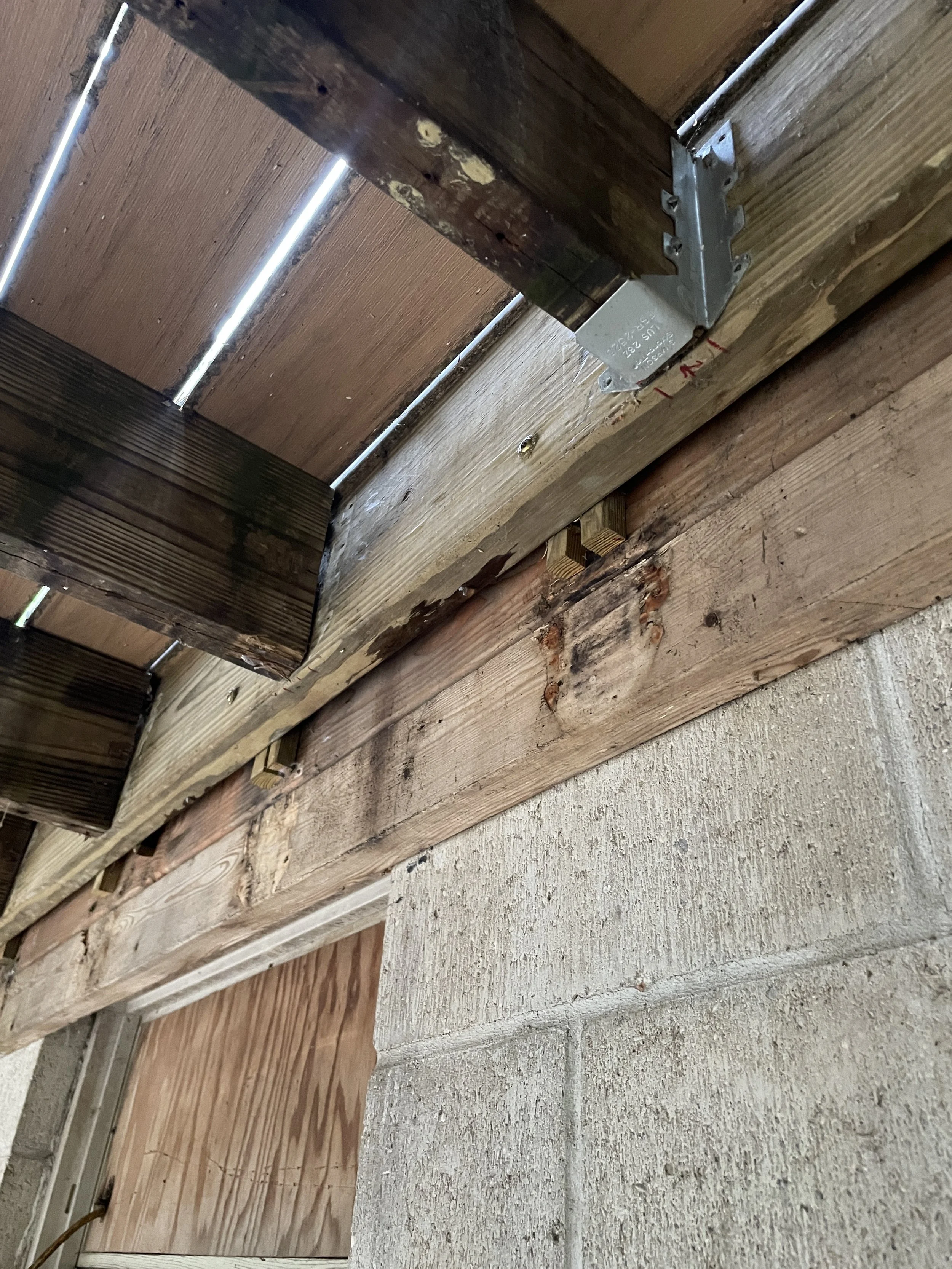
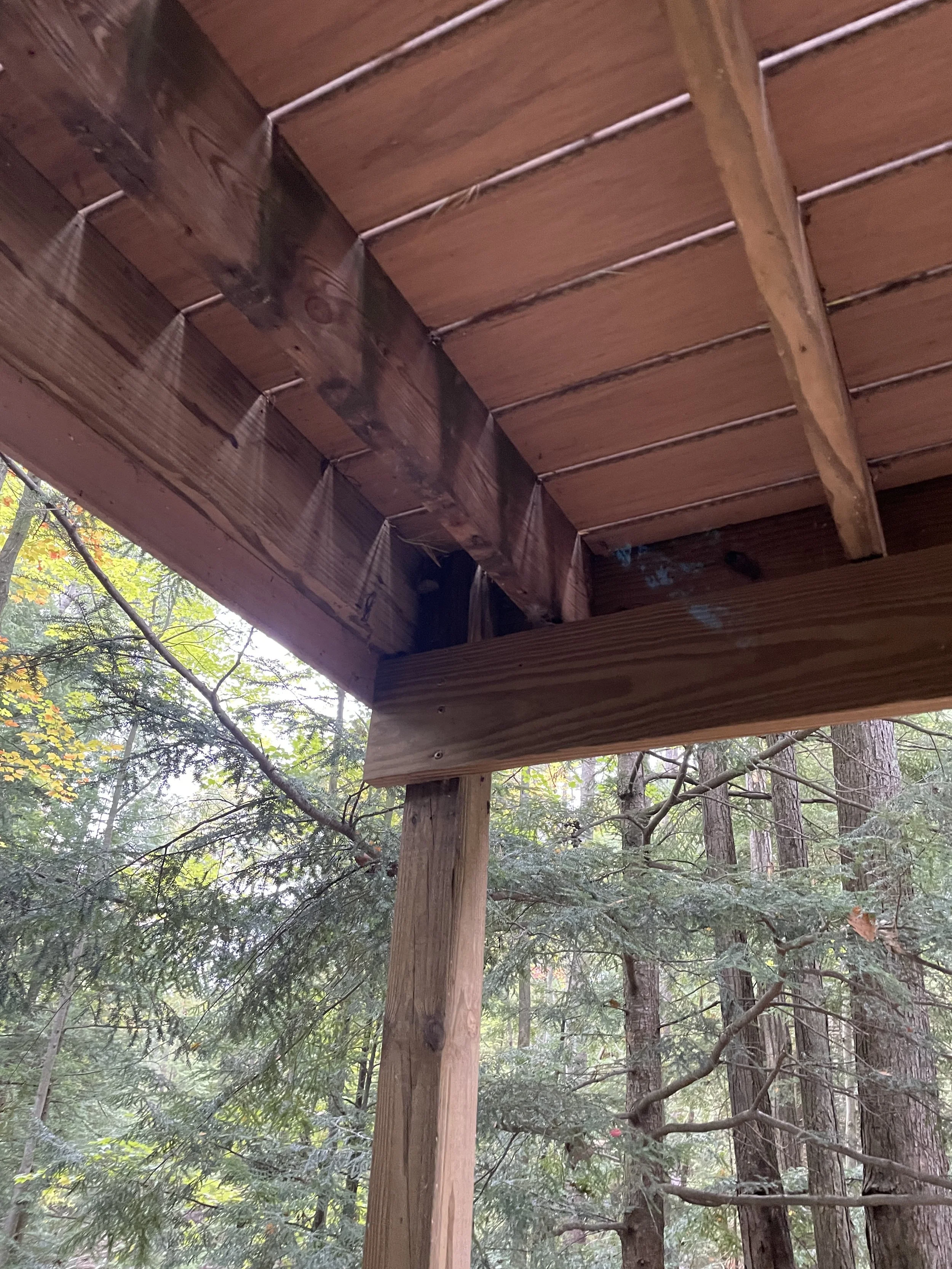
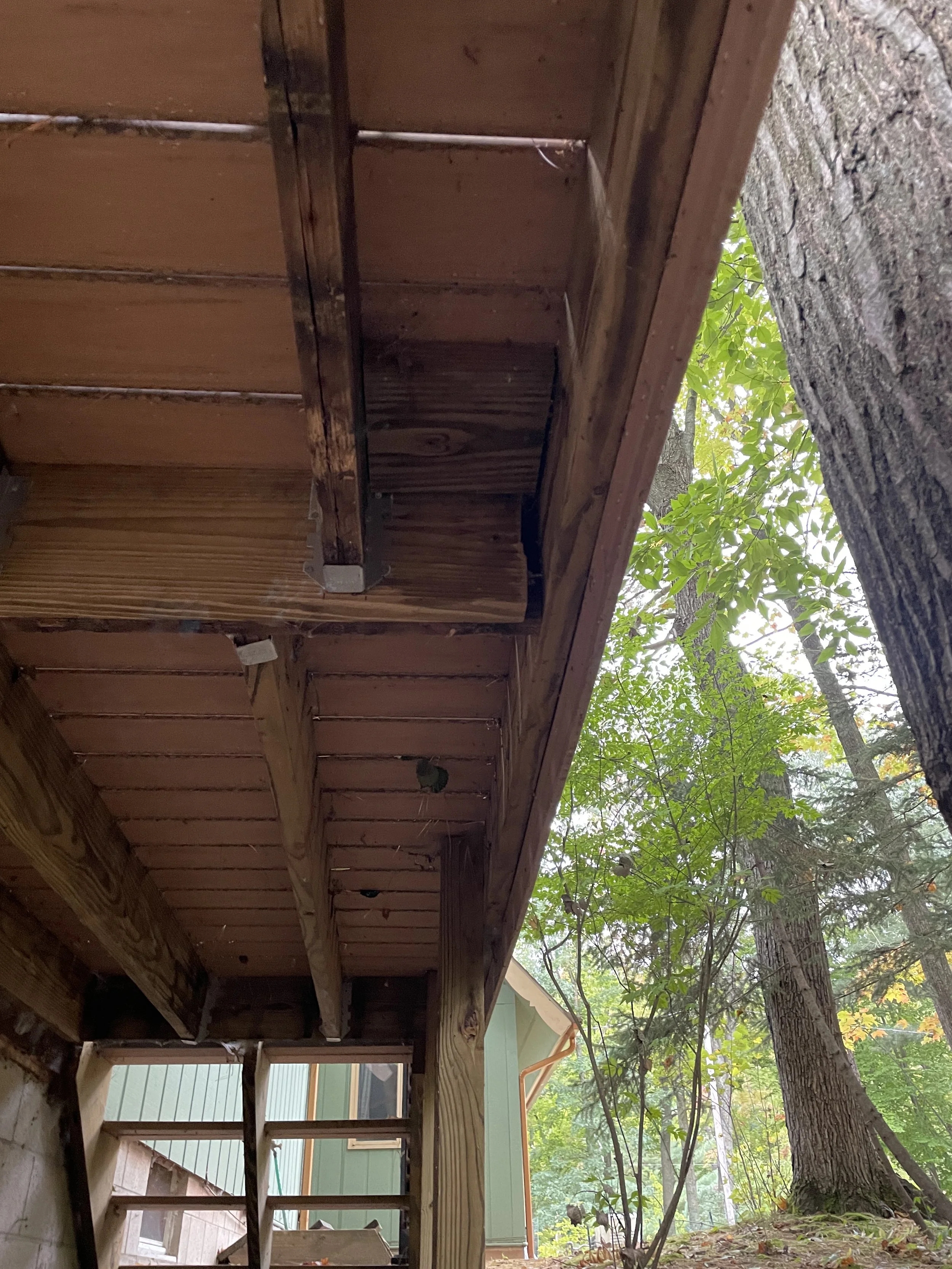
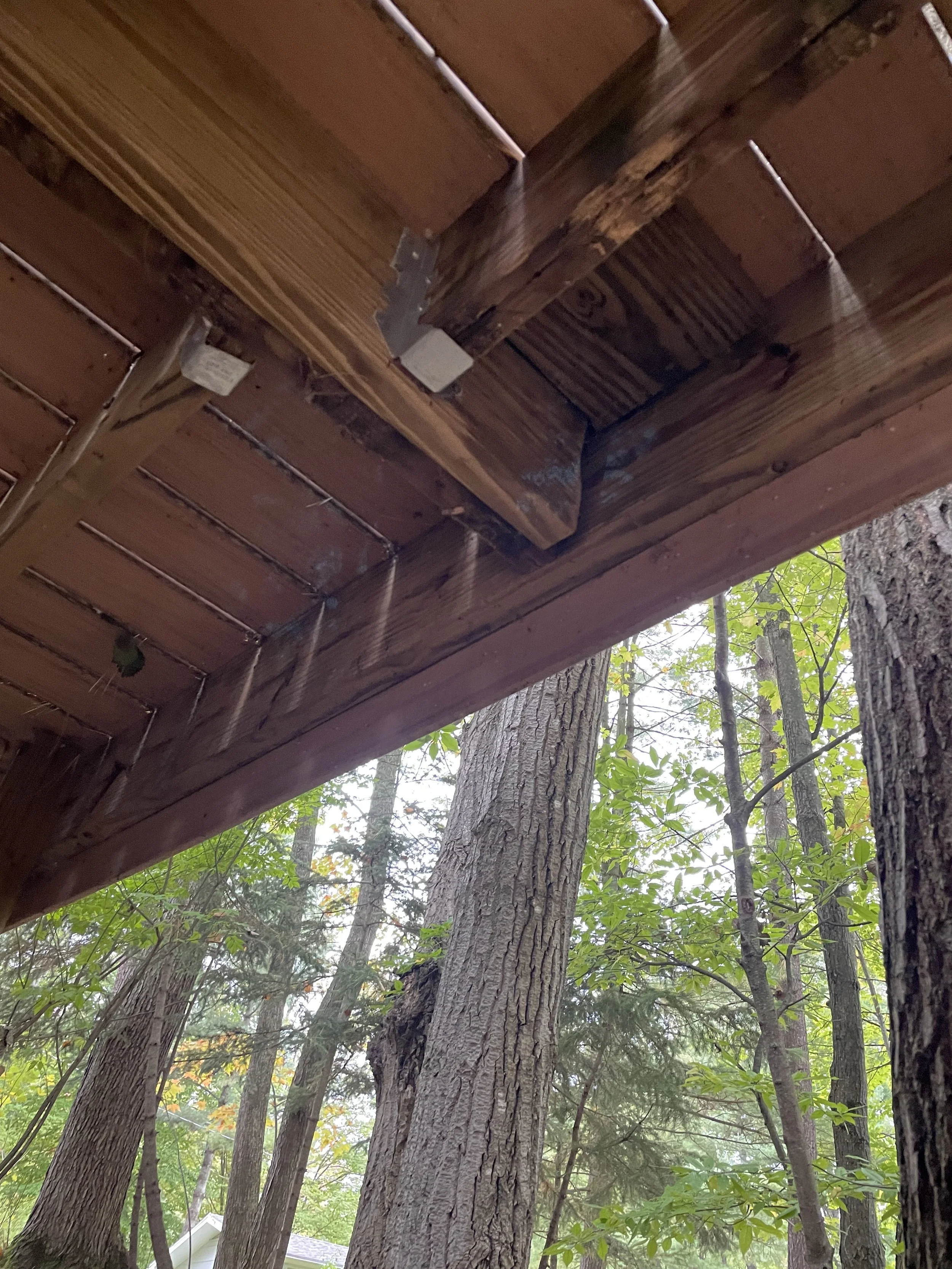
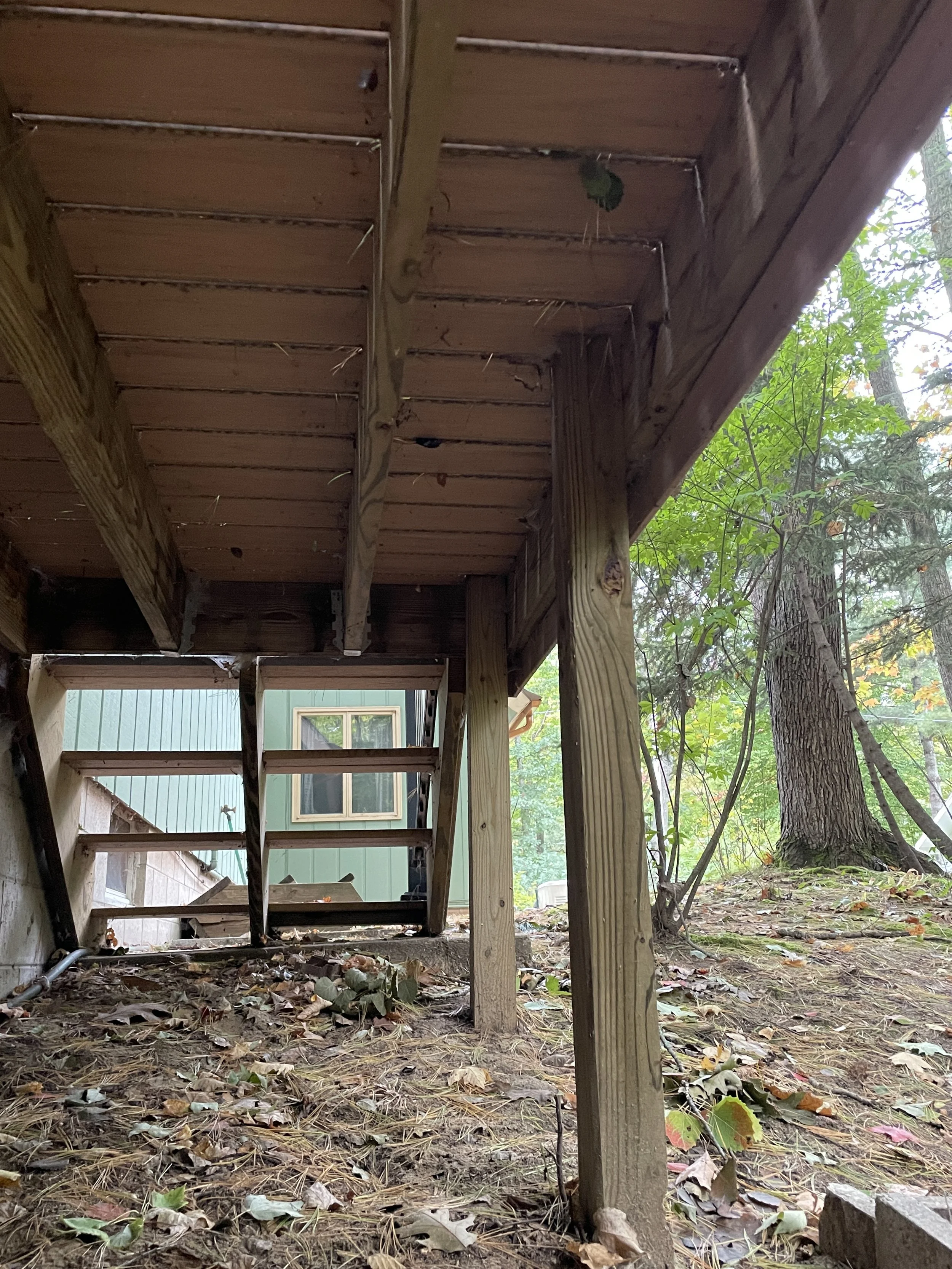
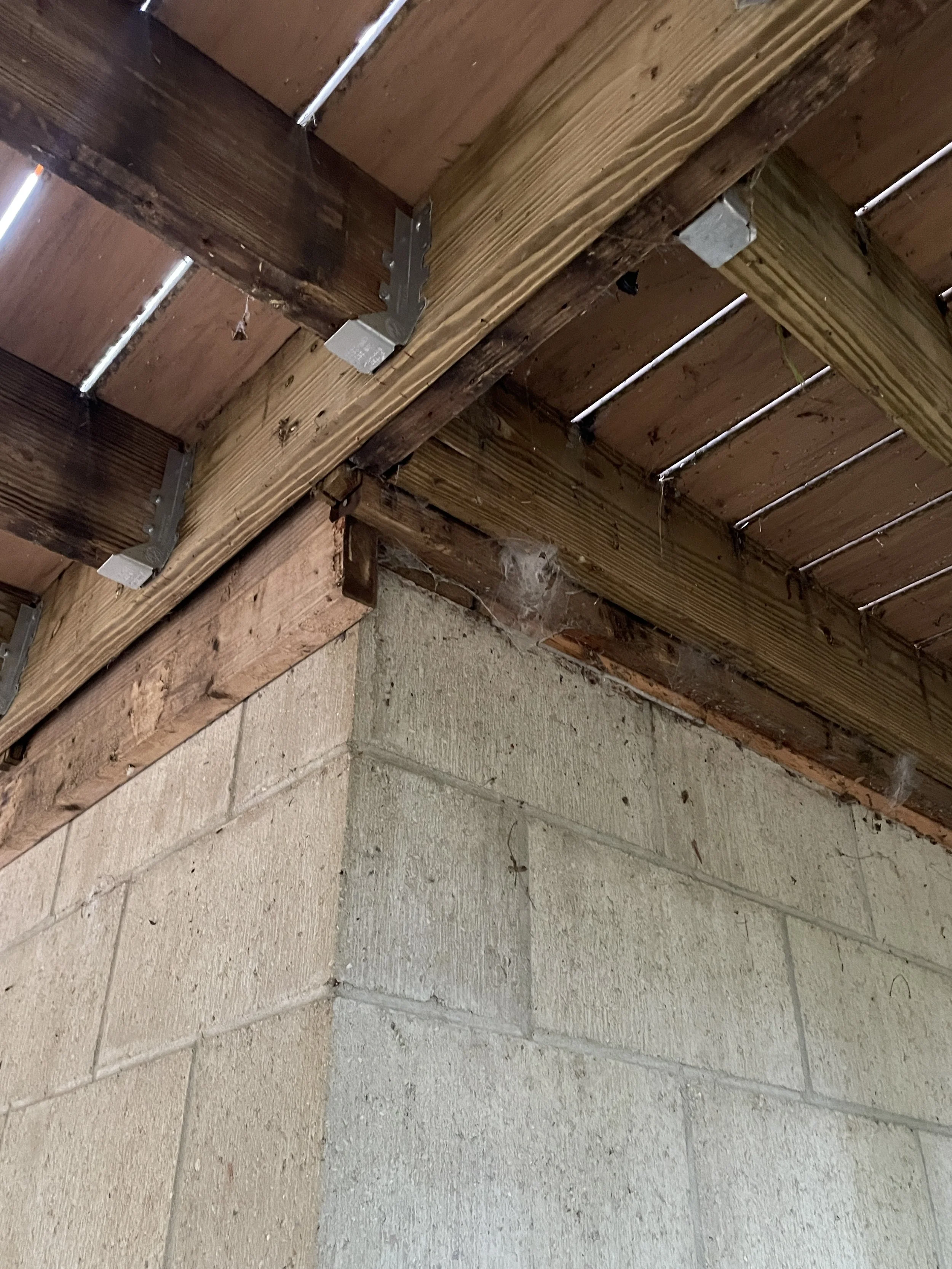
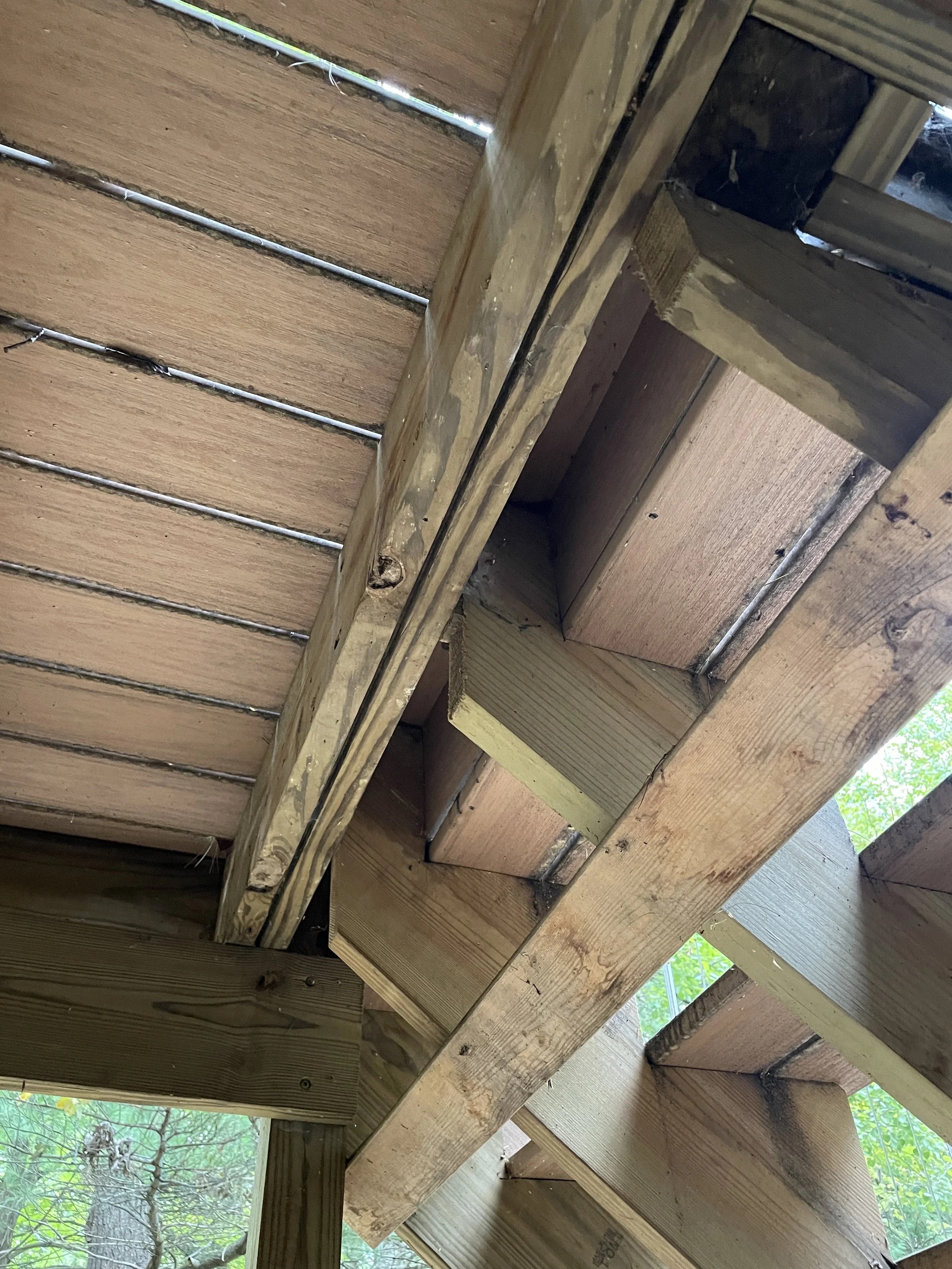
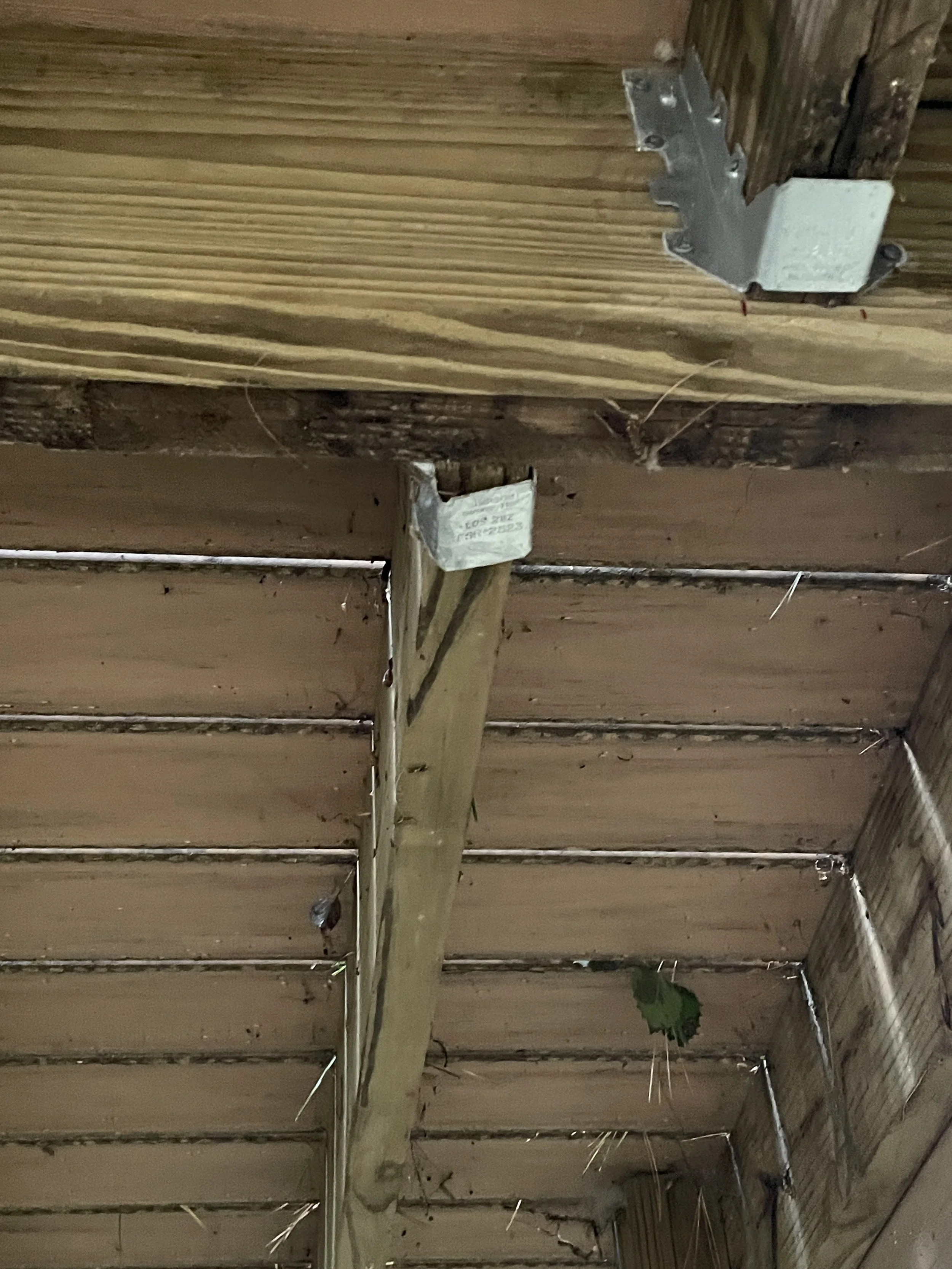
The existing deck and surrounding hillside presented several structural and usability concerns. While the deck was functional, prior modifications introduced improper load-bearing practices and inconsistent construction methods.
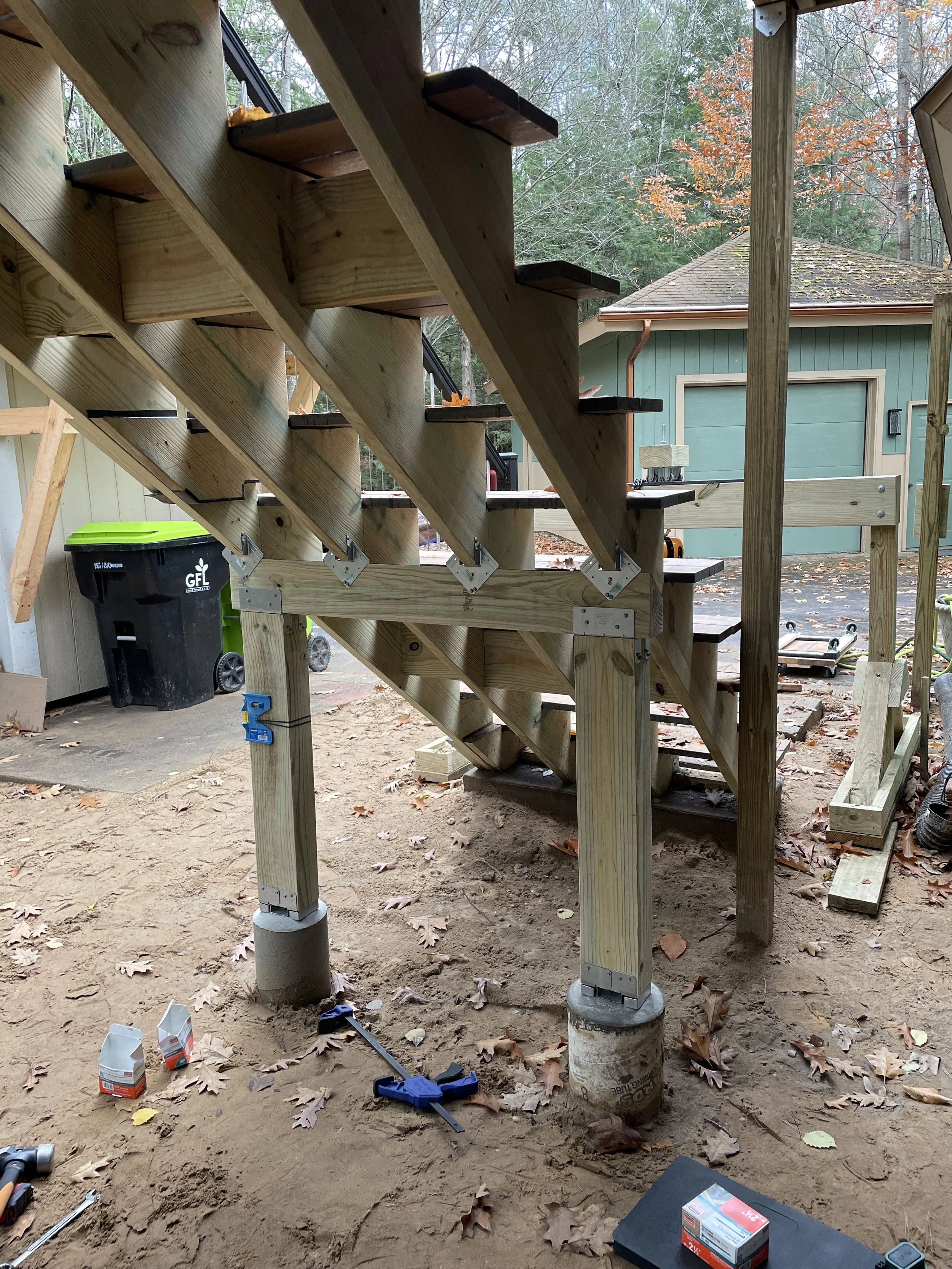
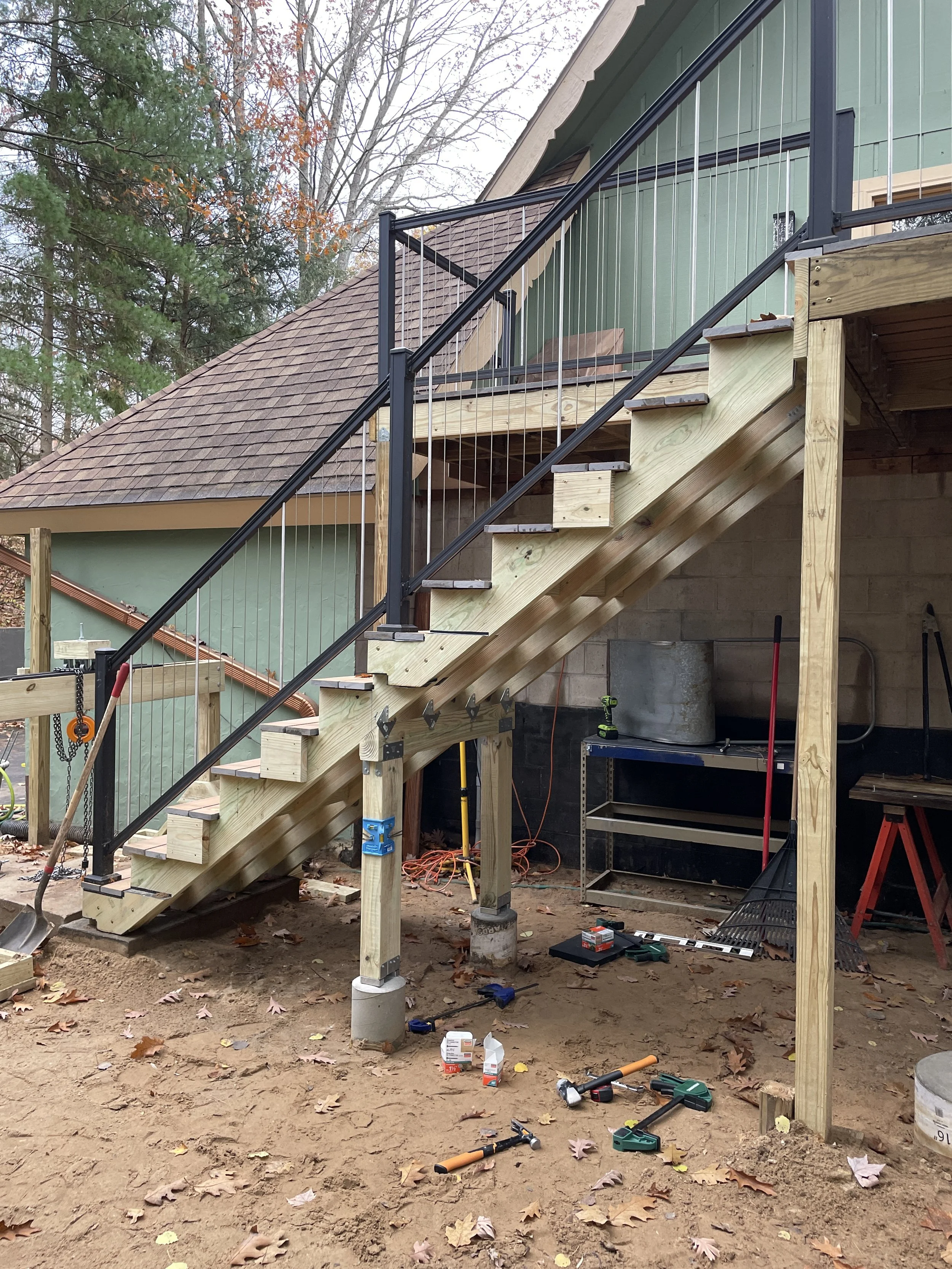
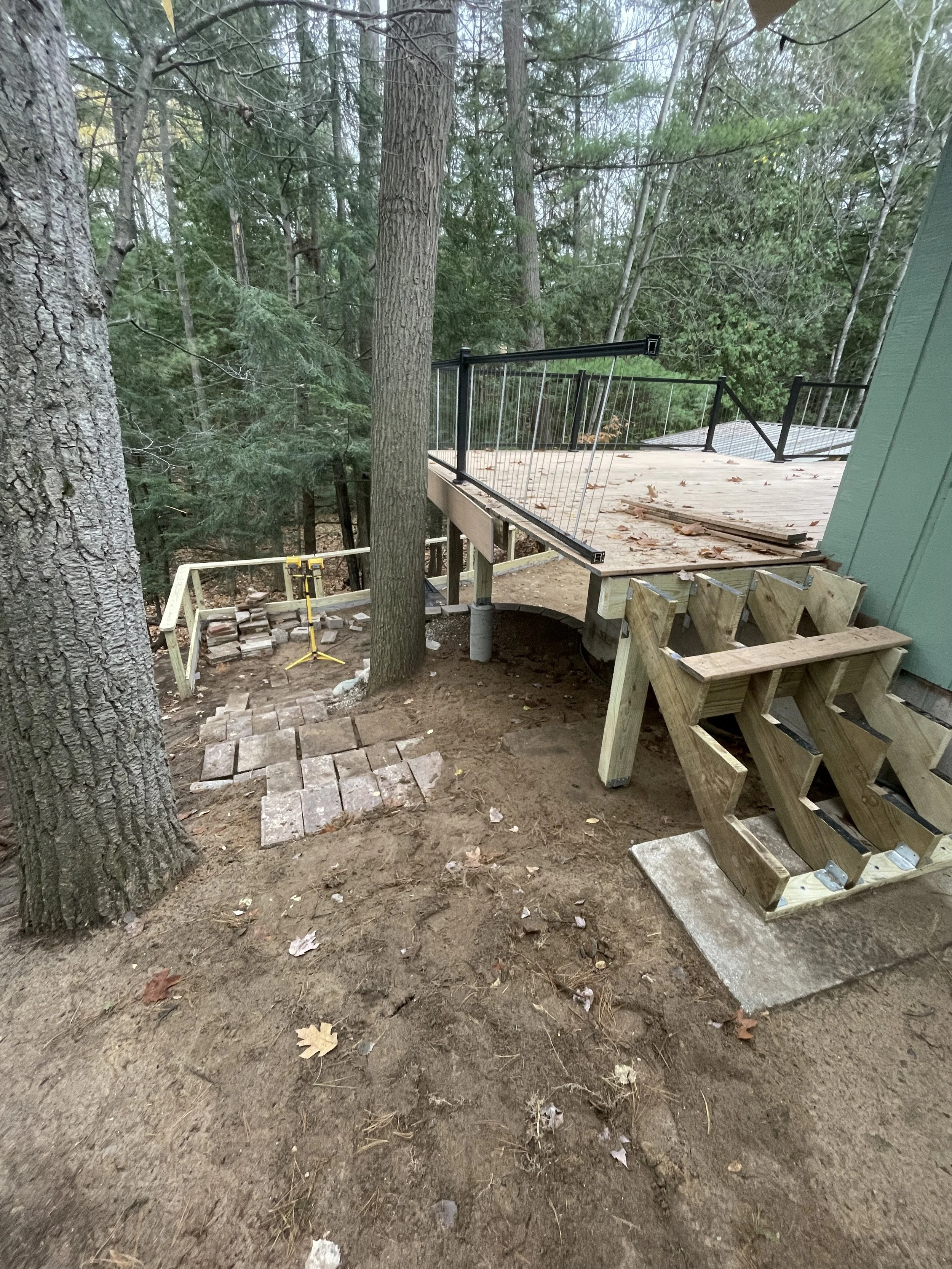
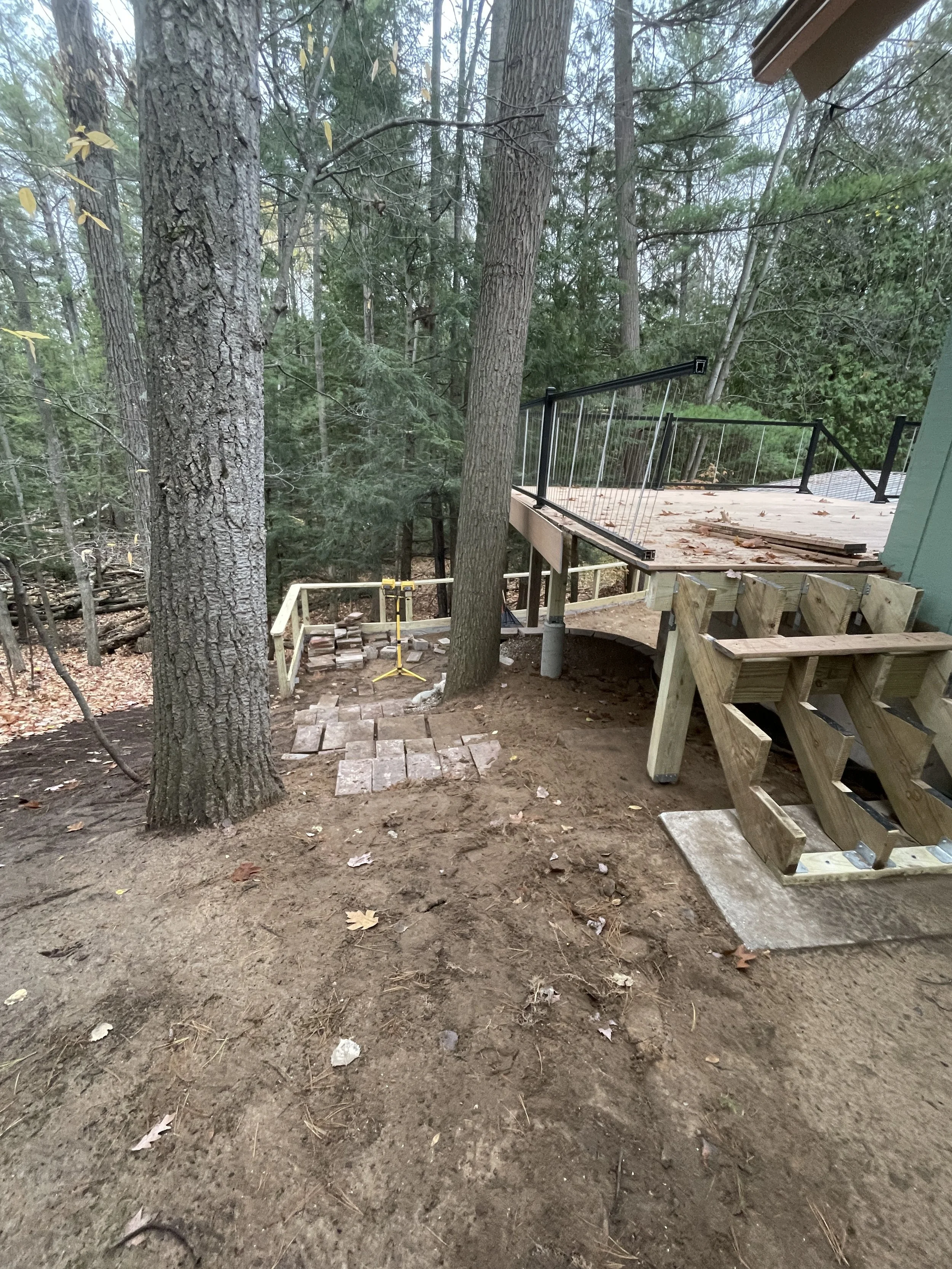
Key issues included beams fastened to the sides of posts rather than being fully supported on top, placing load on fastener shear instead of direct compression. Stair stringers were also improperly attached, lacking proper hardware to secure them to the deck structure.
In addition to structural concerns, the steep terrain surrounding the deck made the area difficult and unsafe to navigate, limiting access and usability of the space.
Primary Retaining Wall
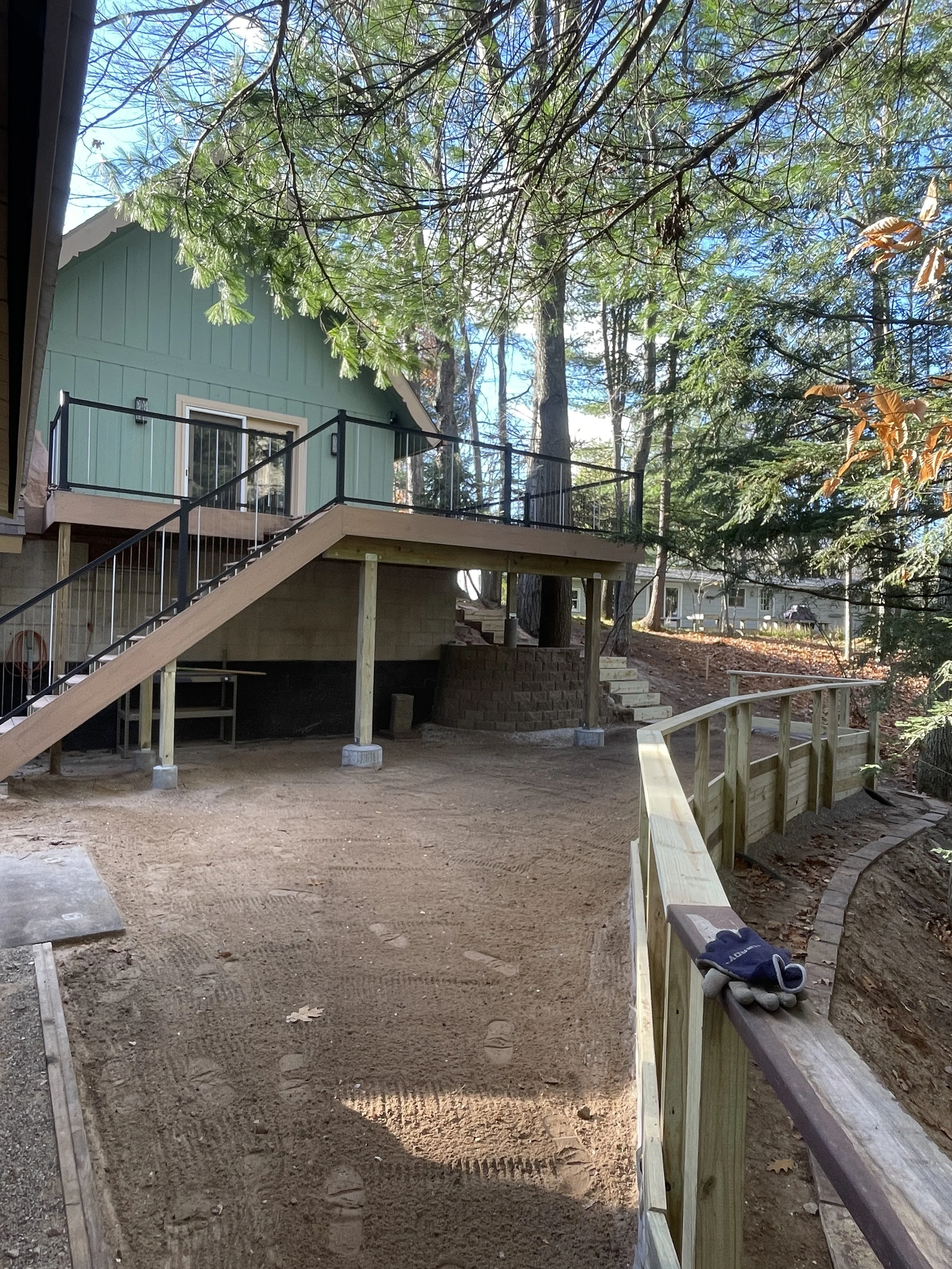
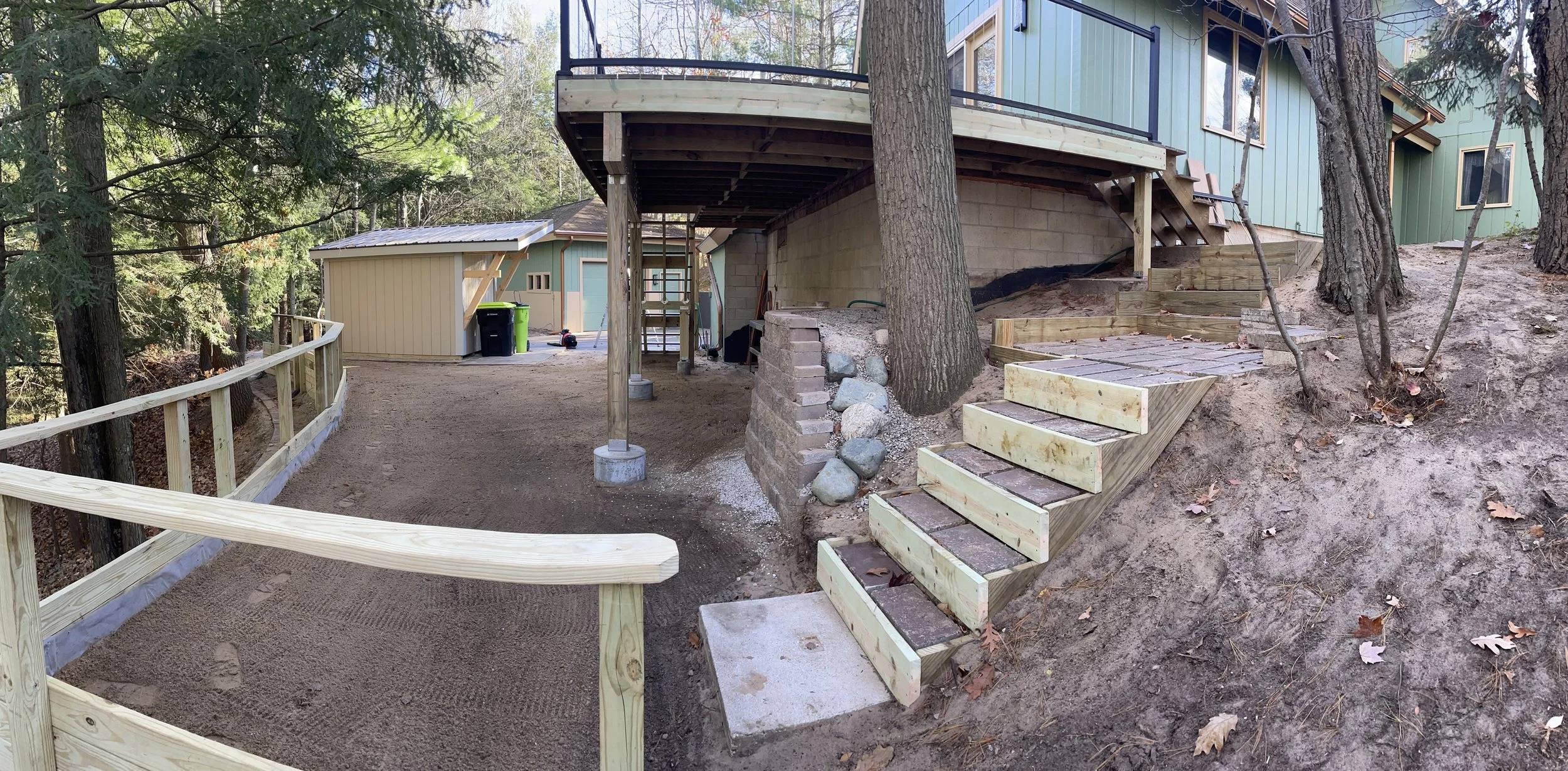
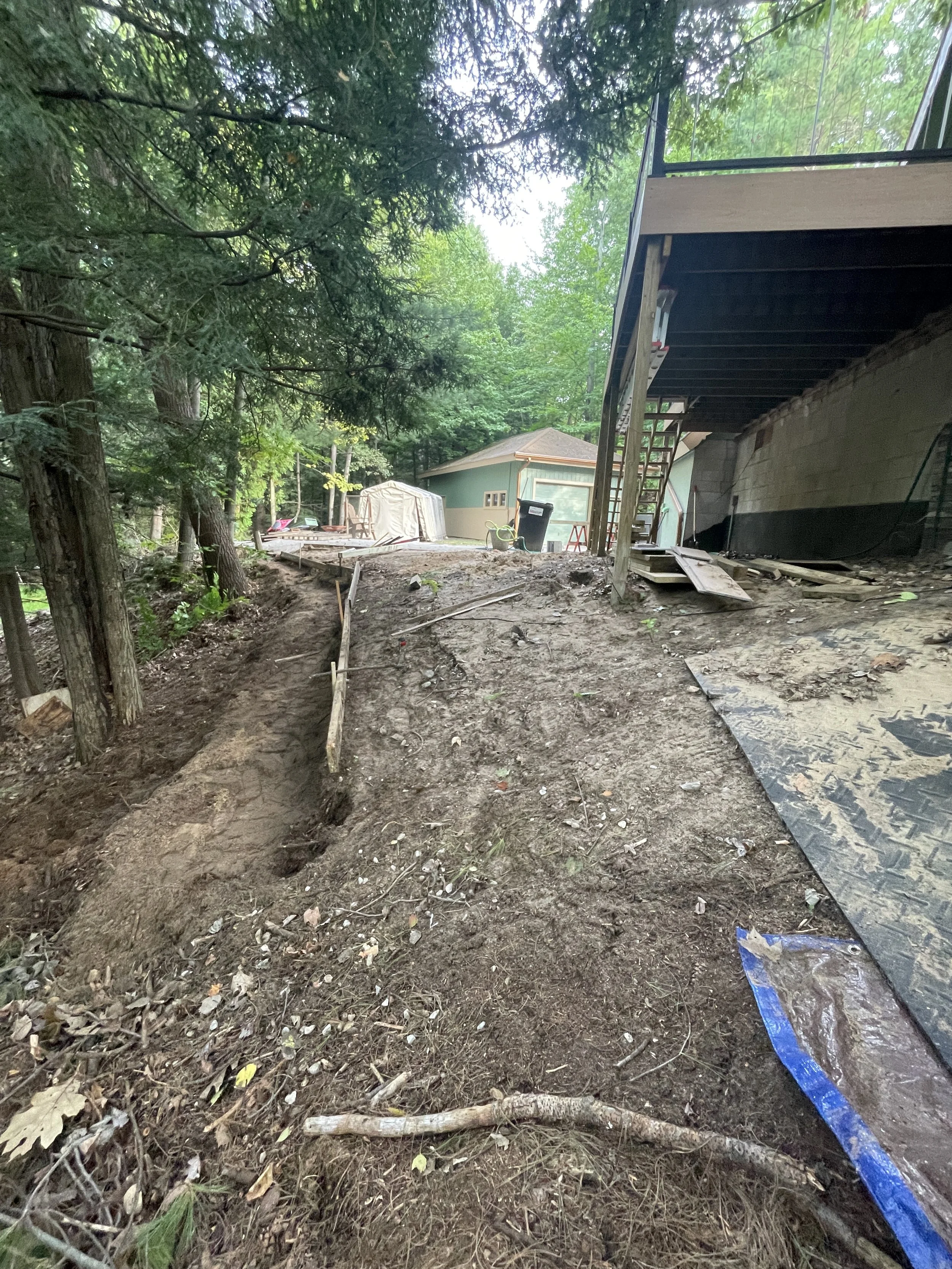
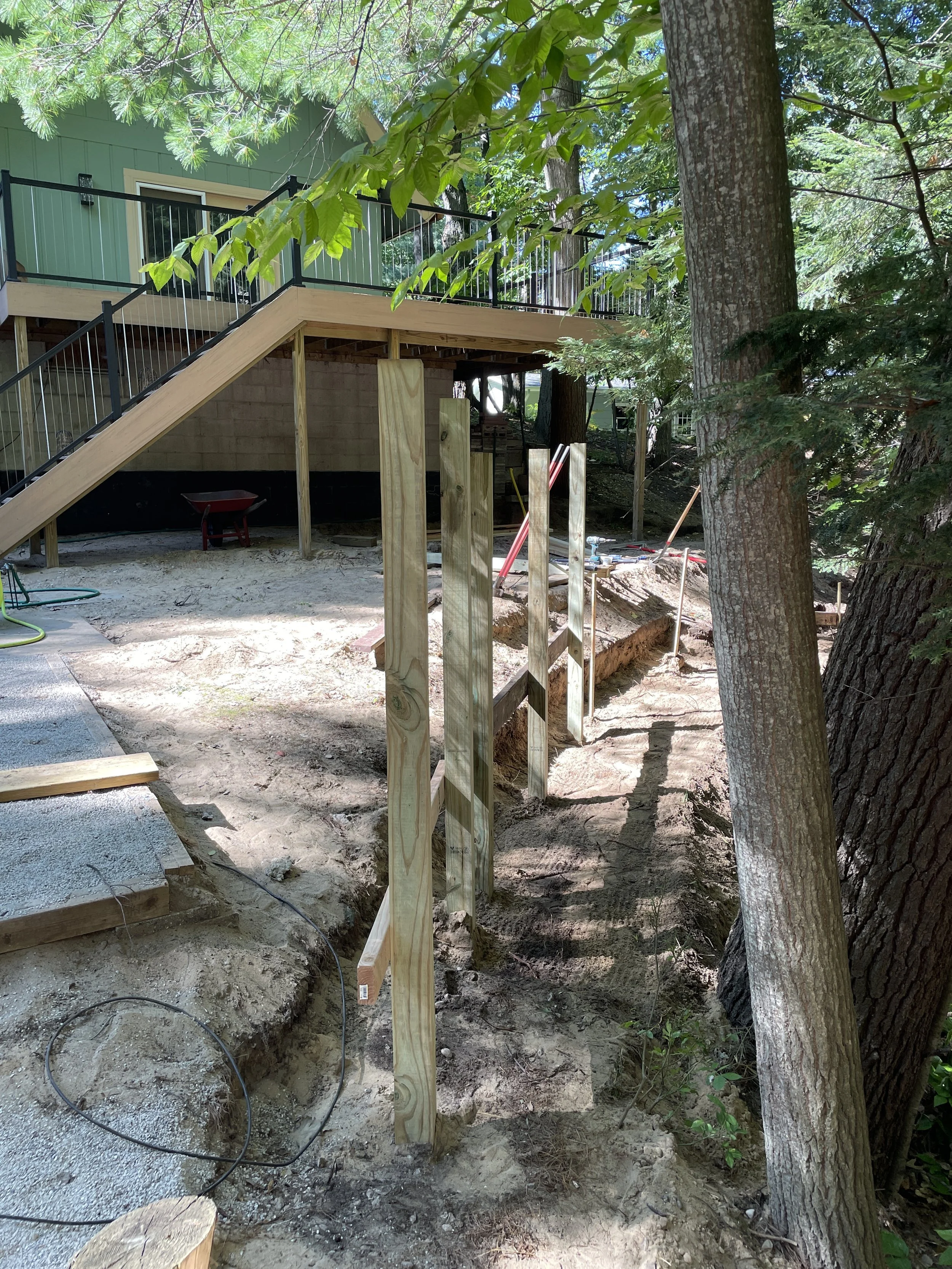
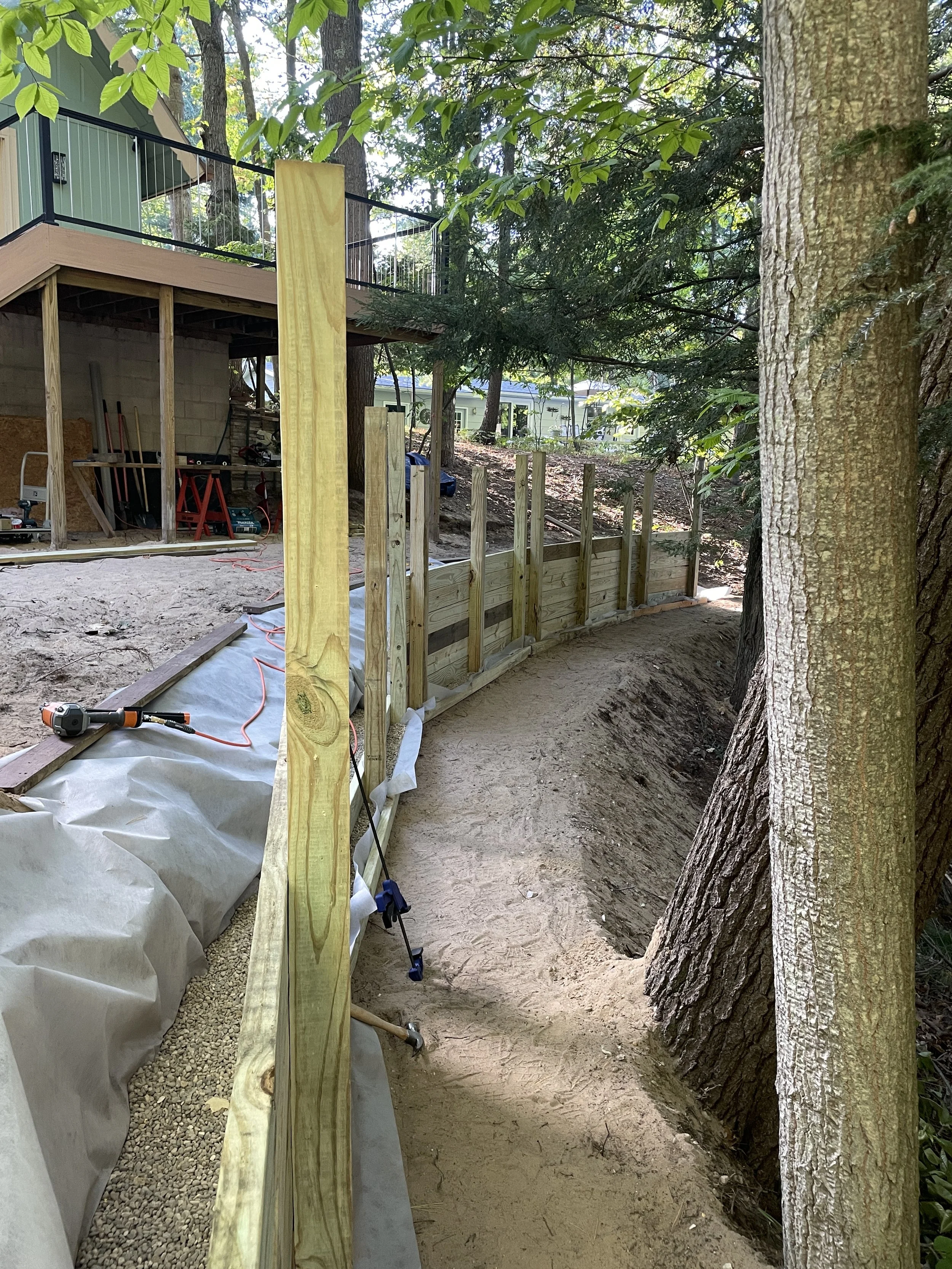
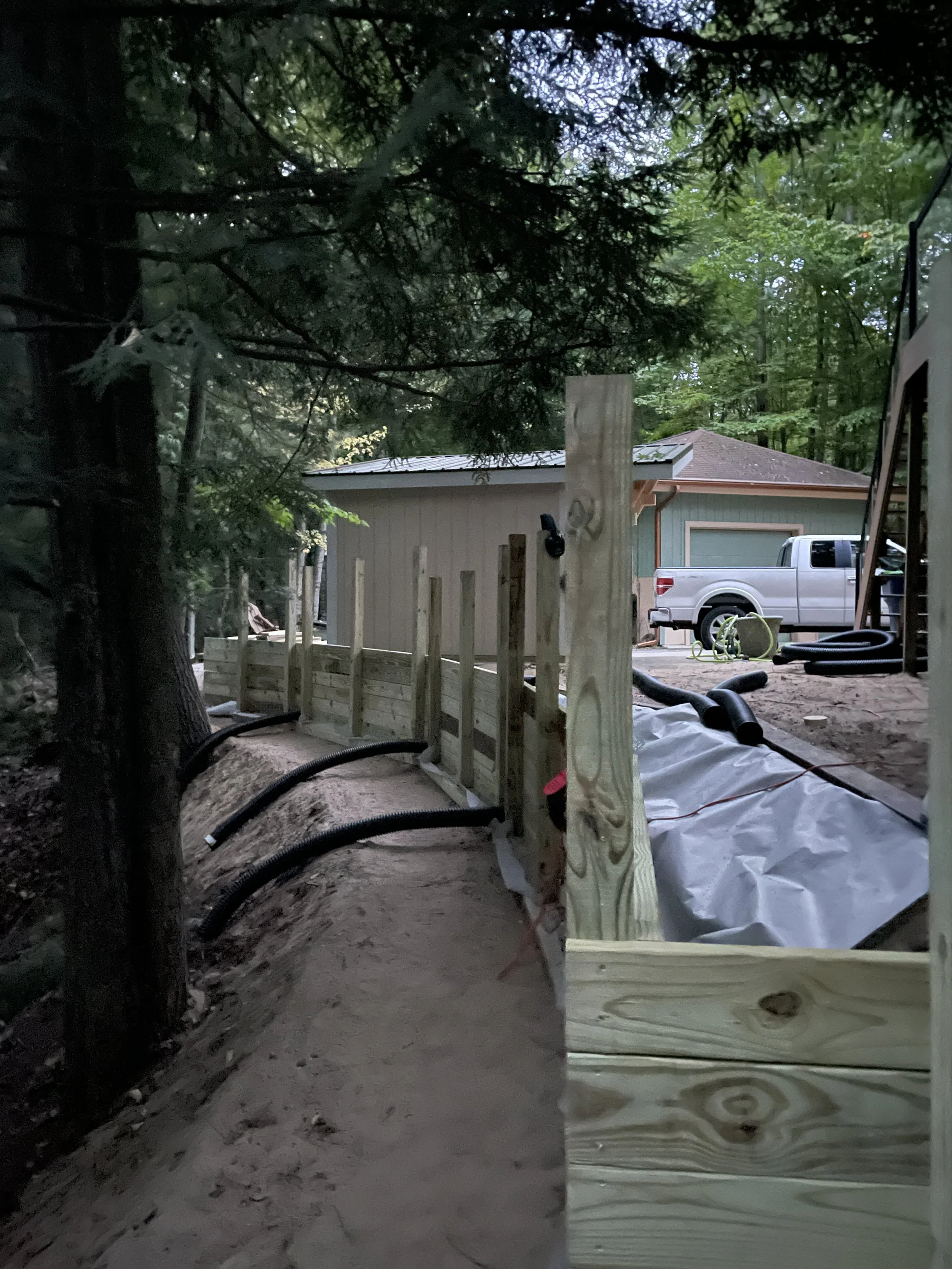
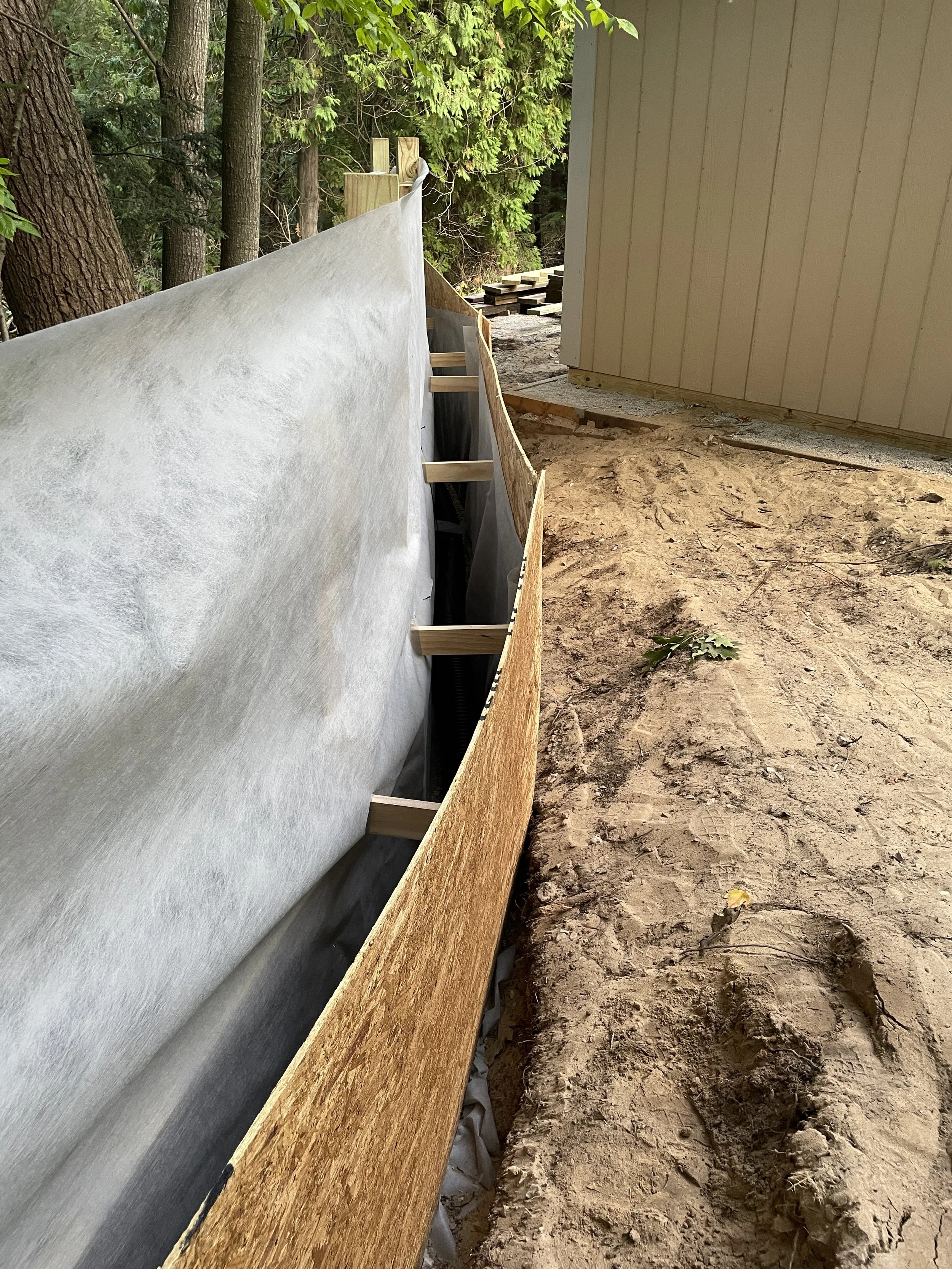
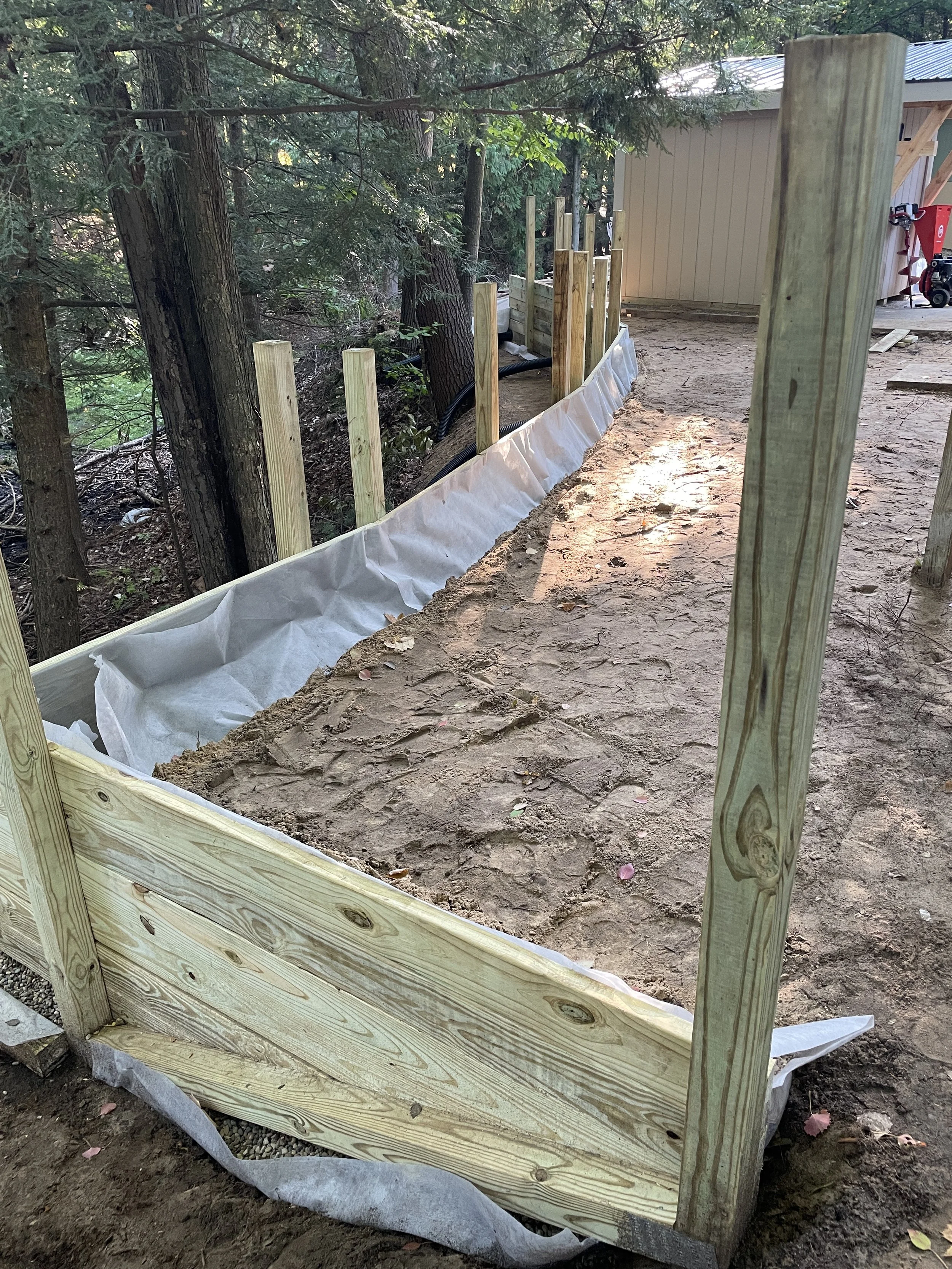
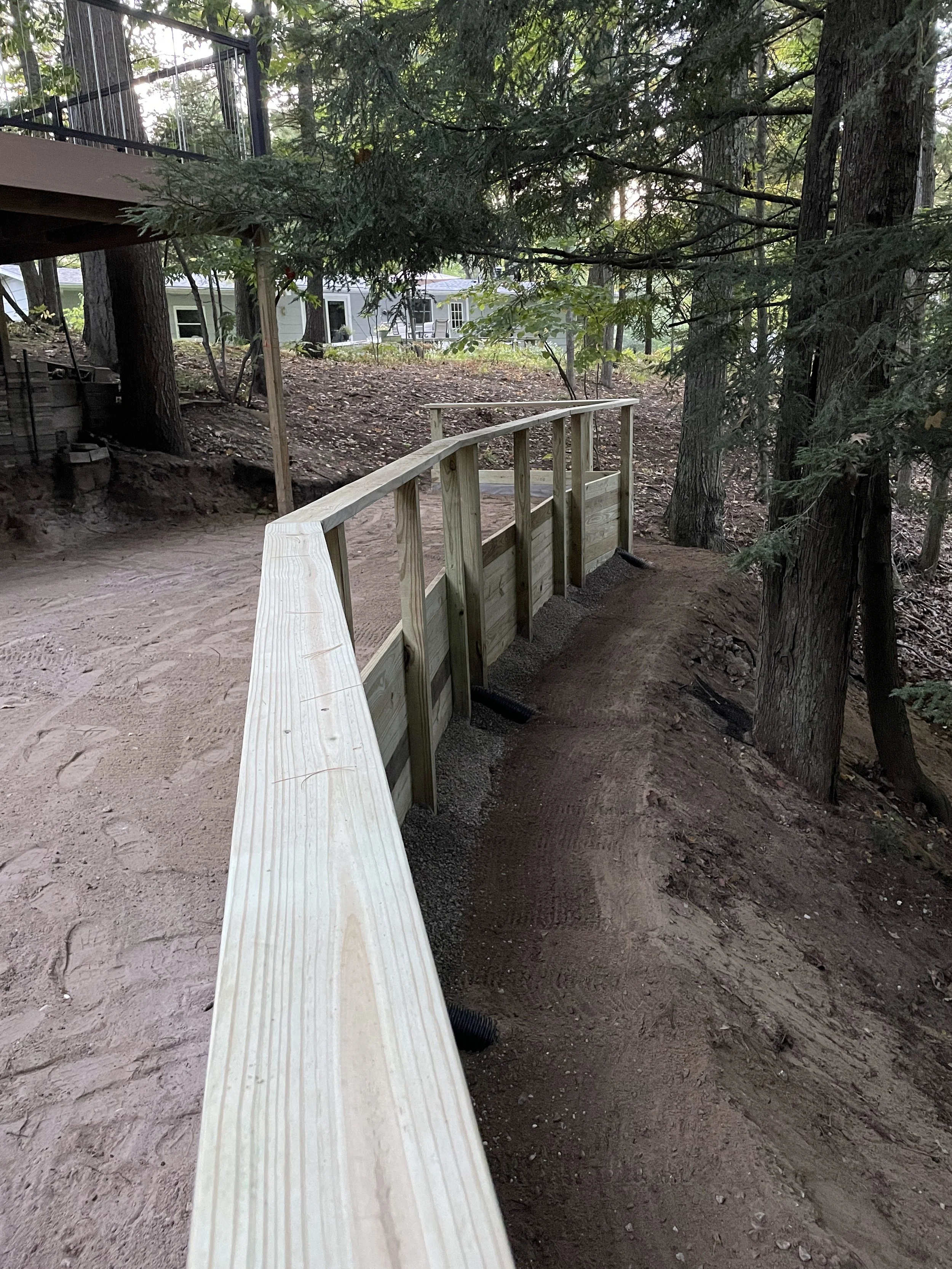
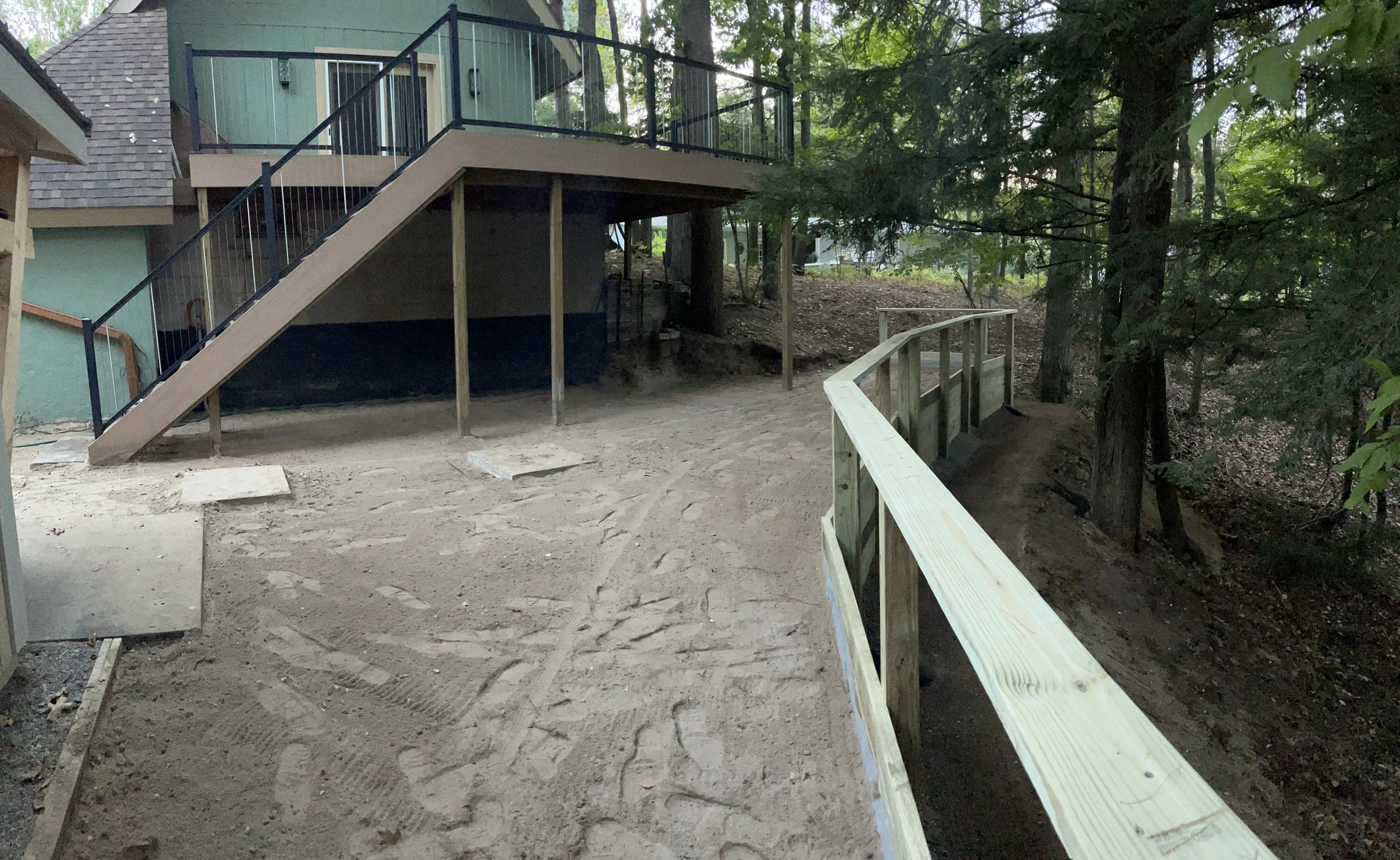
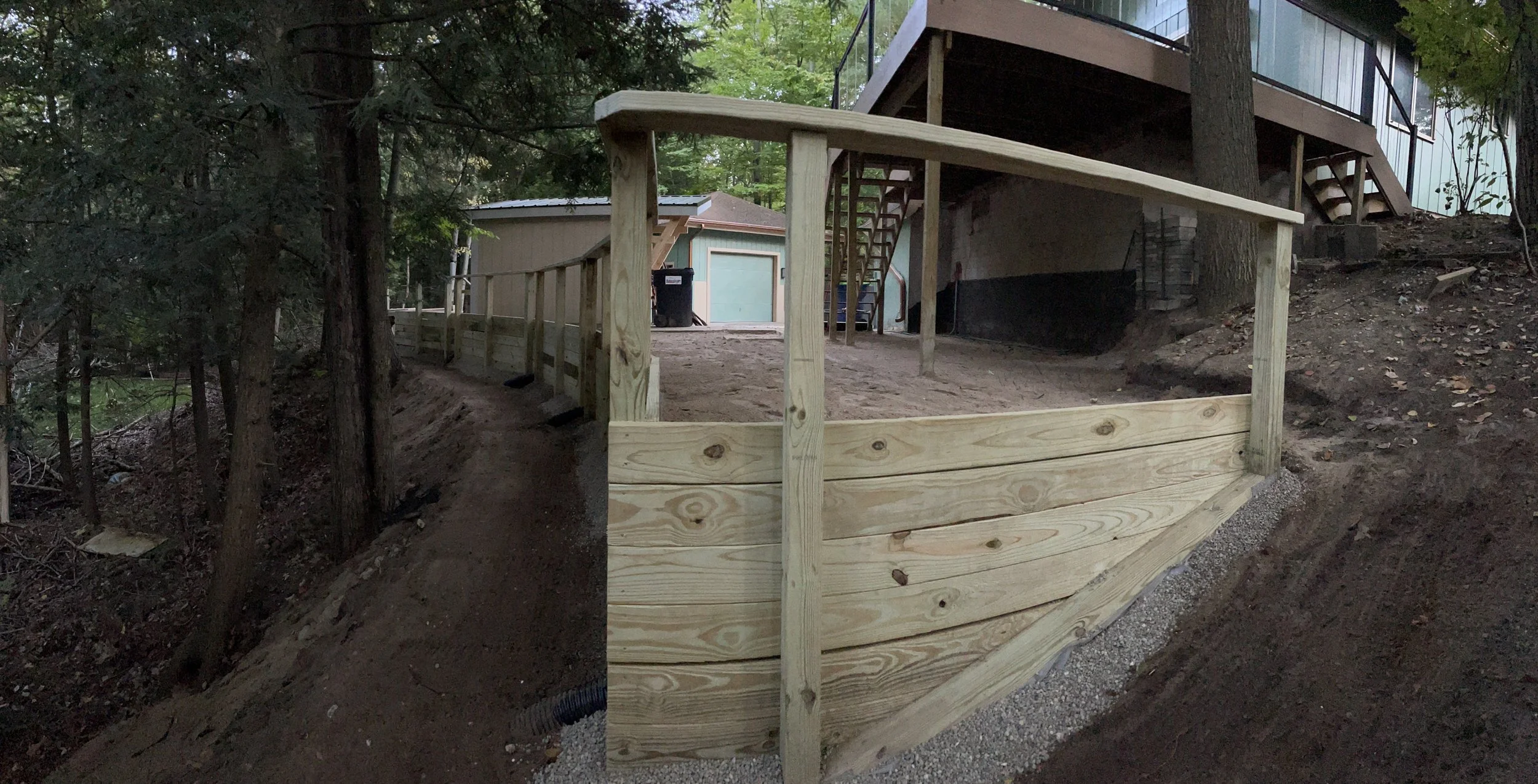
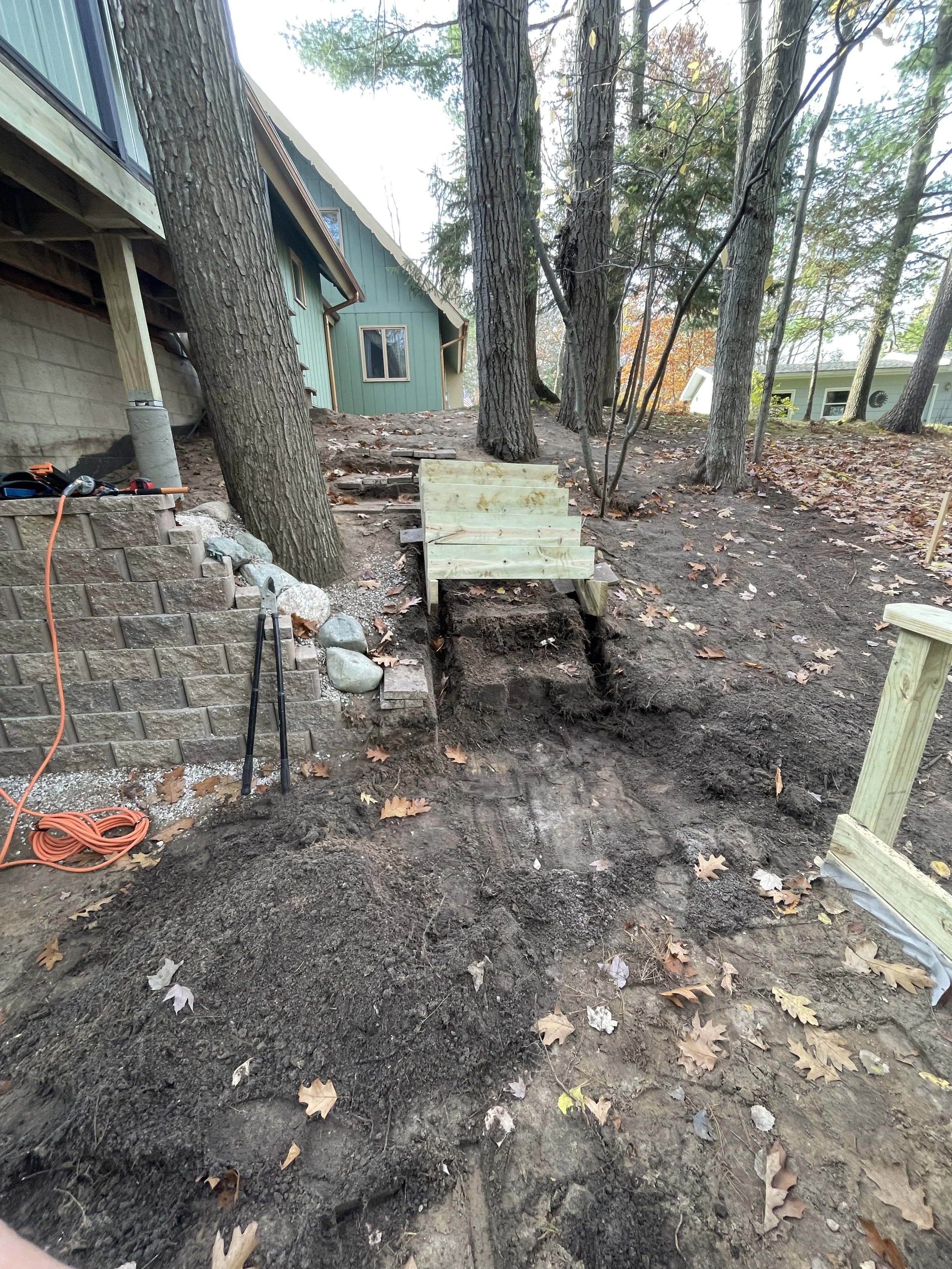
The first step in improving the space was reshaping the terrain to create a stable and usable working area. A large retaining wall was constructed to terrace the hillside, reducing the slope and establishing a level surface around the deck.
This change not only improved accessibility but also provided a consistent foundation for subsequent structural work. As part of the terracing process, a French drain system was installed behind the retaining wall to manage water accumulation and prevent pressure buildup over time.
The result was a stabilized, level workspace that enabled safe movement around the structure and supported the next phases of the project.
Deck Structural Rebuild
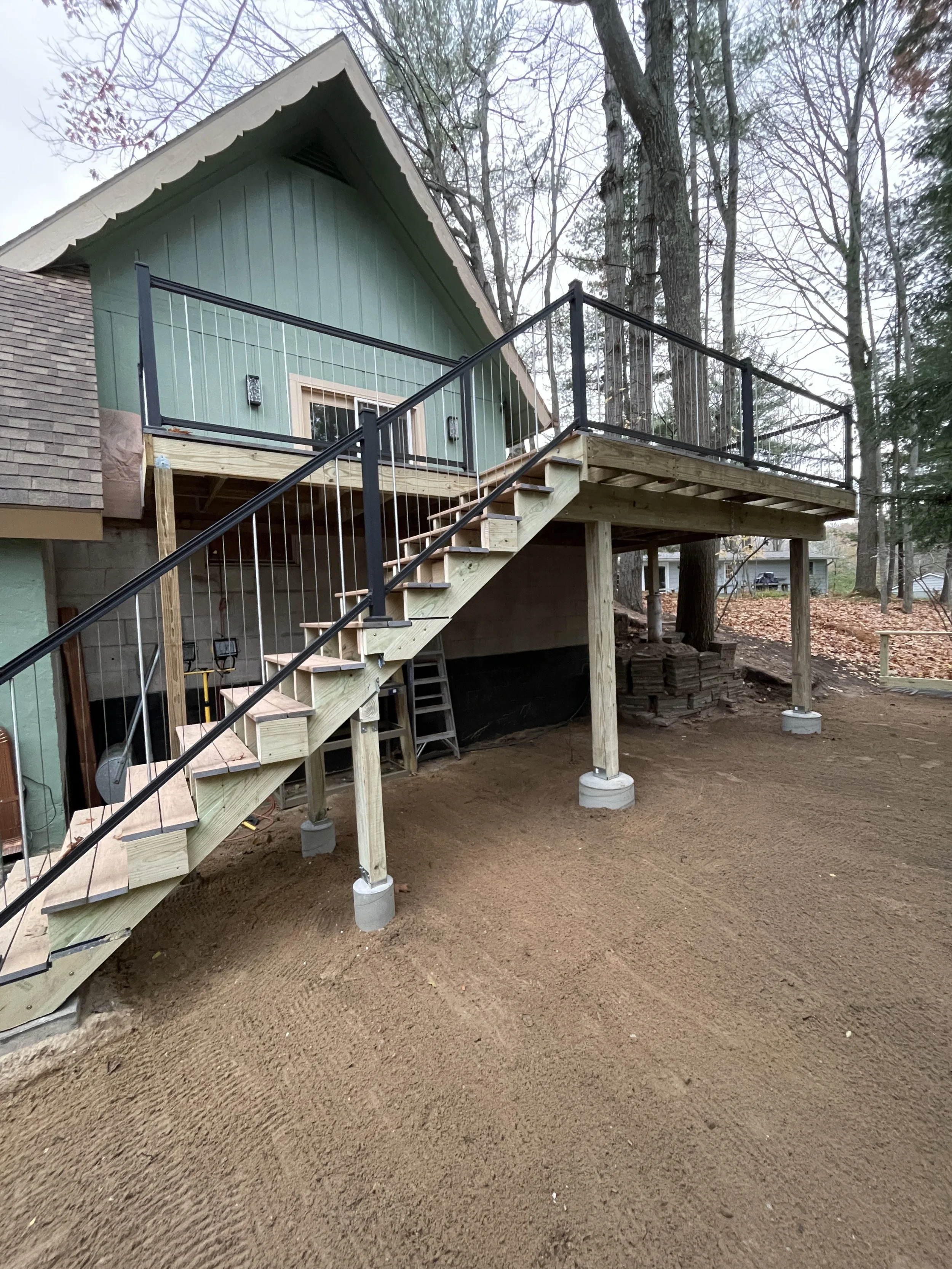
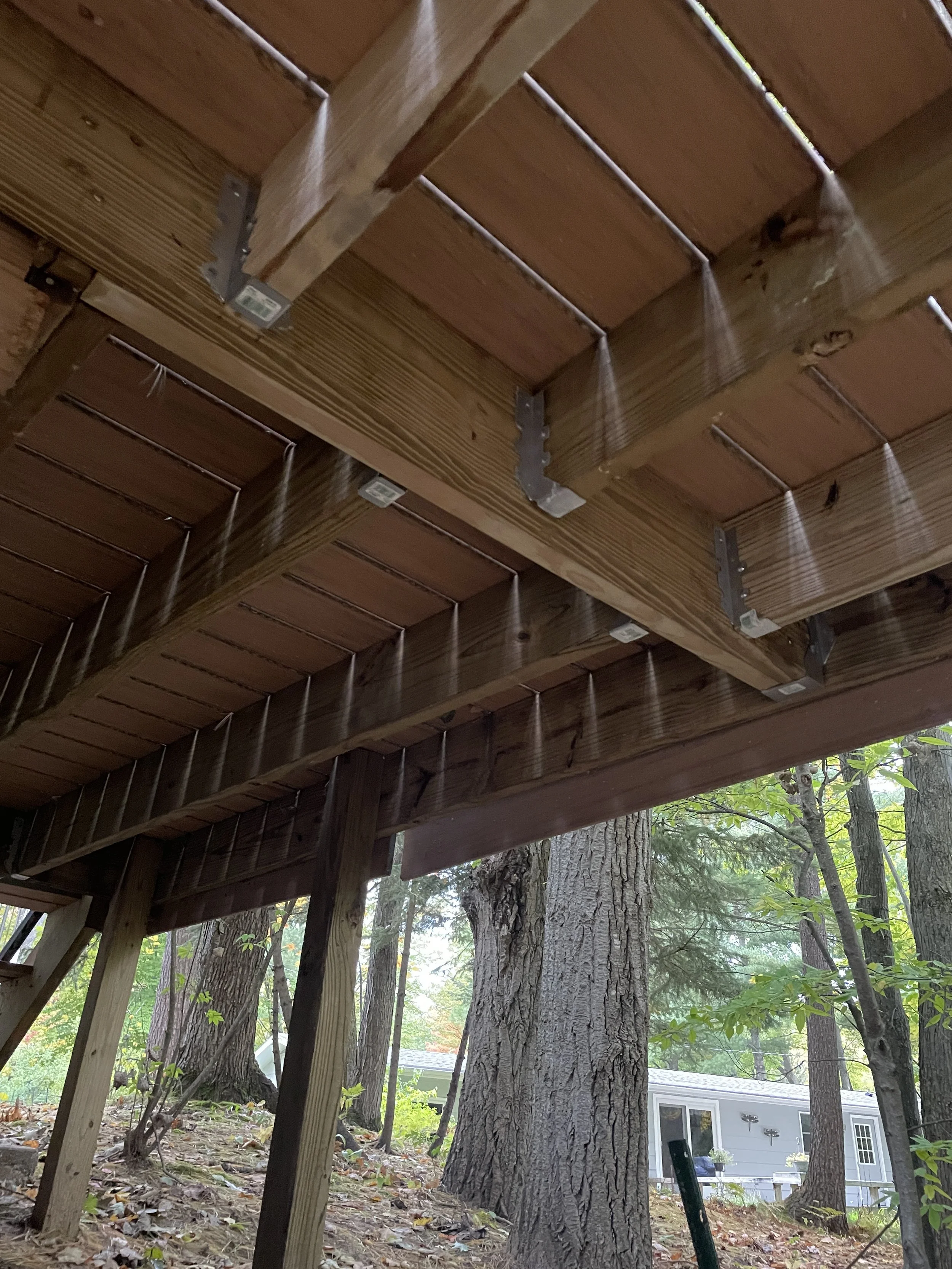
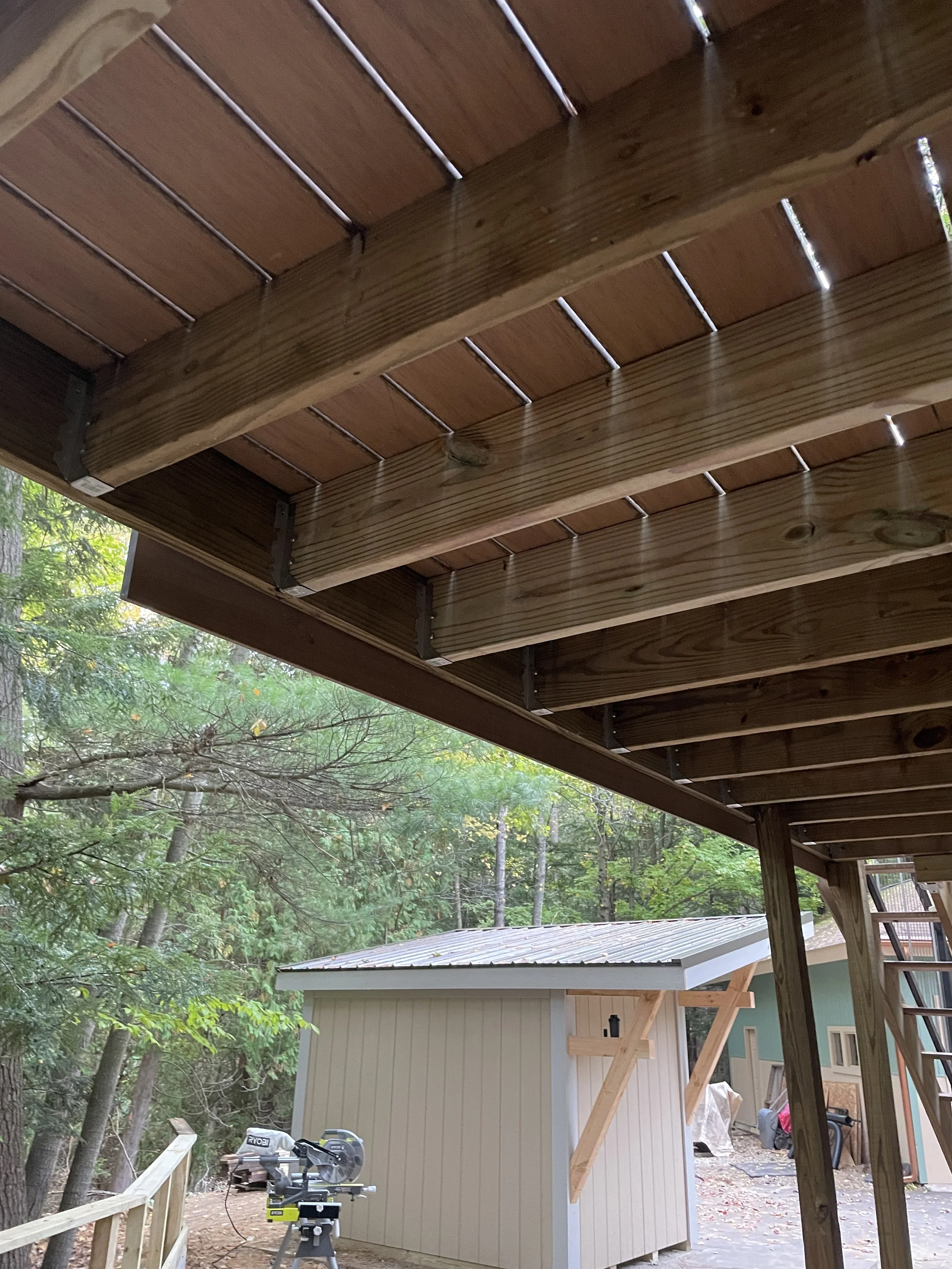
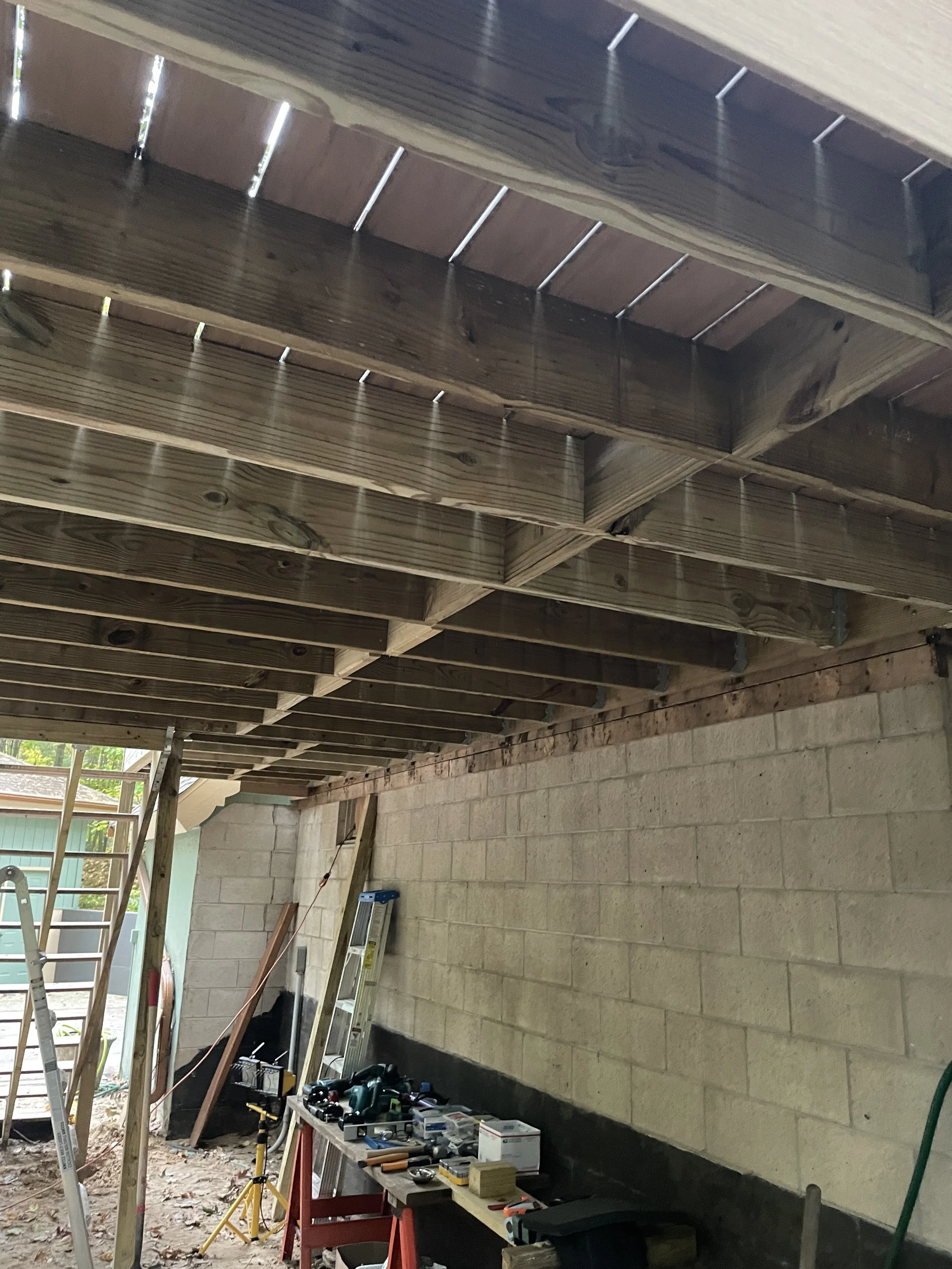
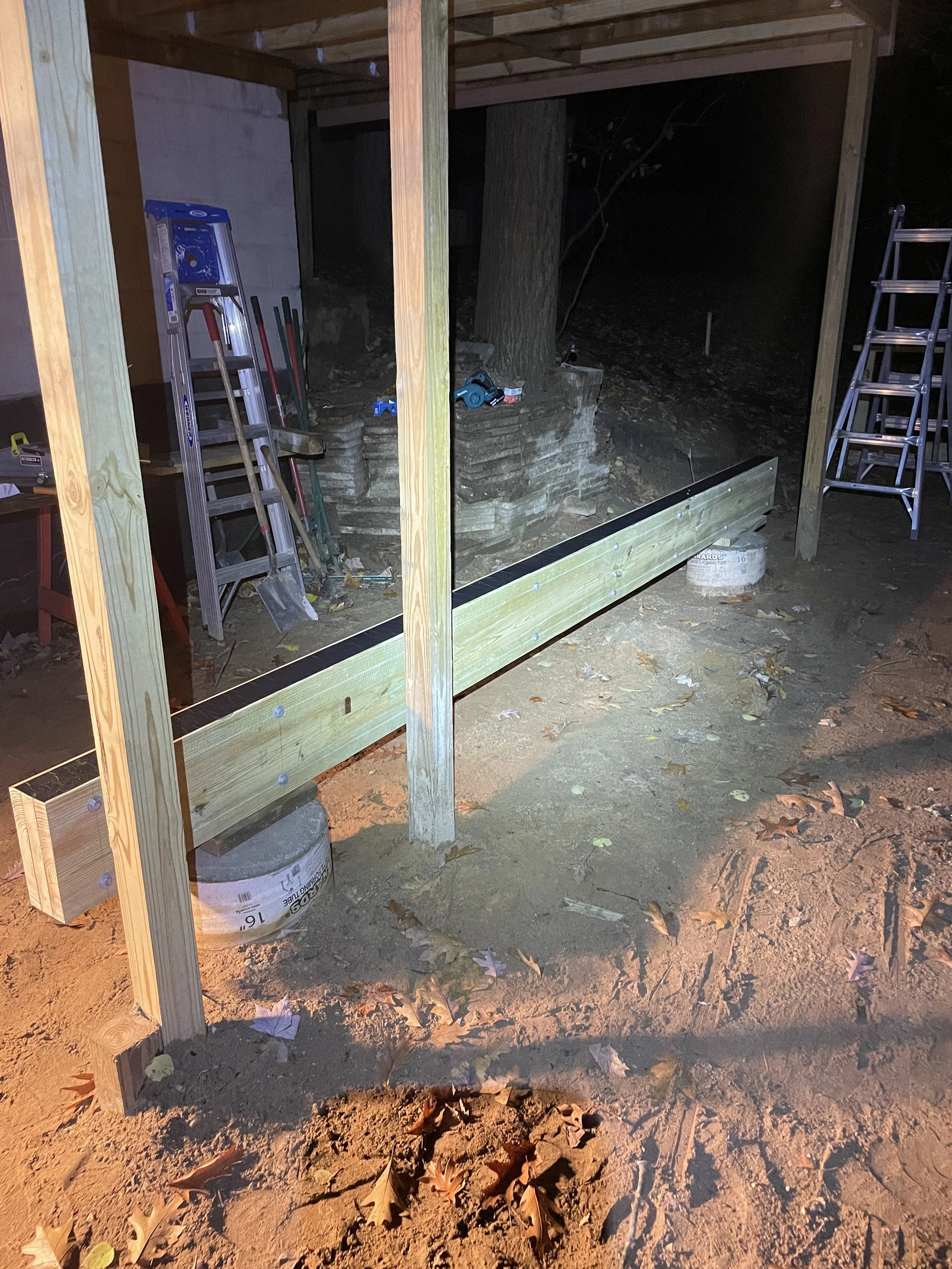
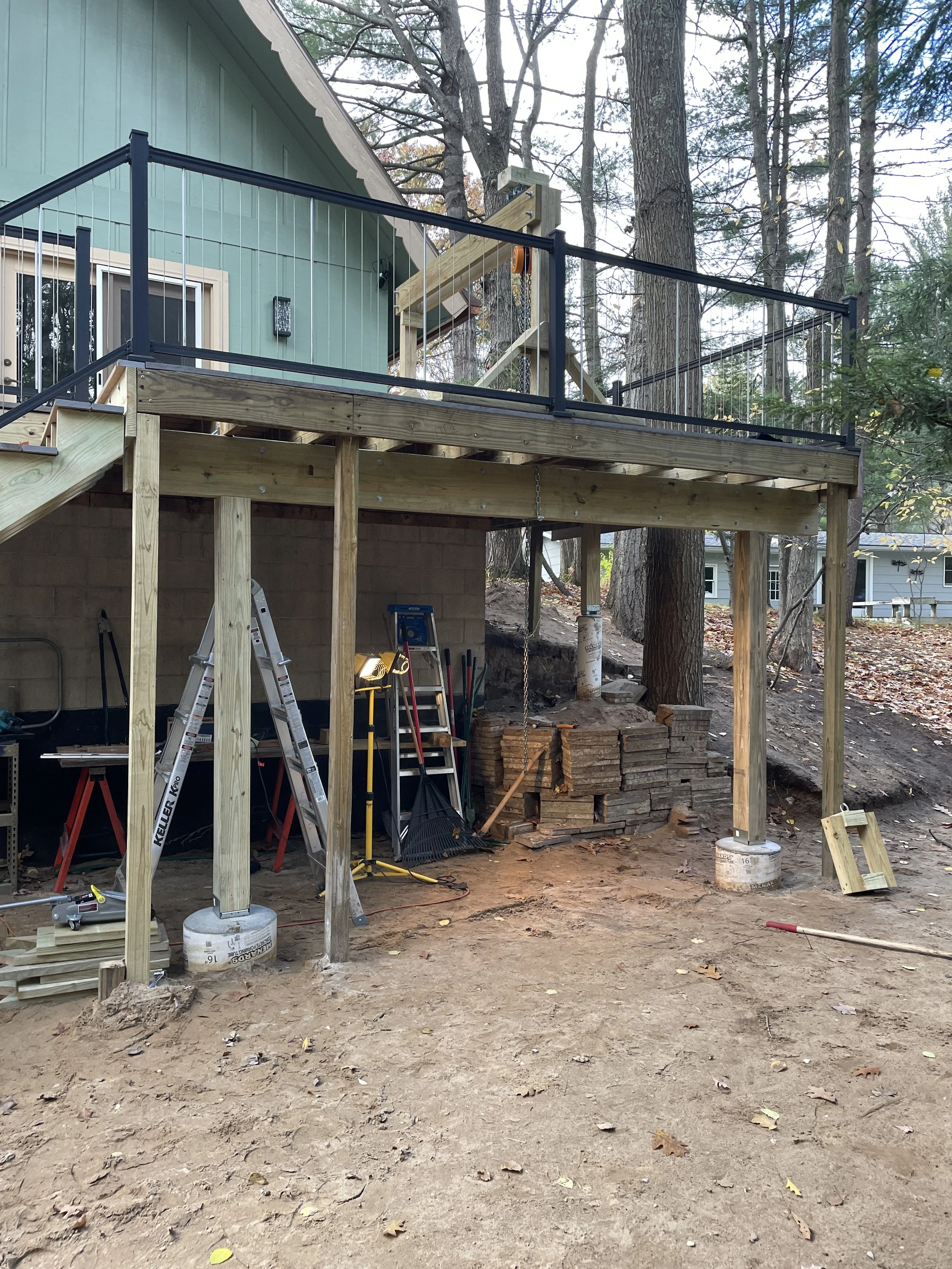
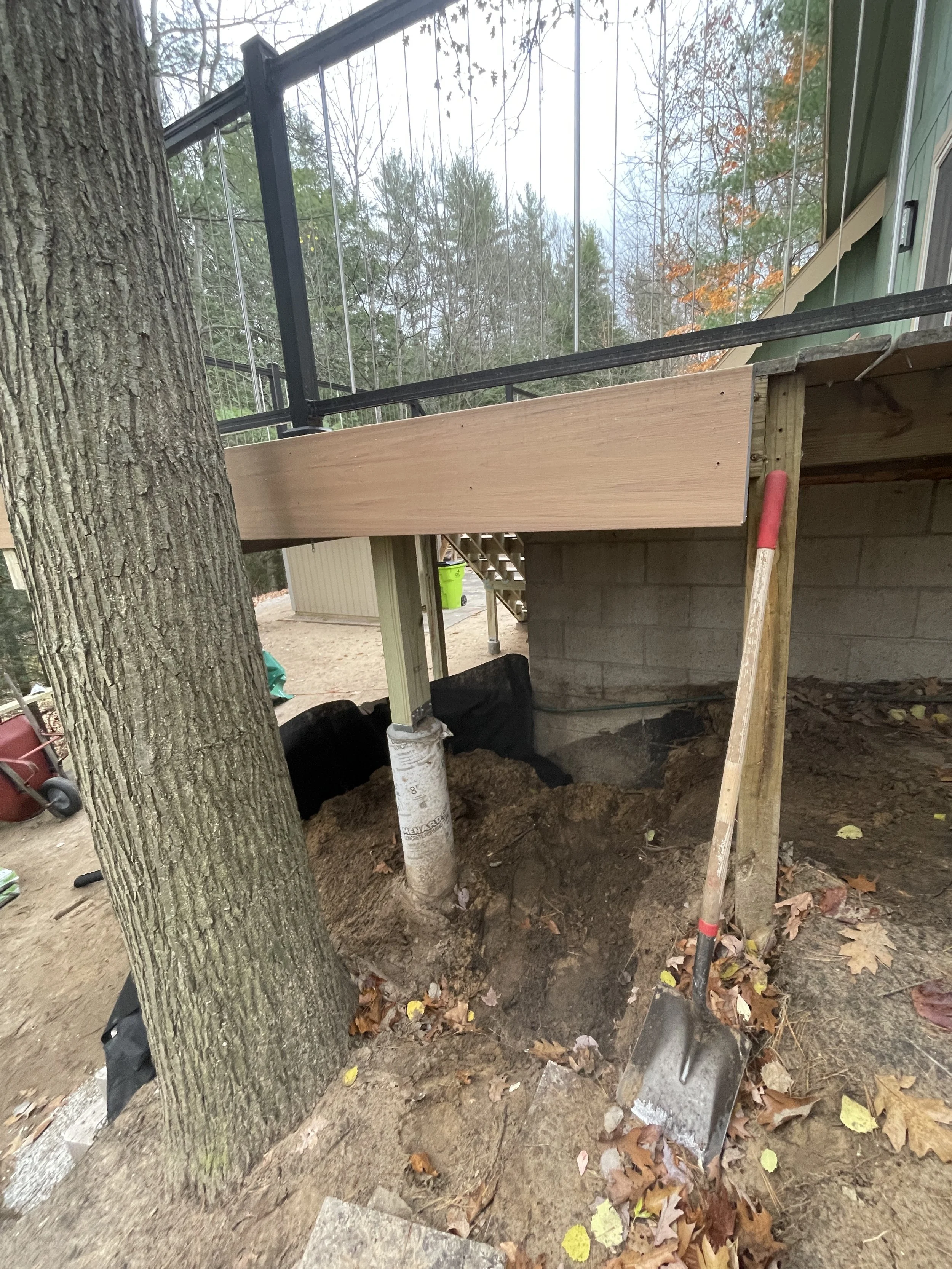
The existing deck structure was evaluated and rebuilt to correct improper load paths and improve overall structural integrity. Several load-bearing members were originally fastened to the sides of posts, relying on fastener shear rather than direct vertical support. These elements were reconfigured so that primary beams bear directly on posts, transferring loads properly into the foundation.
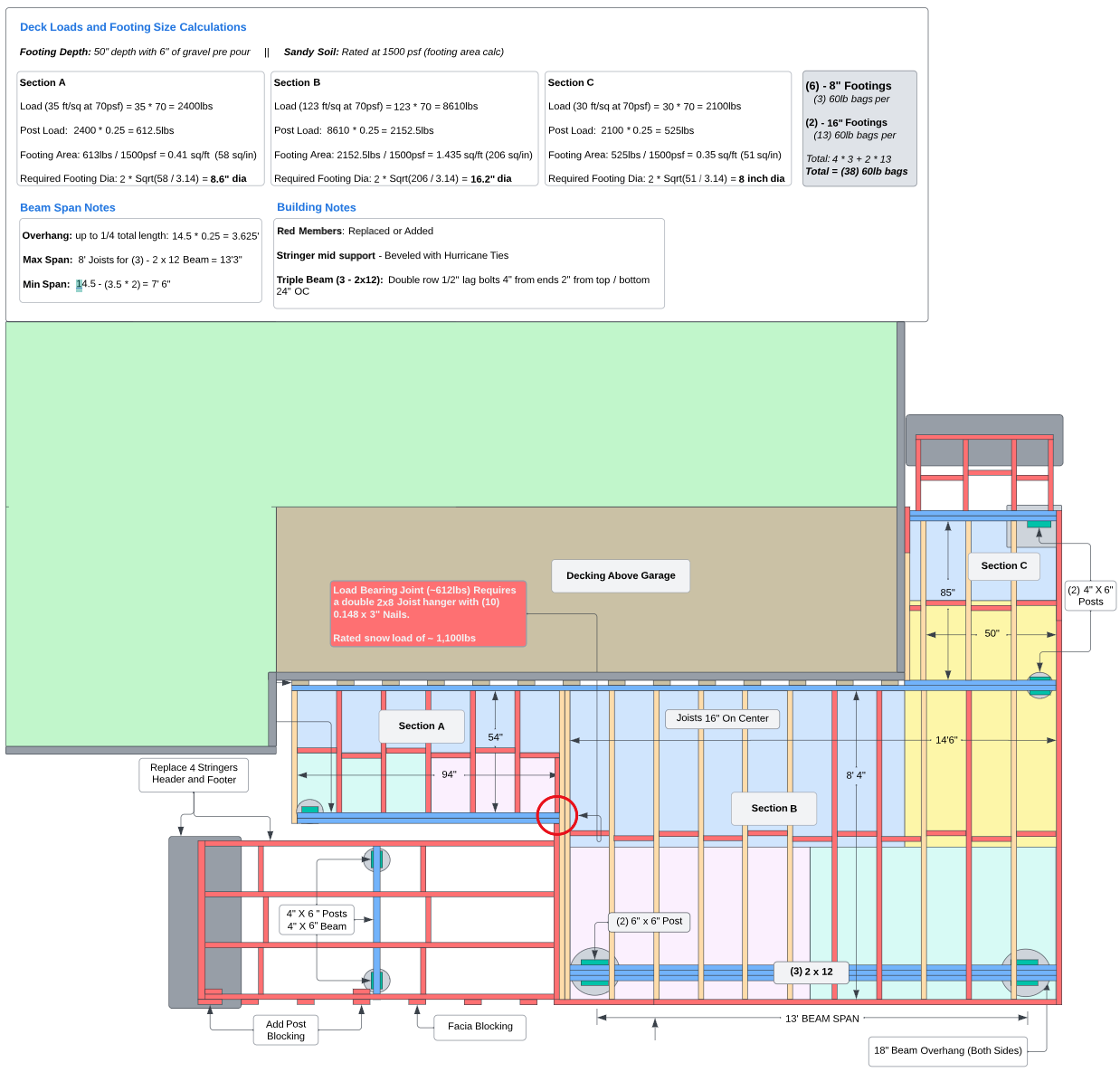
The structure was divided into sections and analyzed to estimate loading conditions, guiding the placement of new footings, beams, and supports. Damaged and undersized members were replaced, and additional reinforcement was added where needed to ensure the deck could safely handle expected loads.
Secondary Retaining Wall
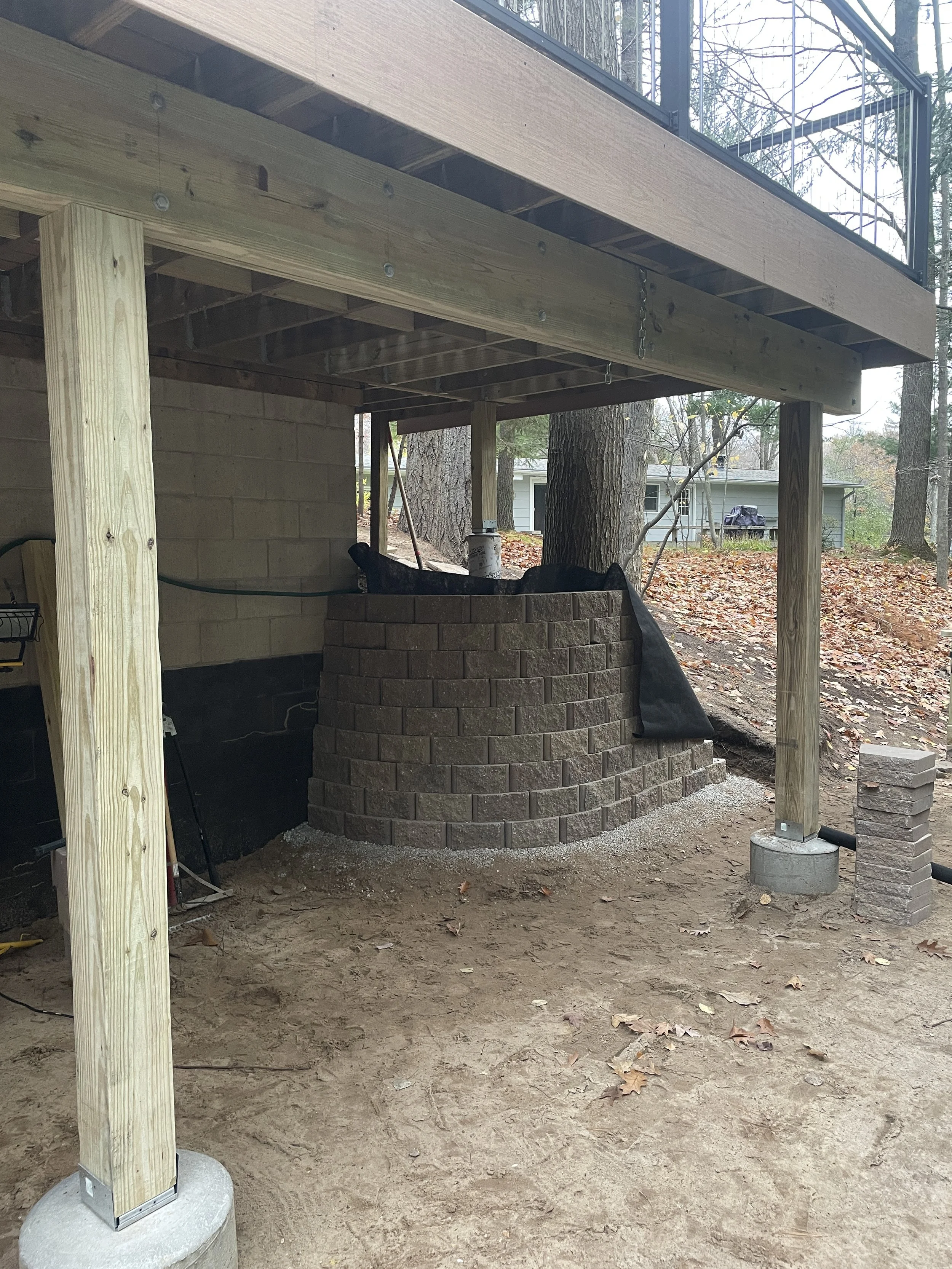
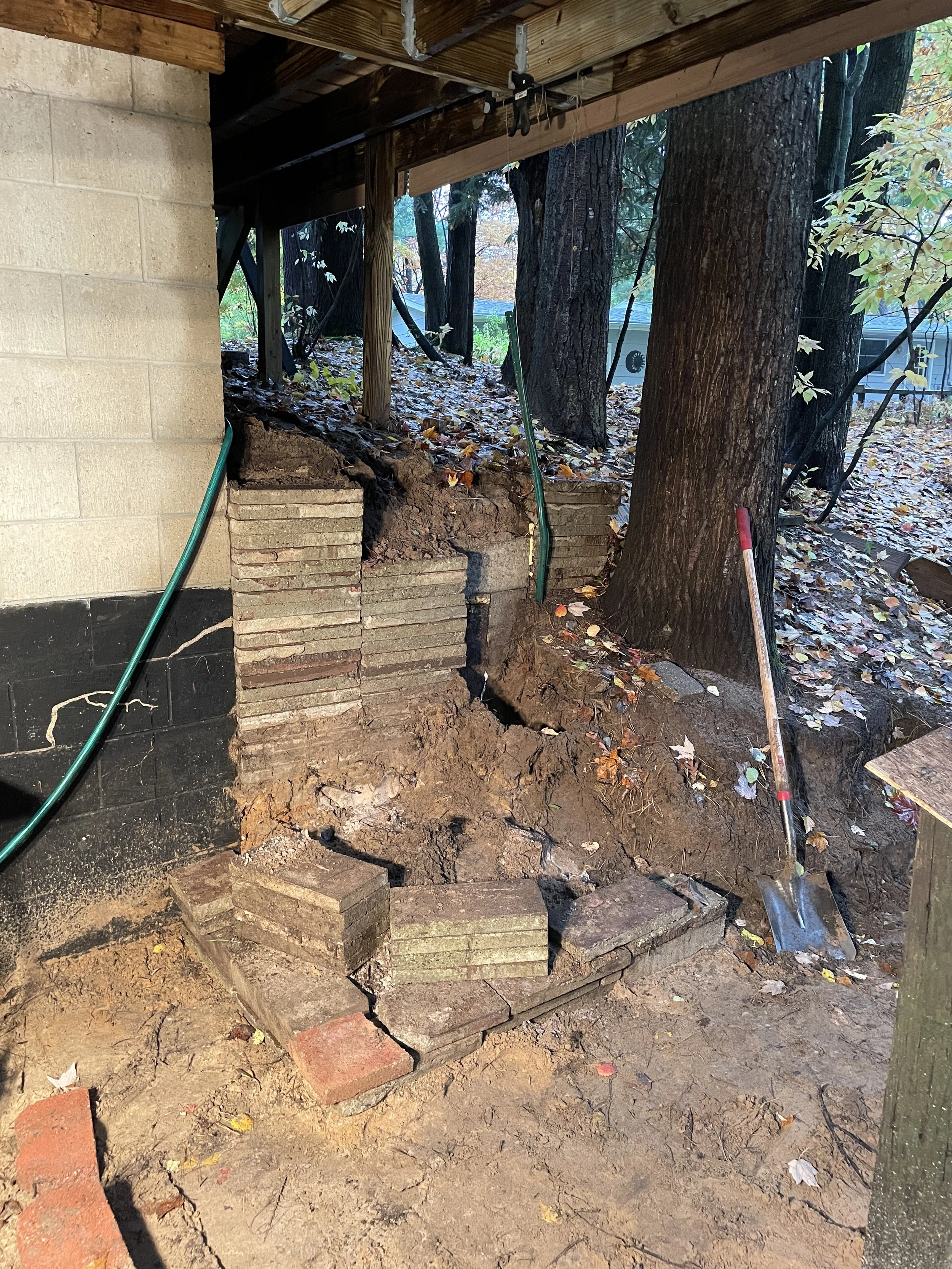
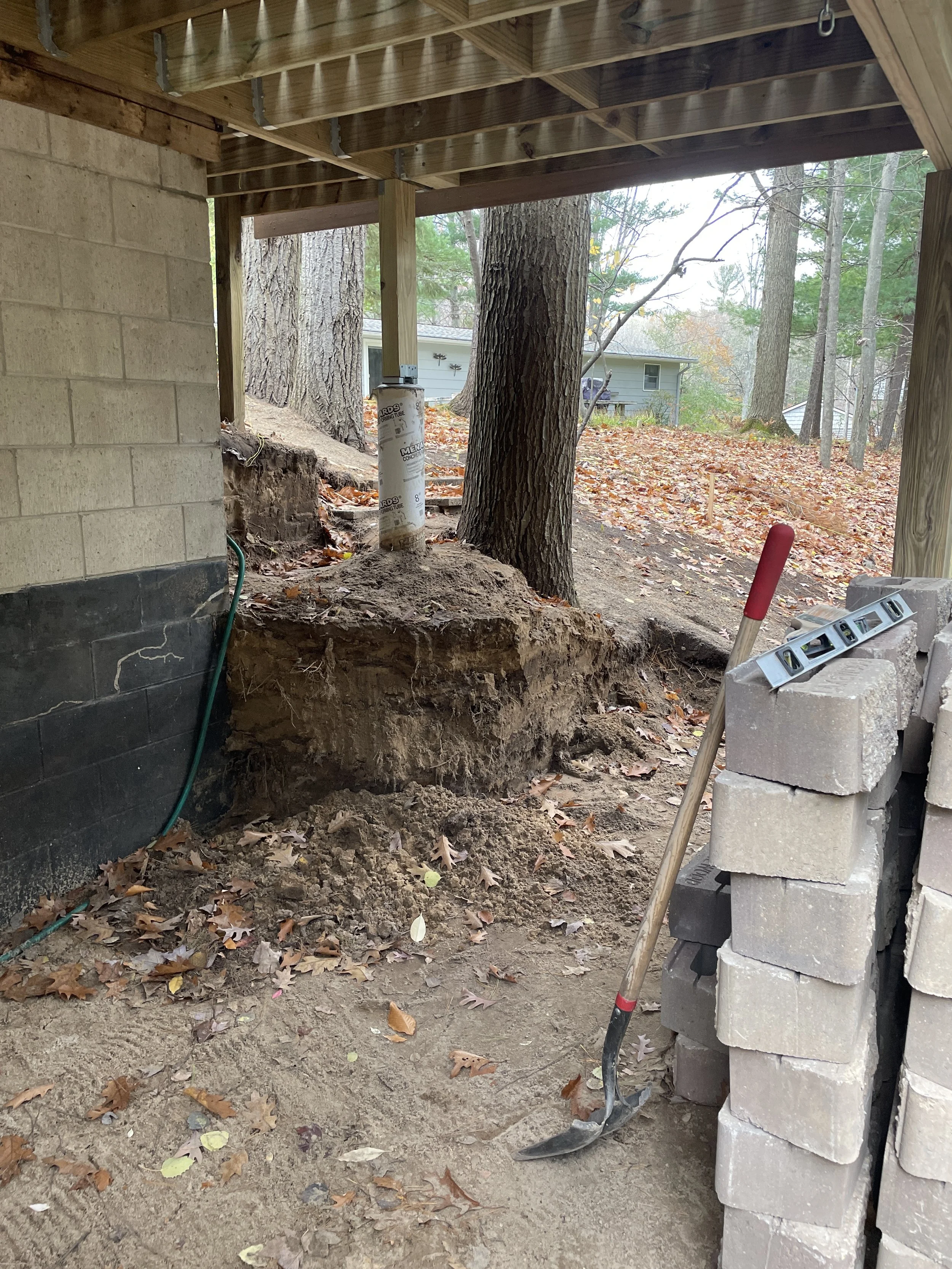
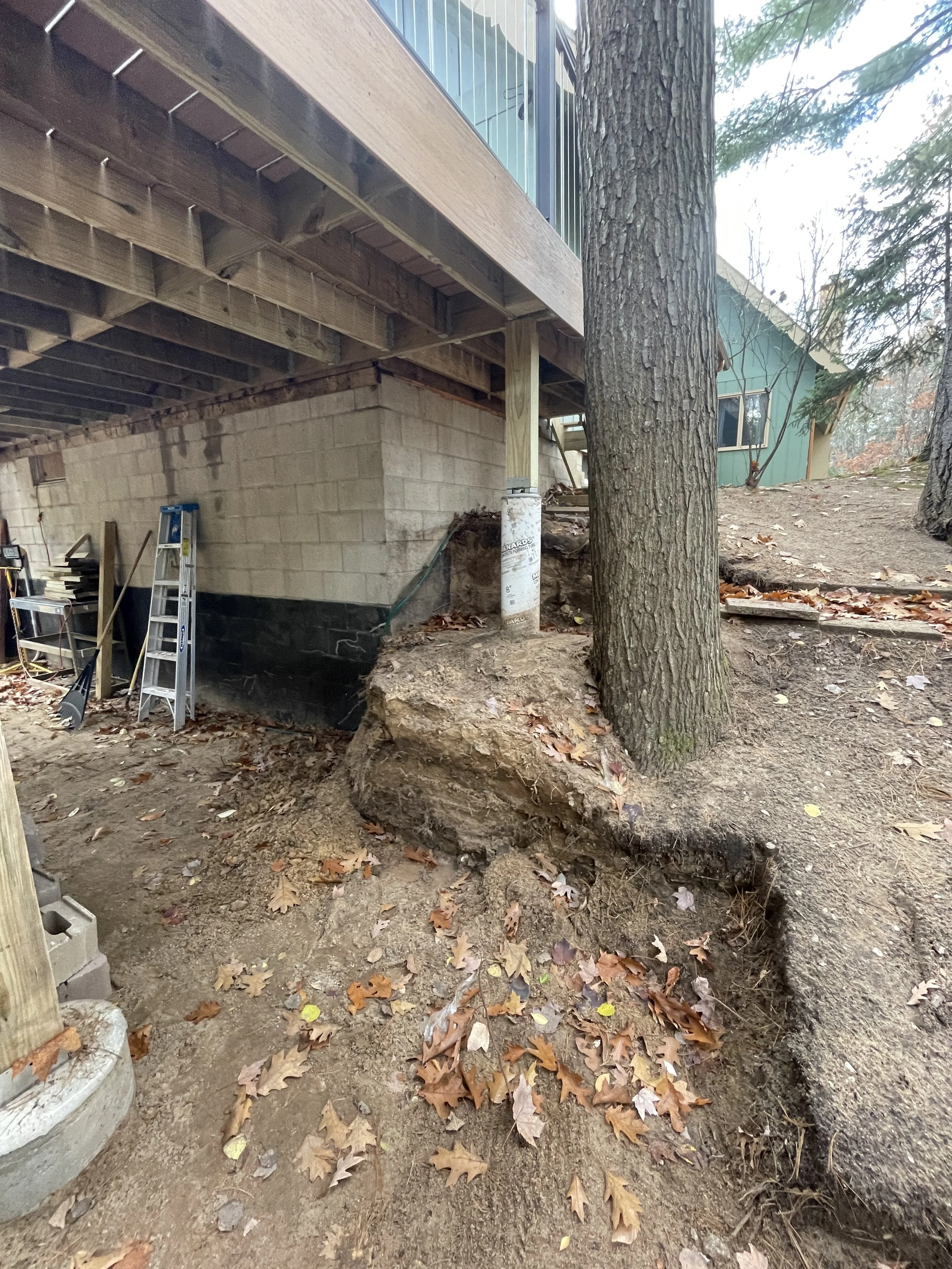
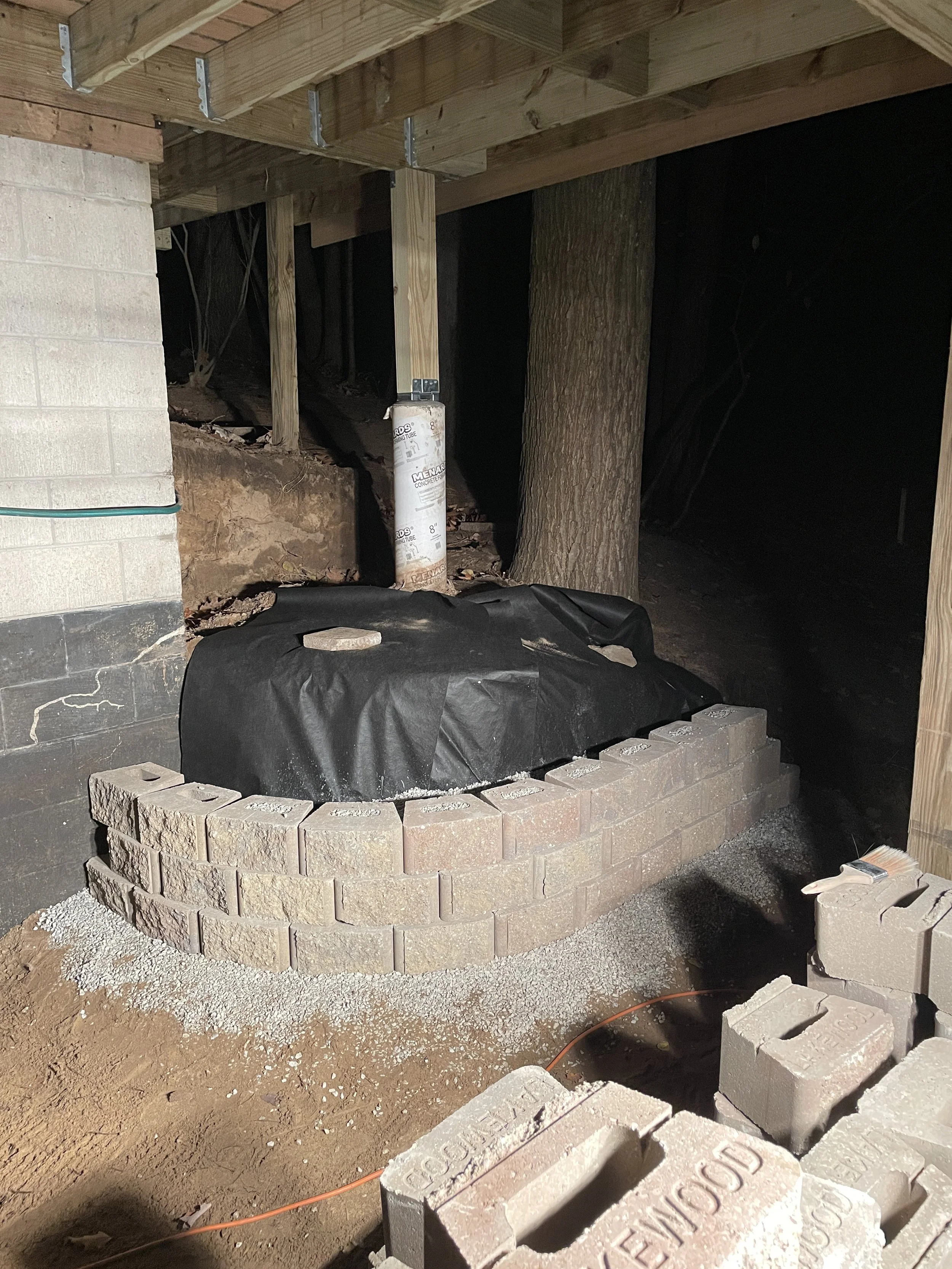
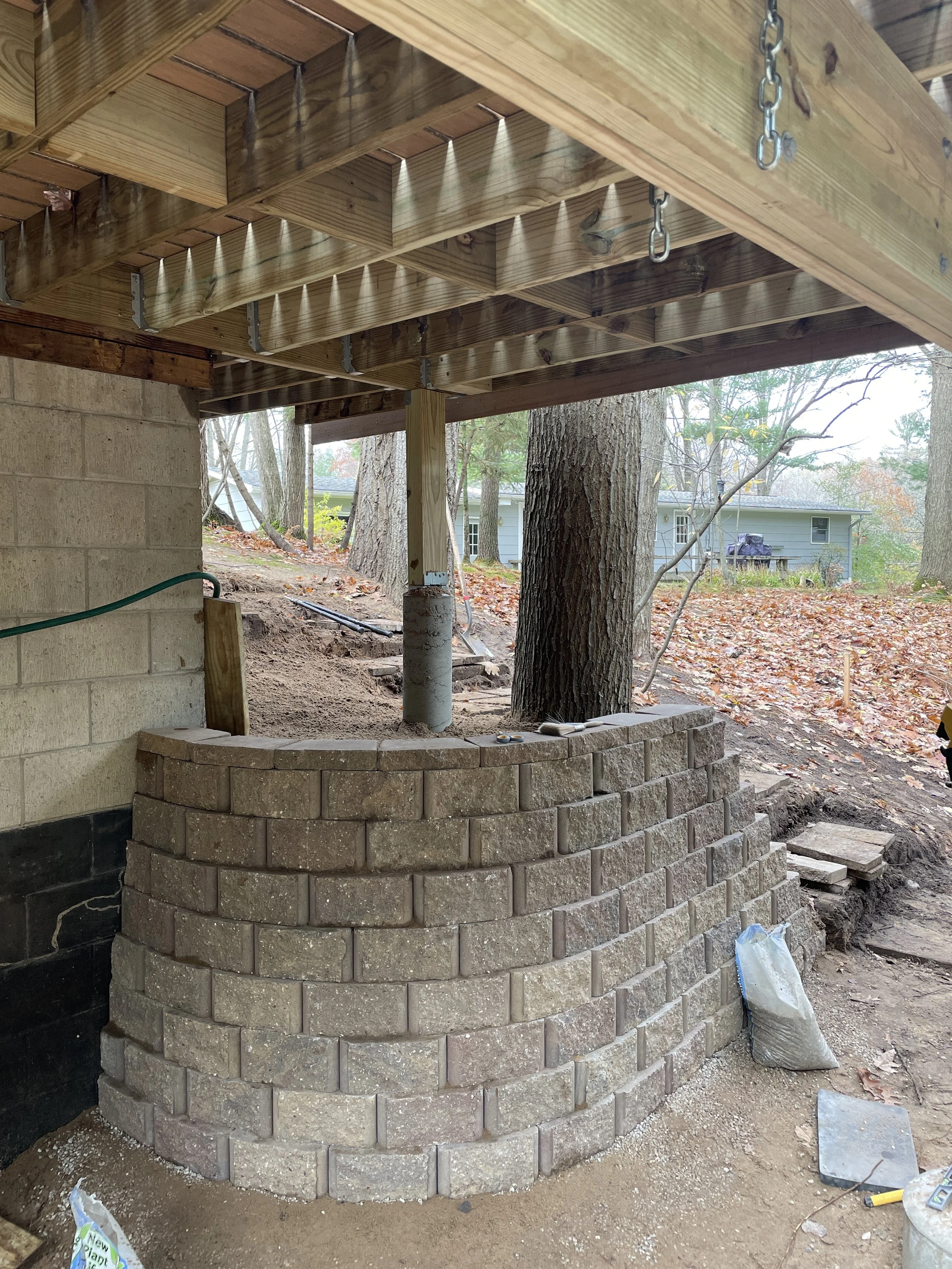
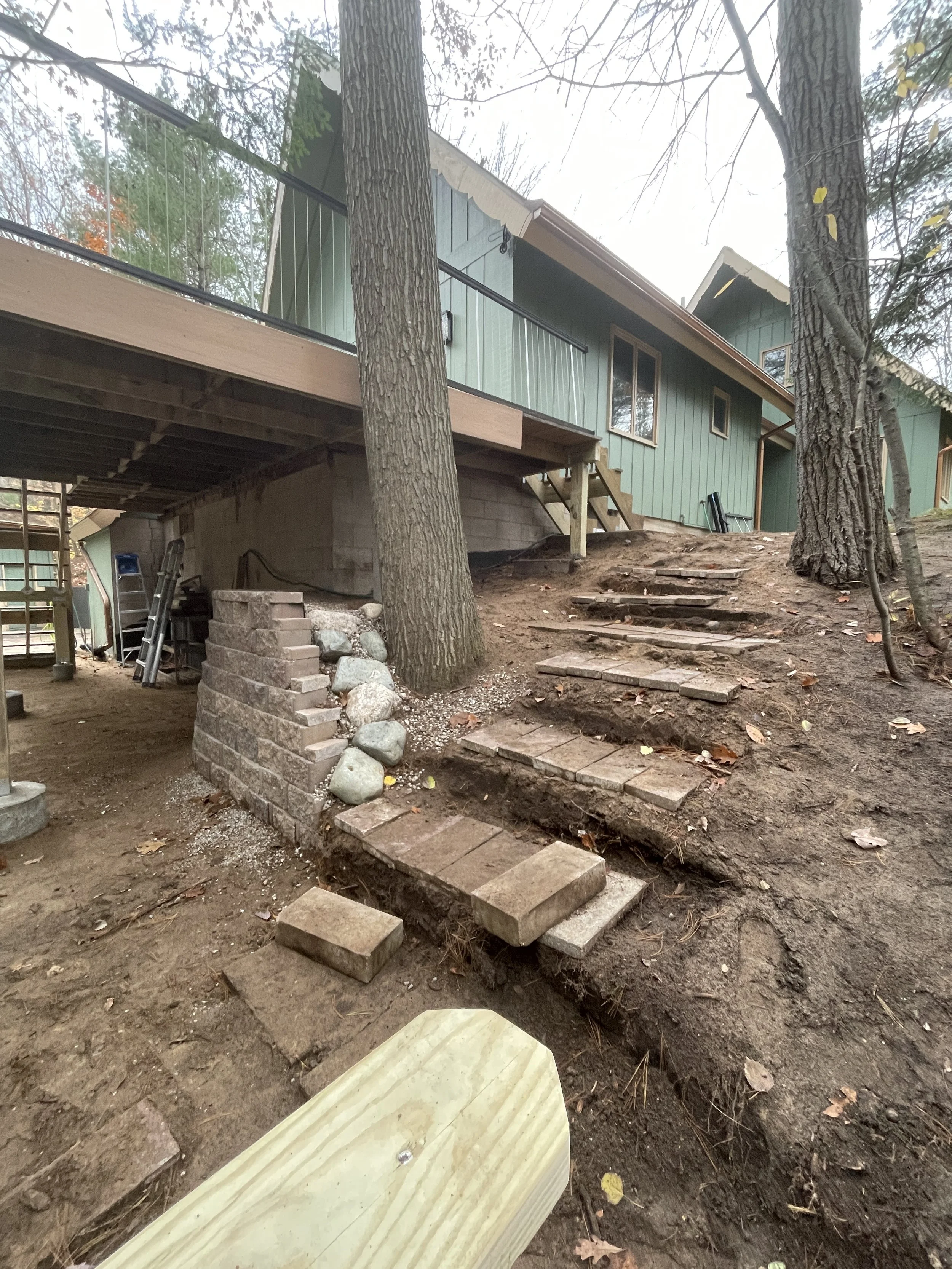
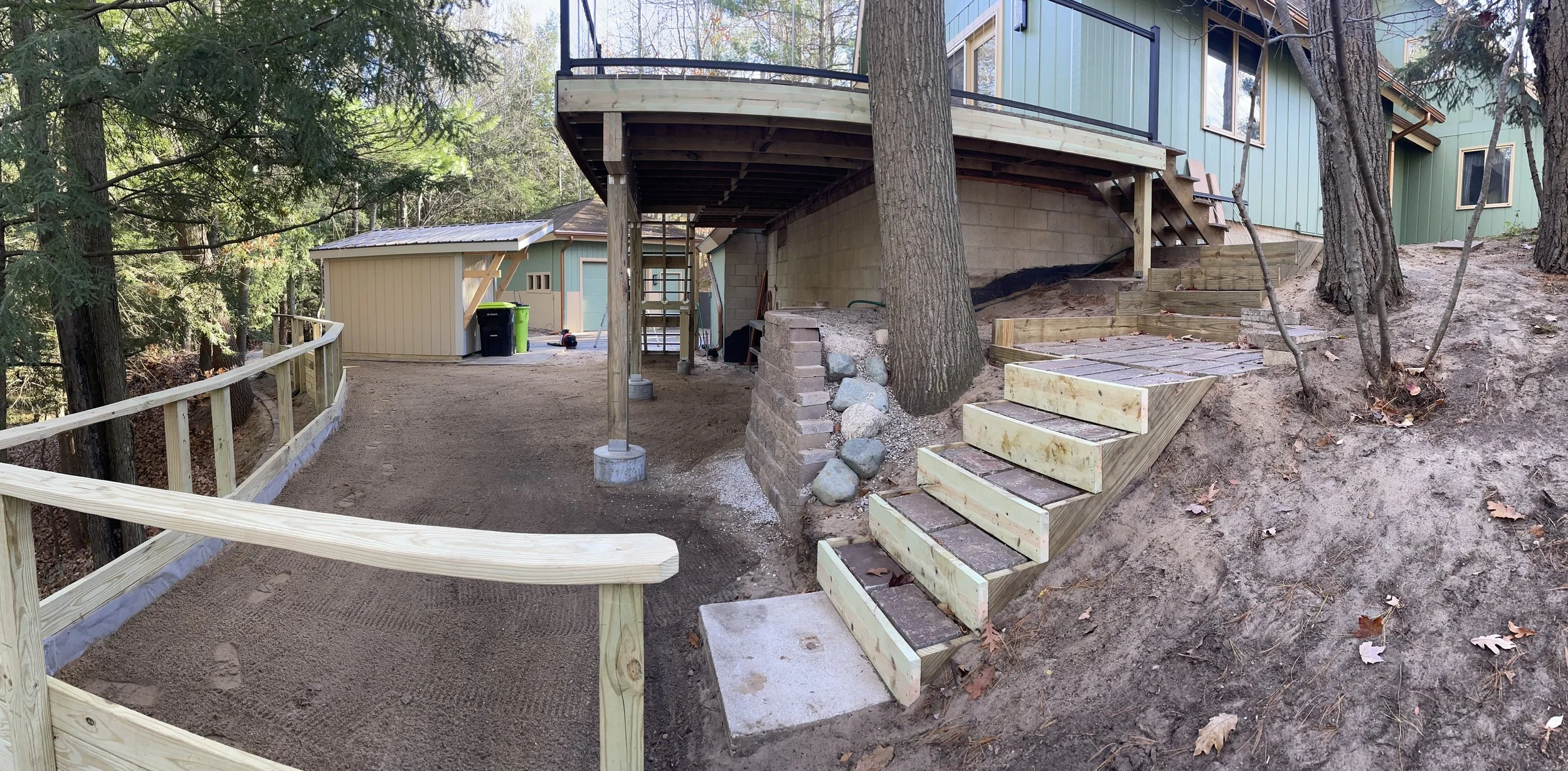
An existing retaining wall was removed and reconfigured to accommodate new deck footings while maintaining soil retention along the hillside. The original wall consisted of loosely stacked brick with no drainage or backfill, limiting both stability and usable space.
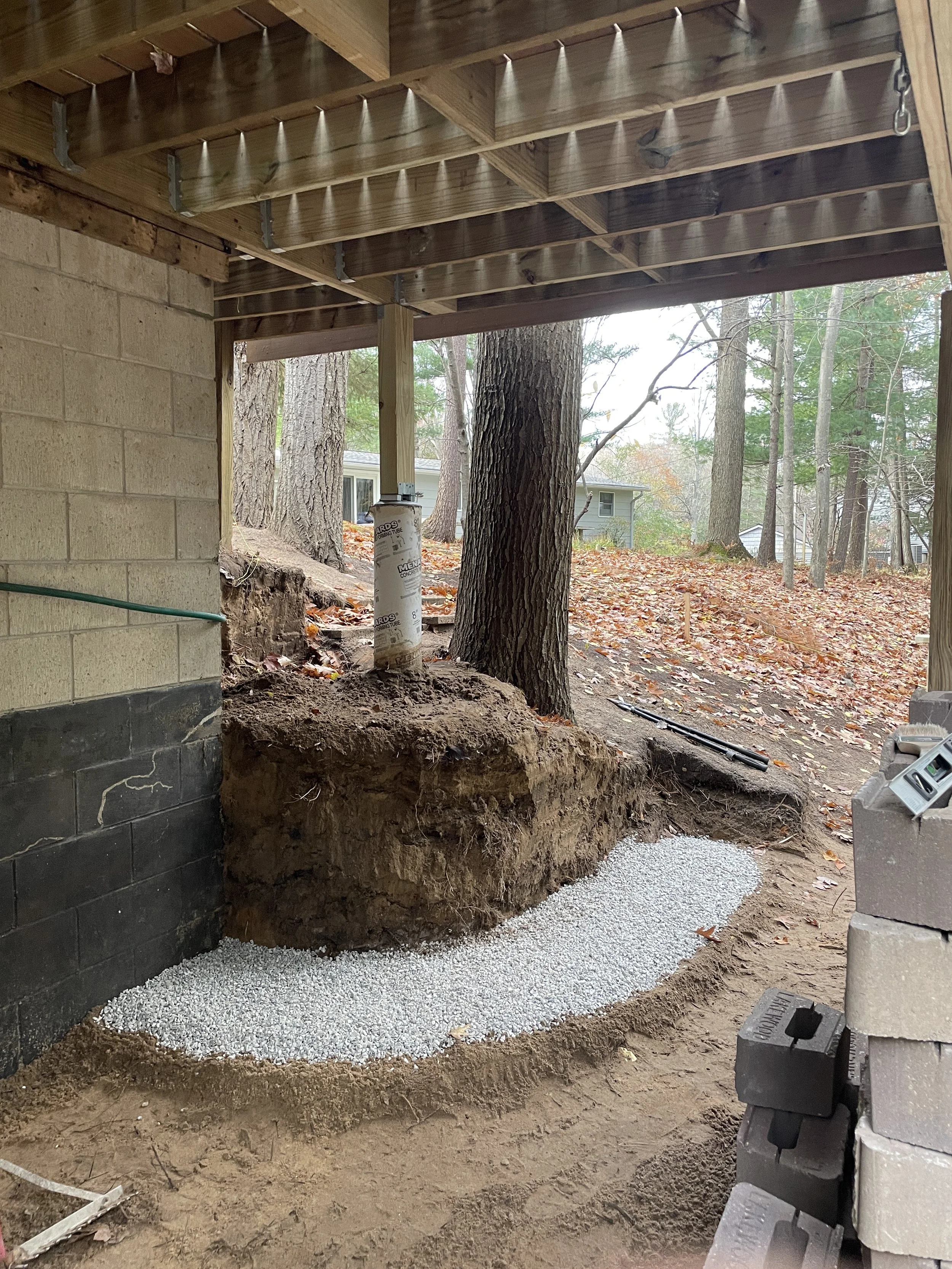
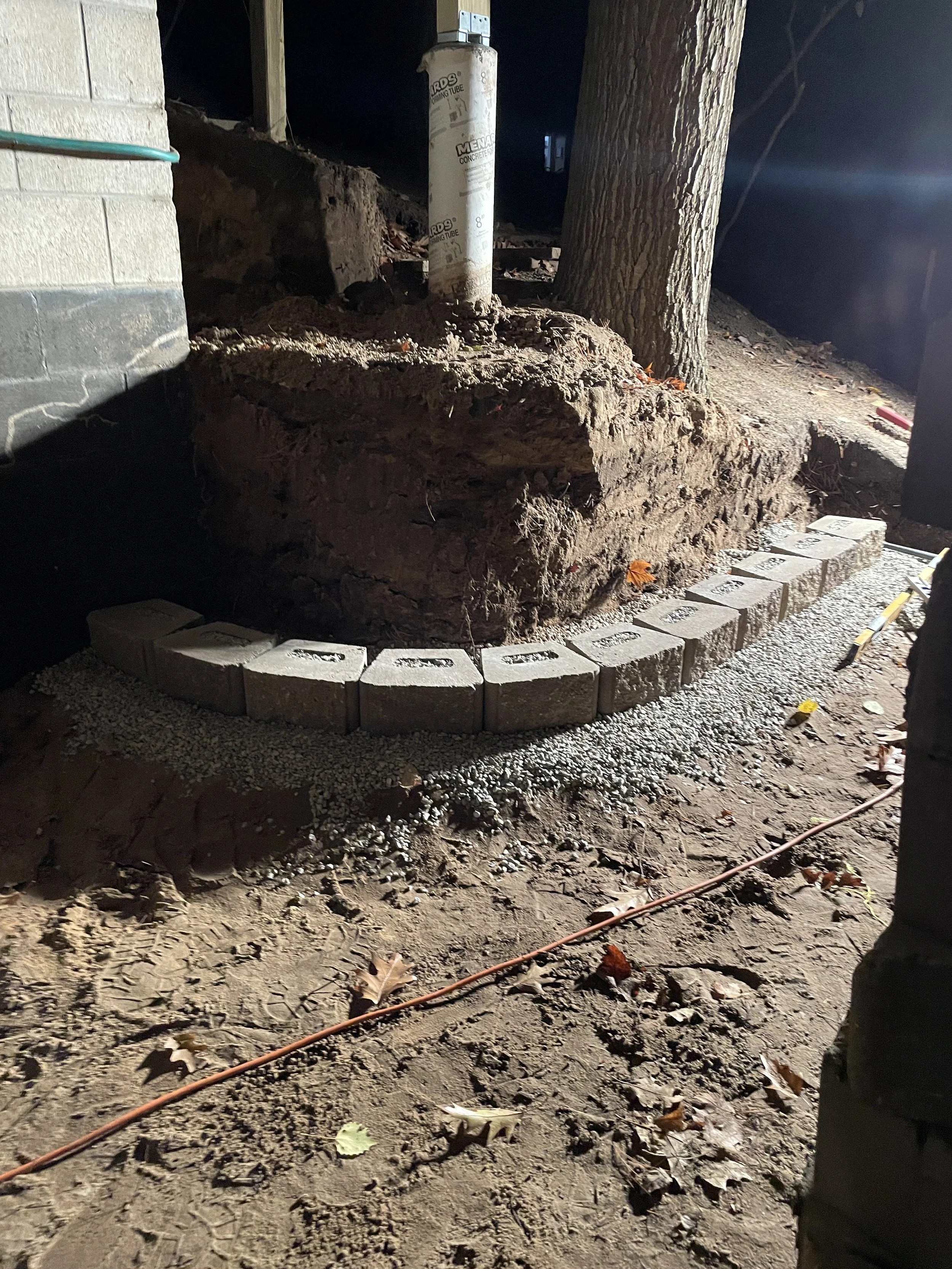
The wall alignment was adjusted to create sufficient clearance for proper footing placement, then rebuilt with improved backfill practices. Gravel backfill was used to promote drainage and reduce soil pressure, improving long-term stability while maintaining the intended grade.
Access Improvements
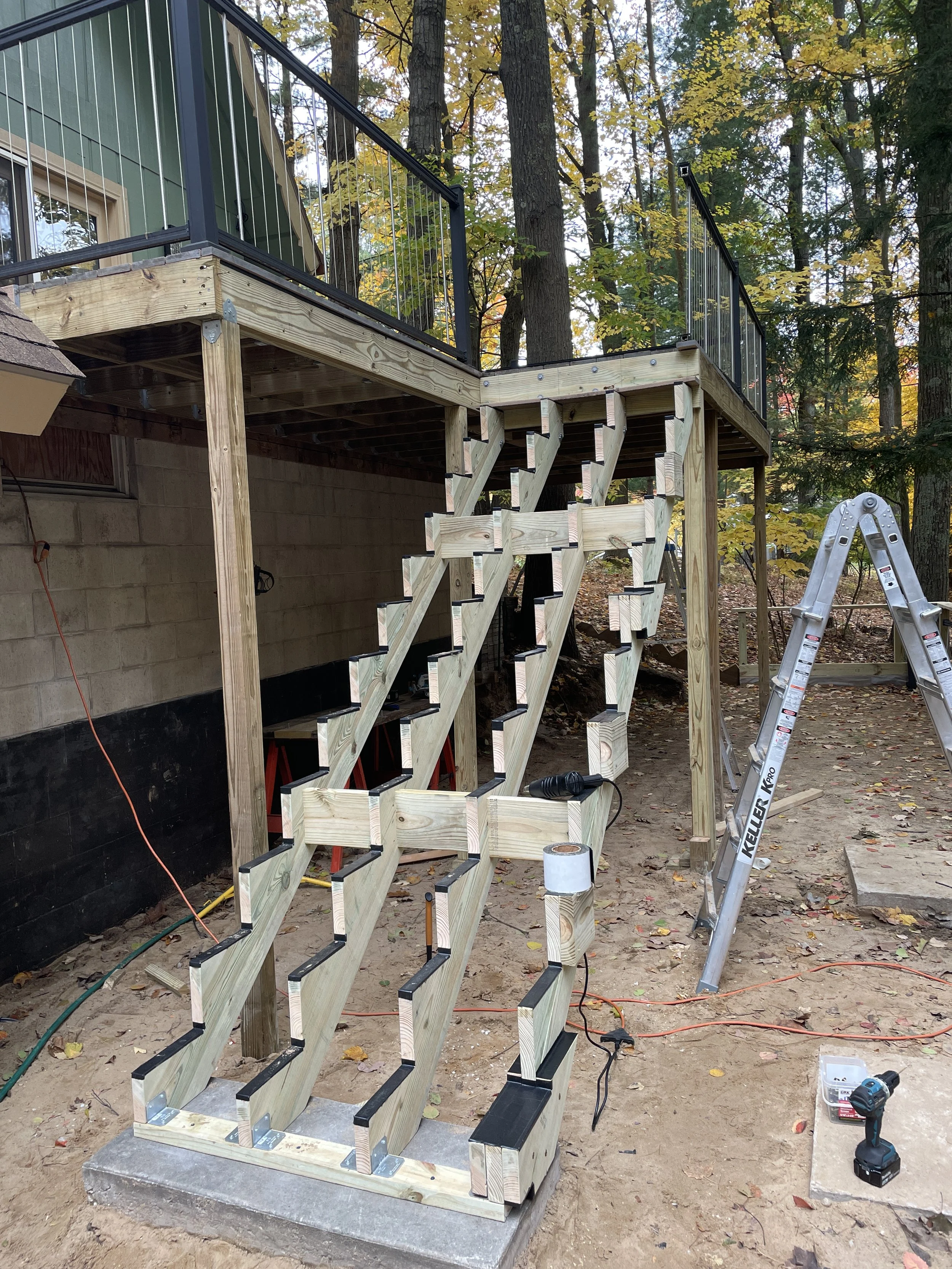
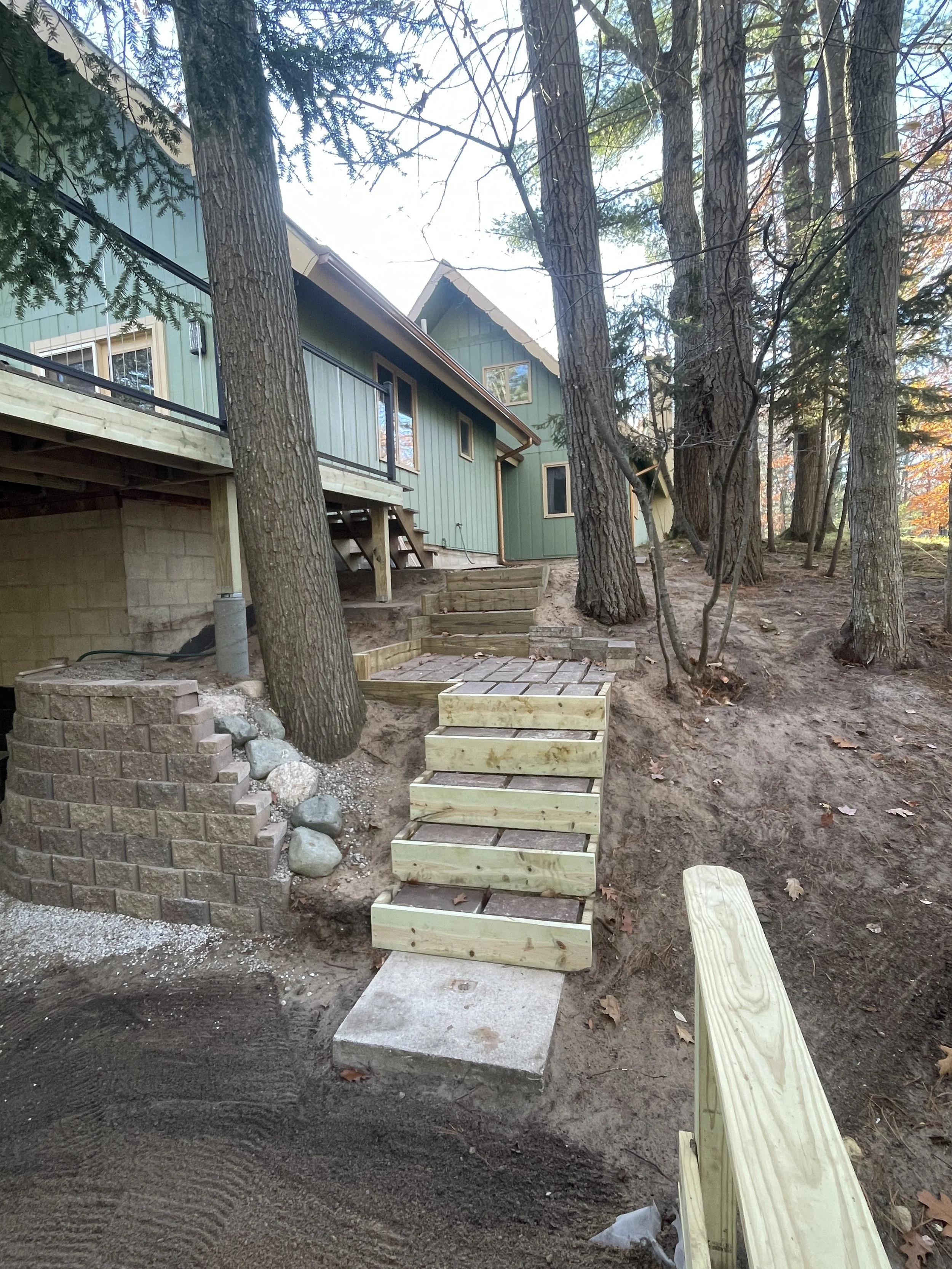
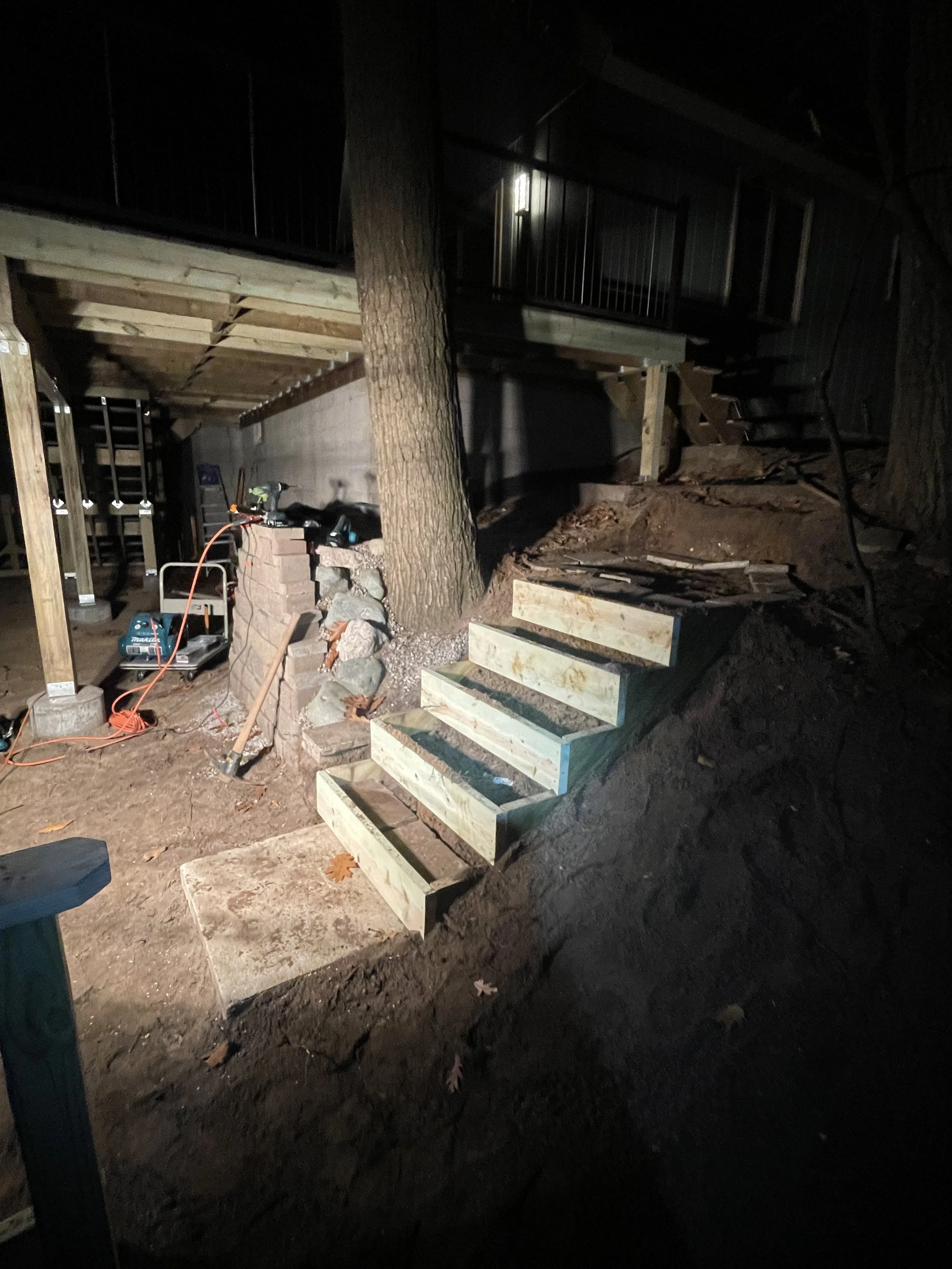
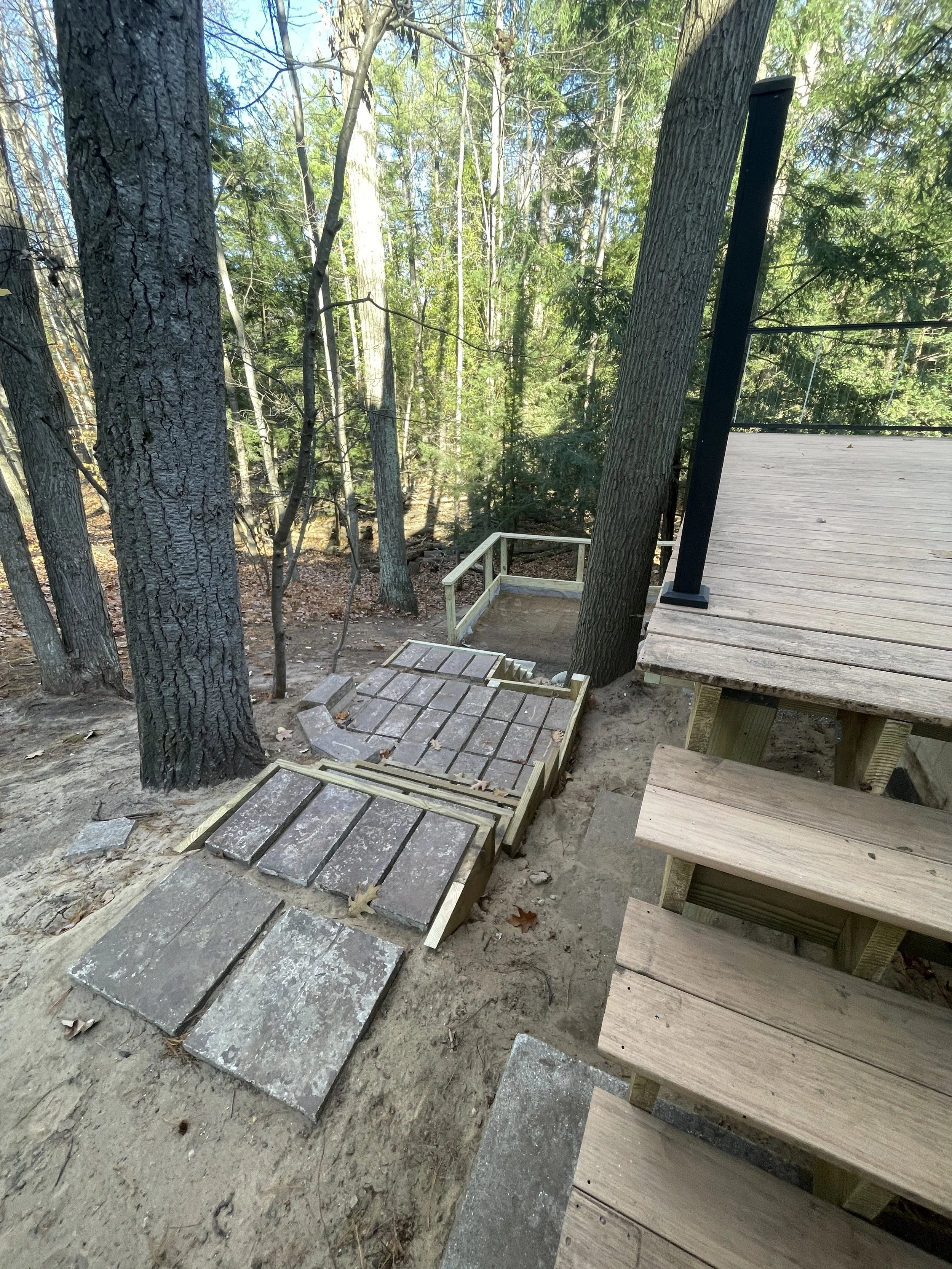
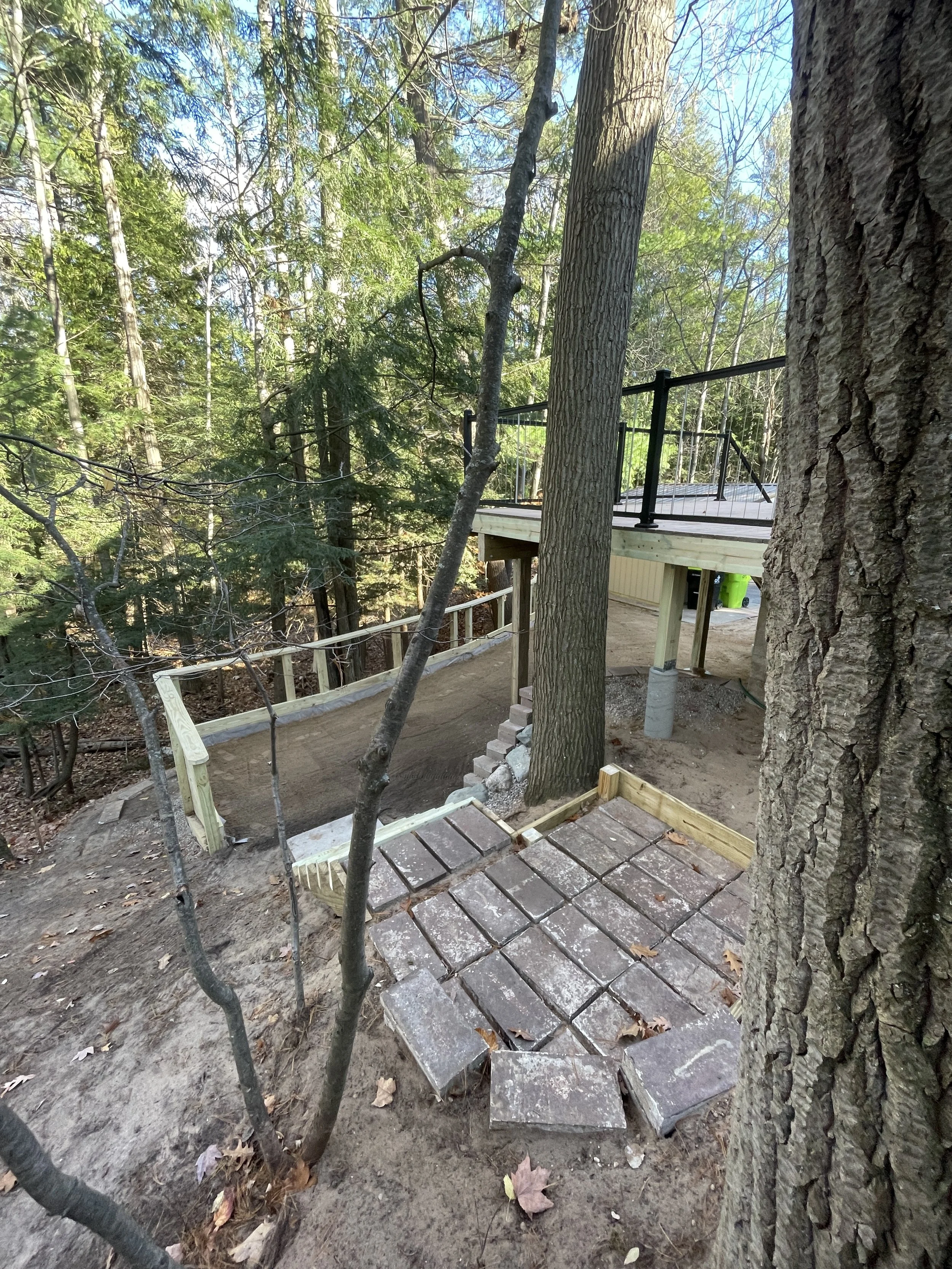
A simple staircase system was constructed along the hillside to provide safe and consistent access between grade levels. Due to terrain constraints and project timeline, a modular approach was used—segmenting the stairs into smaller sections with an intermediate landing to manage elevation change. Existing materials were repurposed where possible, and the structure was backfilled and integrated into the slope to create a stable, functional access path.
Gantry System
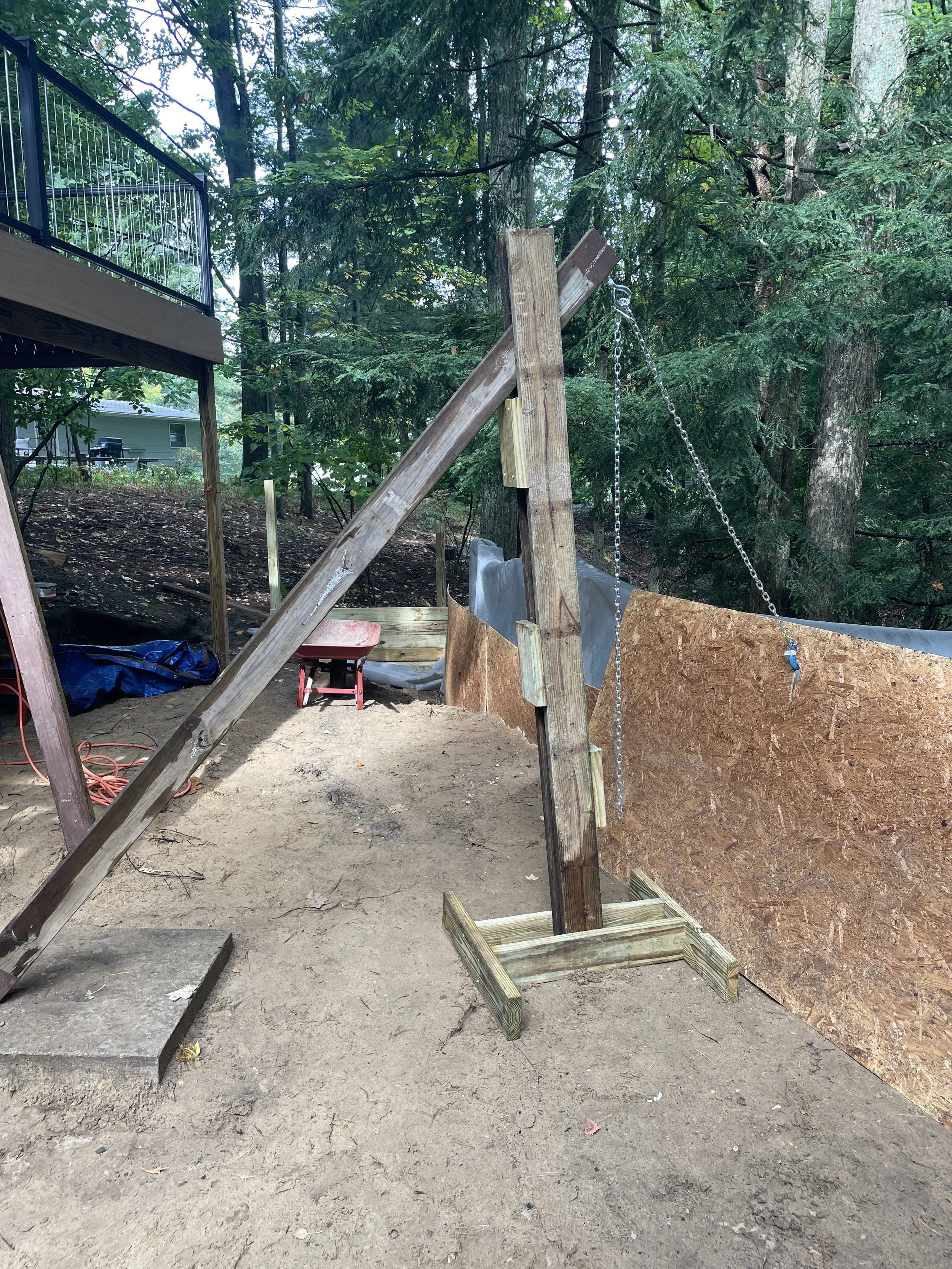
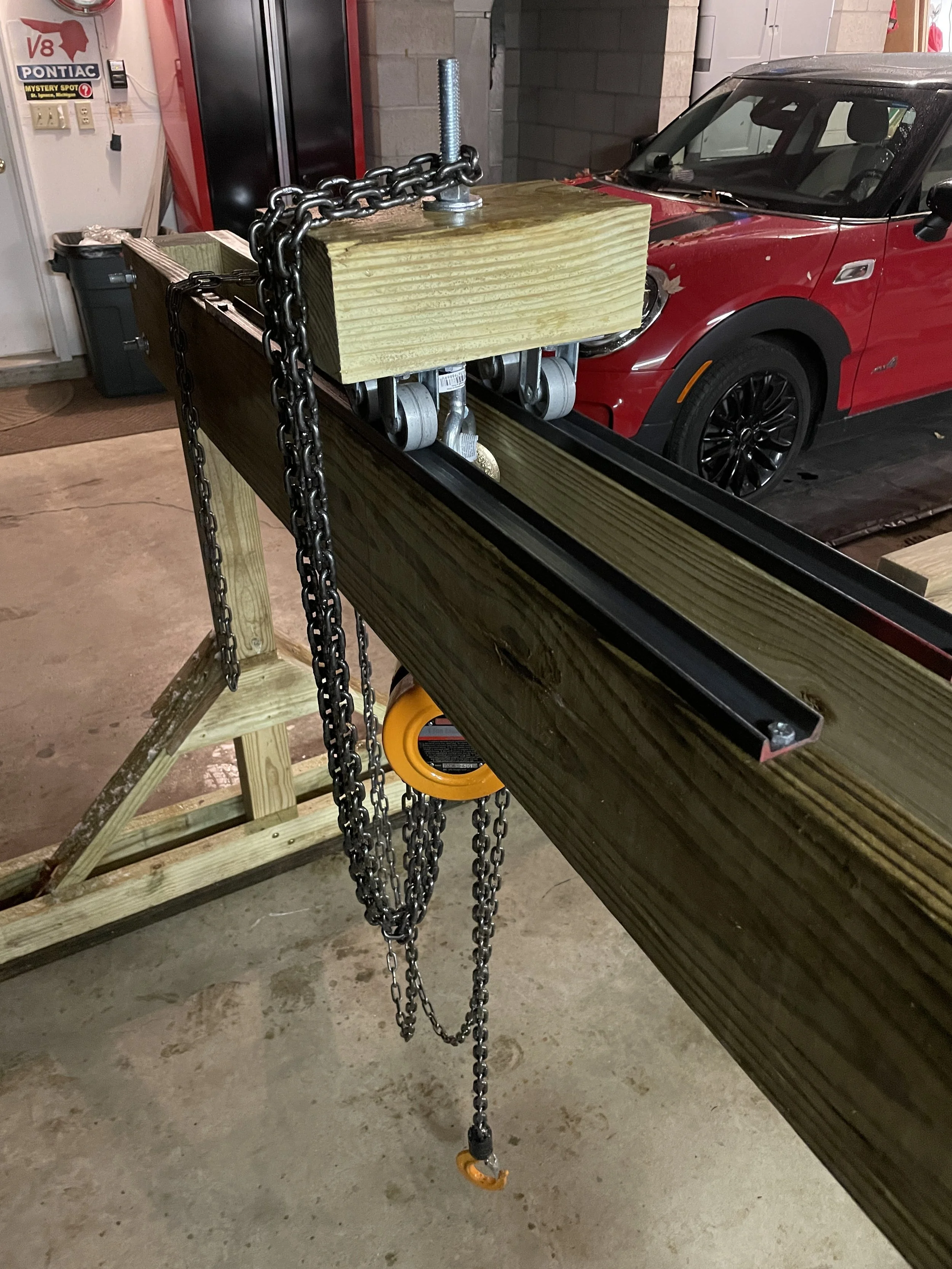
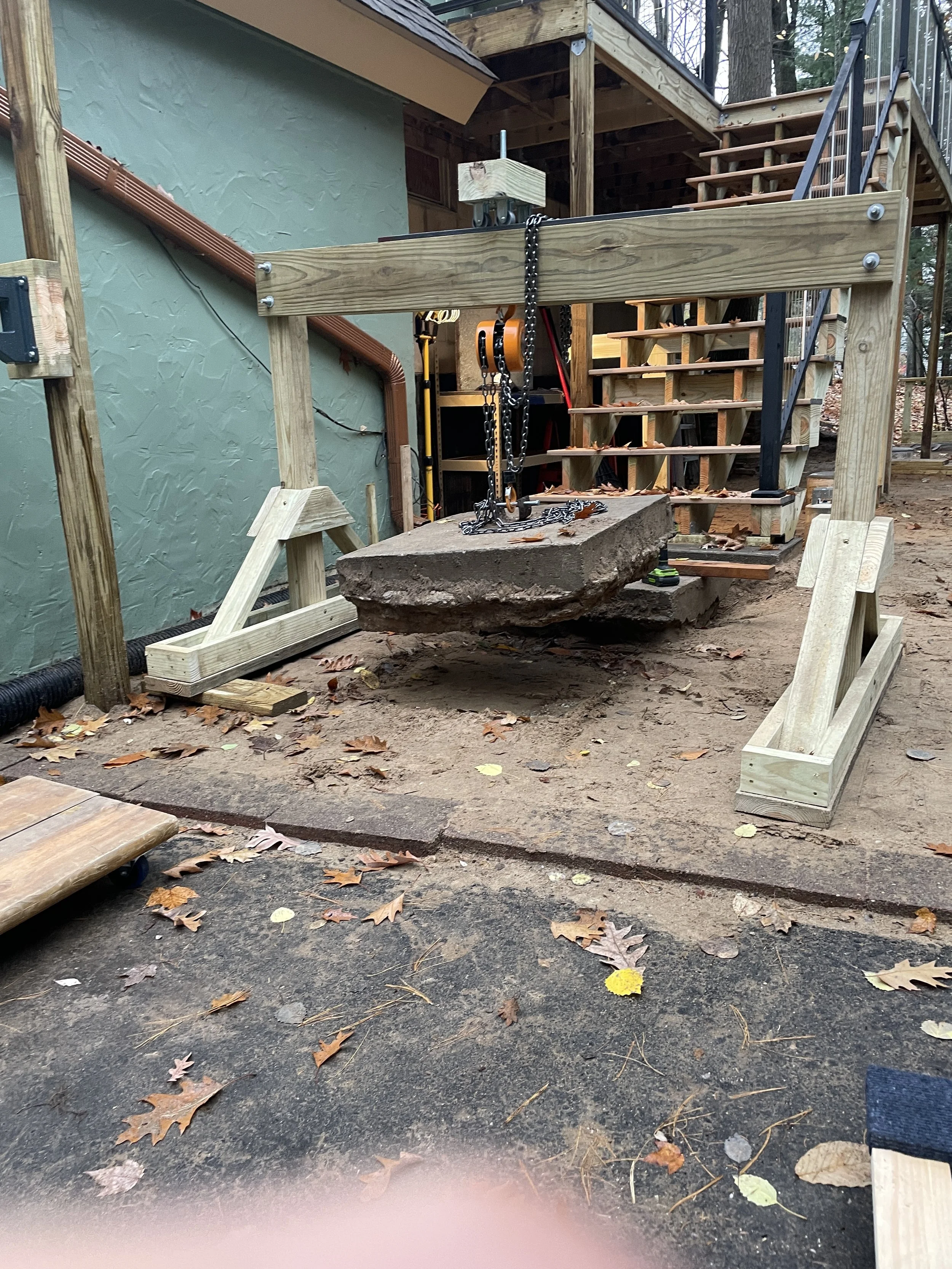
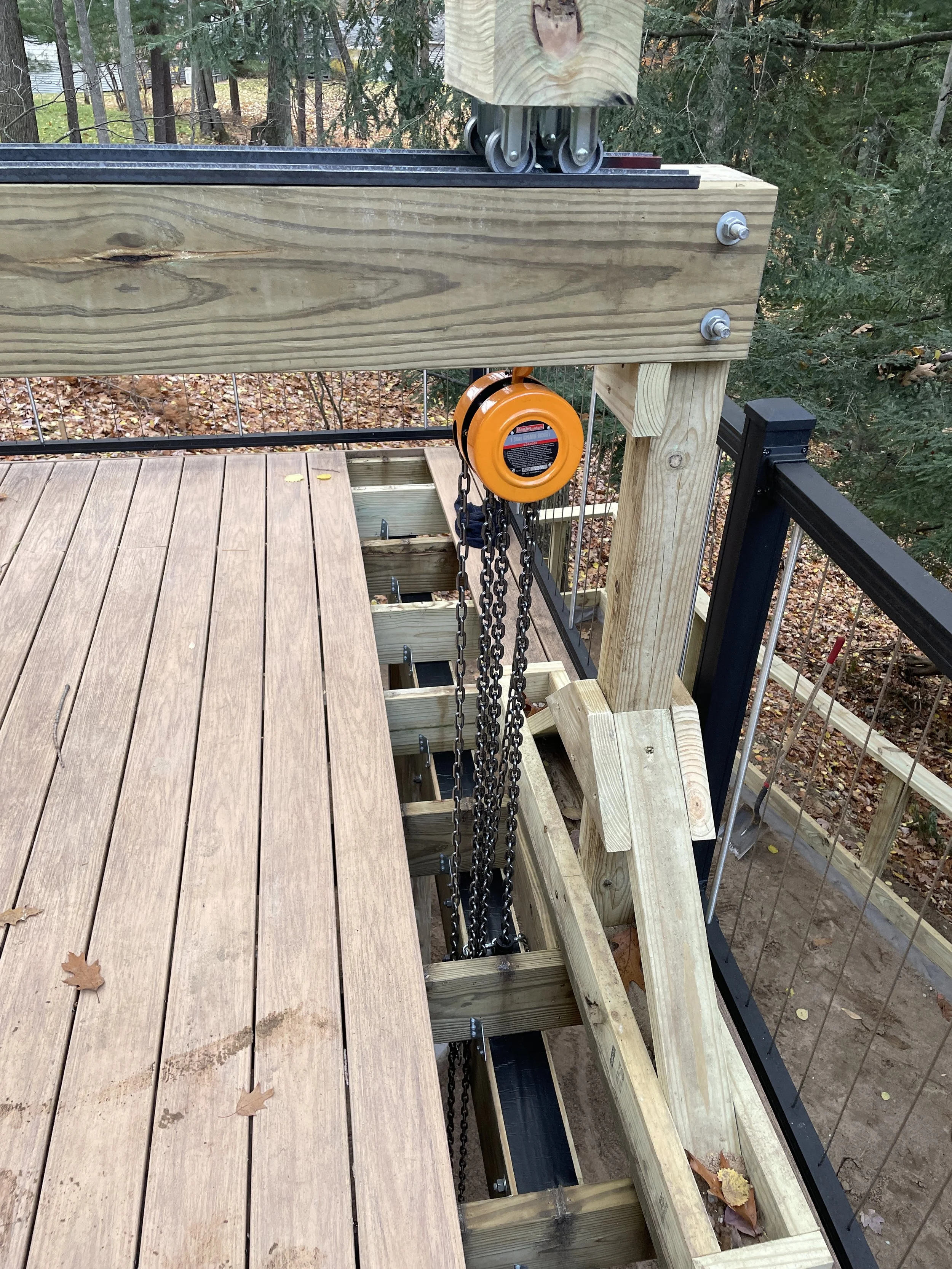
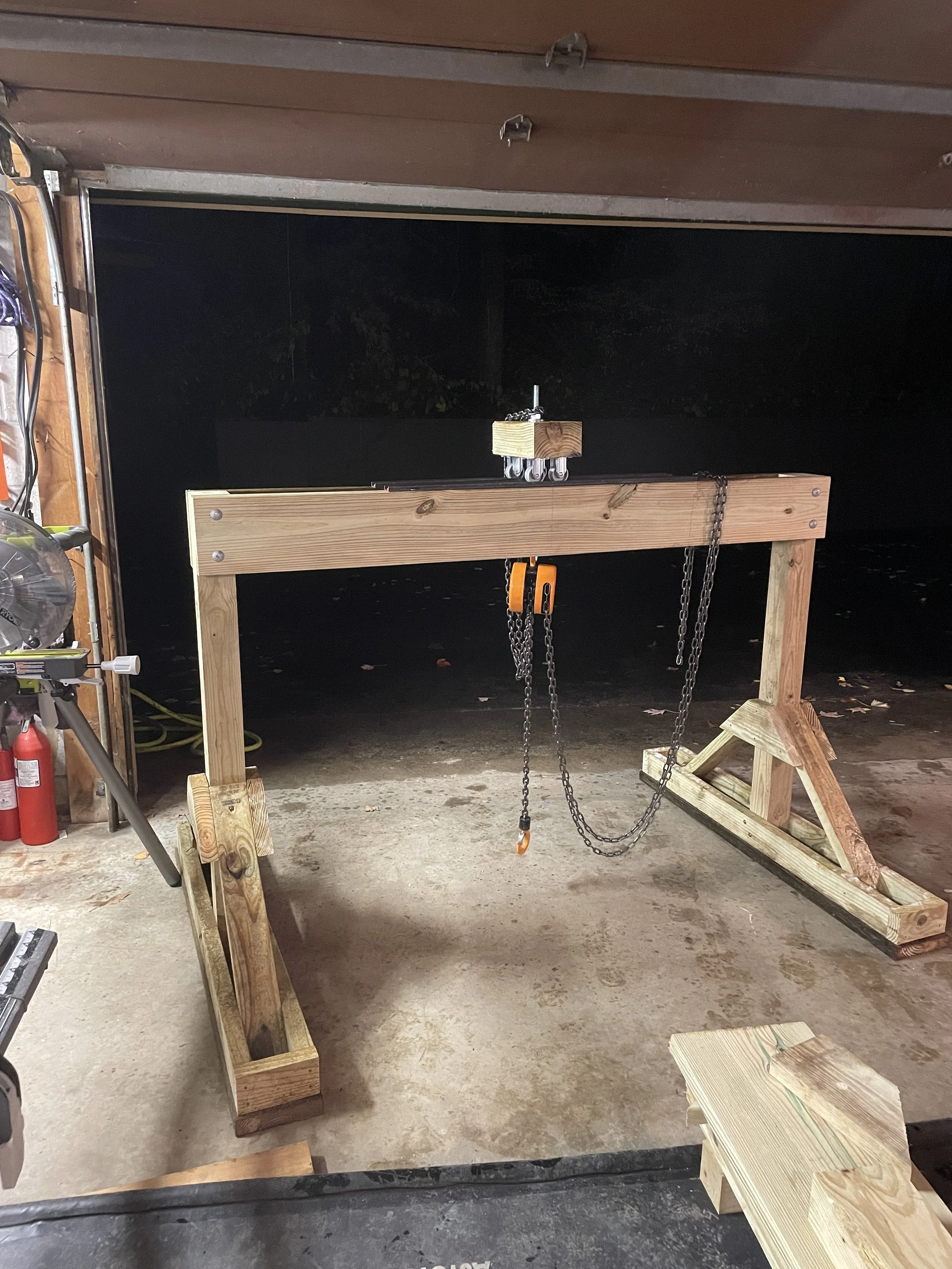
A temporary gantry system was designed and constructed to safely lift and position heavy structural members during installation. Working alone, traditional lifting methods were not feasible, so a freestanding wooden gantry was built to support a chain hoist system.
The gantry incorporated a fixed beam with a rolling trolley, allowing suspended loads to be repositioned horizontally while under lift. This enabled precise alignment of beams during installation and reduced the risk of unsafe manual handling. The system was also reused to relocate heavy existing concrete footings, improving efficiency throughout the project.
Results
The completed system transformed an underutilized and structurally inconsistent area into a stable, accessible, and functional outdoor space. The deck structure was reinforced with proper load paths and new footings, significantly improving reliability and long-term durability.
Terrain modifications, including the primary and secondary retaining walls, created usable ground space while maintaining proper soil retention and drainage. Additional access improvements, including a segmented hillside staircase, allow for safe and consistent movement throughout the area.
Despite being executed as a solo project, all major structural elements were installed with controlled lifting methods and careful planning. The result is a cohesive system that integrates structural integrity, site usability, and practical construction techniques.